

Summary
18 items · 30-60 minutes
Why a Dedicated Space Matters More Than the Equipment In It
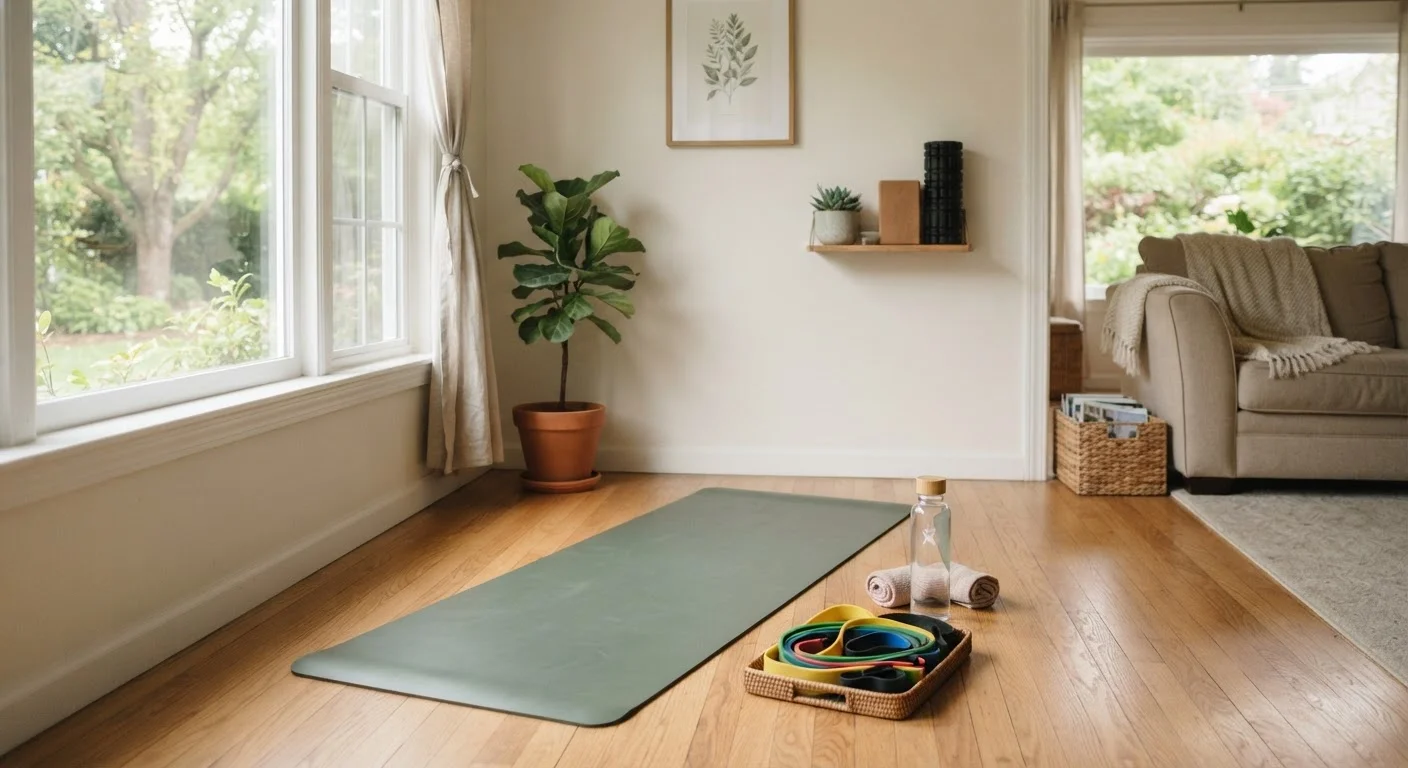
Creating even a small, consistent workout zone at home sends a powerful signal to your brain: this is where movement happens. Research in habit formation consistently shows that environmental cues - a cleared corner, a visible mat, shoes kept nearby - lower the effort required to start exercising. You don't need a spare room or a significant budget to get that benefit.
This checklist is designed for families working with limited space and limited funds. It separates what genuinely supports safe, effective exercise from what is optional, and what is simply unnecessary. If you're also thinking about how home fitness fits your overall household spending, our guide on family budgeting strategies can help you prioritize the small costs involved.
Before you start shopping for anything, work through the preparation group below. Most families discover they need far less than they expected - and already own more than they think.
Space Preparation
Flooring and Safety
Essential Equipment
Organization and Consistency Habits
What You Actually Need (and Where to Be Skeptical)
The fitness equipment industry is built on the idea that more gear equals better results. That framing rarely holds up. Bodyweight training delivers real, measurable fitness gains with zero equipment - no debate among exercise scientists on that point. Anything you buy beyond a basic mat and perhaps one or two versatile tools should be driven by a specific training goal, not marketing pressure.
When comparing equipment options, our article on resistance bands vs. dumbbells walks through the honest trade-offs between the two most common budget purchases - cost, storage, and practical versatility all factor in differently depending on your household's needs.
Exercise Mat
Provides joint cushioning for floor work, reduces slip risk on hard floors, and defines the workout zone visually.
Resistance Bands (set)
Adds progressive resistance for strength training without taking up significant space or budget.
Sturdy Chair or Step
Functions as a prop for step-ups, incline push-ups, and tricep dips - most households already own a suitable one.
Foam Roller
Supports post-workout muscle recovery and is a low-cost addition once the basics are in place.
Water Bottle
Keeps hydration accessible throughout a session without interruption.
Device Stand or Clip
Holds a phone or tablet at eye level so you can follow workout videos hands-free.
If any fitness terms in this checklist are unfamiliar, our plain-language workout glossary defines them without jargon.
Avoid Overbuying Before You've Built a Habit
One of the most common home fitness mistakes is spending heavily on equipment before establishing a regular routine. Start with the essentials on this checklist, build consistency over several weeks, and only then consider whether additional tools solve a specific gap. Unused equipment doesn't support fitness goals - it occupies floor space and budget. See our article on common home workout myths for more on what beginners often get wrong.
This article is for general informational purposes only and does not constitute medical or fitness advice. Consult a qualified healthcare or fitness professional before starting a new exercise program, particularly if you have an existing health condition or injury.
The content provided on our blog site traverses numerous categories, offering readers valuable and practical information. Readers can use the editorial team’s research and data to gain more insights into their topics of interest. However, they are requested not to treat the articles as conclusive. The website team cannot be held responsible for differences in data or inaccuracies found across other platforms. Please also note that the site might also miss out on various schemes and offers available that the readers may find more beneficial than the ones we cover.