

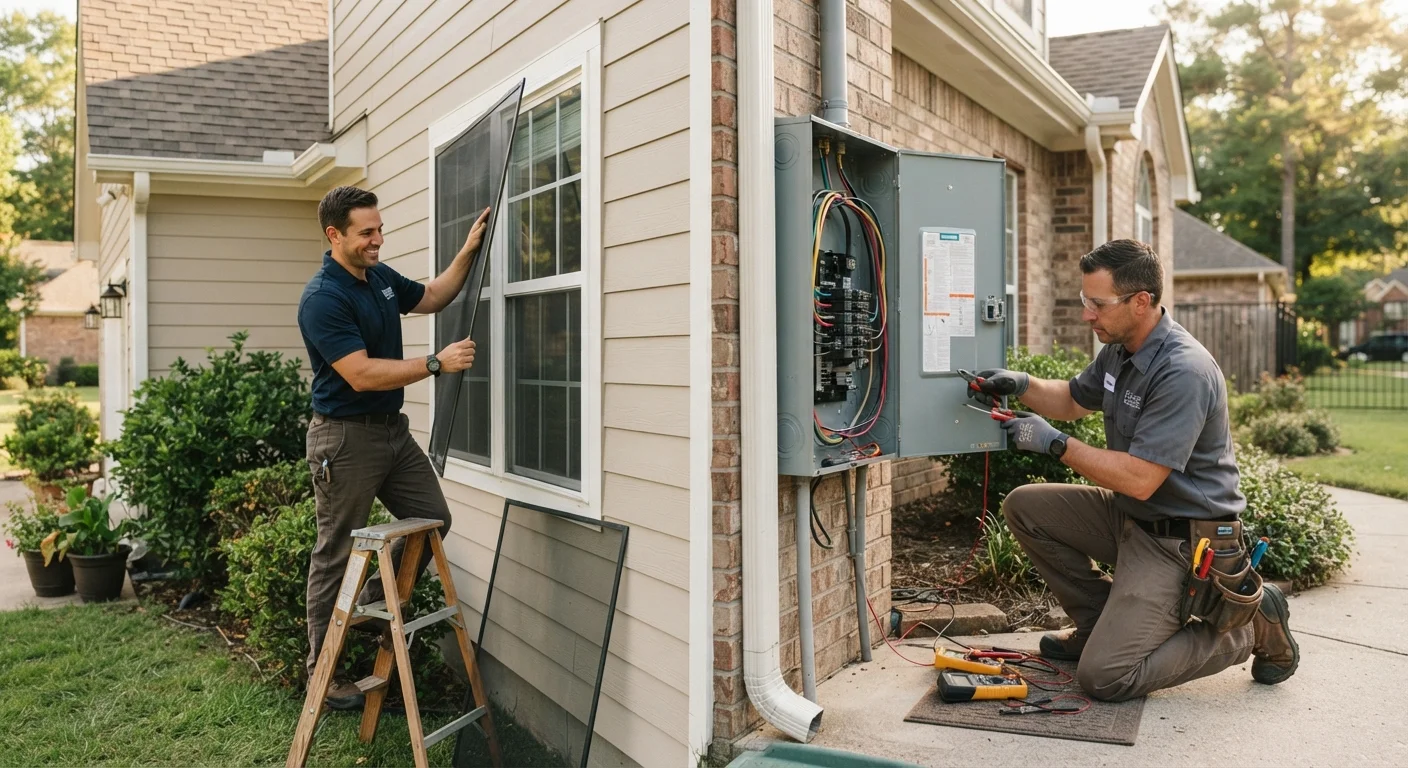
Option A
DIY Home Maintenance
The empowering, cost-saving approach for capable families.
Best for: Routine upkeep tasks that carry low risk, require no permits, and don't involve hazardous systems like gas, structural components, or main electrical panels.
Option B
Professional Home Services
The licensed, code-compliant solution for complex or hazardous work.
Best for: Any job involving electrical wiring, gas lines, load-bearing structures, roofing, or work that requires a permit and inspection in most US jurisdictions.
What Makes a Task DIY-Friendly?
The line between a manageable weekend project and a job that demands a licensed professional comes down to three factors: safety risk, regulatory requirements, and required expertise. A task is genuinely DIY-friendly when a mistake causes a minor, easily corrected problem-not a fire, flood, structural failure, or code violation.
Generally speaking, DIY-appropriate tasks share these traits:
- They don't touch gas lines, main electrical panels, or load-bearing structural elements.
- They don't require a building permit or licensed trade inspection in most US jurisdictions.
- The tools and materials needed are available at standard hardware stores.
- Clear, manufacturer-provided instructions exist and can be followed without specialized training.
For a fuller picture of the upkeep habits that pay off over time, see our First-Time Homeowner's Orientation to Maintaining a House.
| Criterion | DIY Home Maintenance | Professional Home Services |
|---|---|---|
| Typical cost | Materials only; labor is free | Labor + materials; higher upfront |
| Permits required | Rarely, for routine upkeep | Often, for regulated systems |
| Safety risk if done incorrectly | Low to moderate | High without proper training |
| Tools needed | Basic household tools | Specialized trade equipment |
| Insurance implications | Minimal for routine tasks | Protects coverage for regulated work |
| Code compliance | Not typically regulated | Required for structural/electrical/gas |
| Skill level required | General awareness sufficient | Licensed trade expertise required |
Tasks Families Can Confidently Handle Themselves
The following maintenance jobs are well within reach for most households with basic tools and reasonable care:
- HVAC filter replacement: Replacing a 1- to 4-inch furnace or air handler filter every 1-3 months is one of the highest-impact low-effort tasks in home maintenance. No tools required beyond a filter of the correct size.
- Caulking windows, doors, and tubs: Removing old caulk and applying a fresh bead seals drafts and prevents moisture intrusion. Proper caulking technique takes a few practice runs but carries negligible risk.
- Gutter cleaning: Clearing leaves and debris from gutters prevents water damage to fascia and foundations. Use a stable ladder, wear gloves, and work with a partner spotting from below.
- Drywall patching: Small holes from nails or door knobs can be patched with a pre-mixed compound and a putty knife. Larger repairs (over roughly 6 inches) may warrant a professional assessment.
- Smoke detector and CO alarm testing: Monthly testing, annual battery replacement, and full unit replacement on schedule are homeowner responsibilities. See our guide to life-safety devices for replacement timelines.
- Weatherstripping: Peeling off worn door weatherstripping and pressing on a self-adhesive replacement strip takes under 30 minutes and meaningfully reduces heating and cooling costs.
~35%
Of home energy loss through air leaks
The U.S. Department of Energy estimates that drafts through gaps around windows, doors, and other openings account for a significant share of heating and cooling costs in typical homes.
1-3 months
Recommended HVAC filter replacement interval
Most HVAC manufacturers and the U.S. Department of Energy recommend replacing standard 1-inch filters every 1 to 3 months depending on household conditions and filter type.
$3,000+
Average cost of water damage repairs
Industry estimates suggest that water damage from clogged gutters or failed caulking, when left unaddressed, can lead to remediation costs well into the thousands of dollars.
Staying current on these tasks also keeps you ahead of the deferred-maintenance spiral described in our look at maintenance tasks families most often put off.
Work That Requires a Licensed Professional
Certain home systems are too dangerous, too technically complex, or too tightly regulated to approach without a licensed tradesperson. Attempting them without proper credentials doesn't just risk injury-it can void homeowner's insurance, result in failed inspections, and create significant liability when you sell the property.
- Electrical panel work: Adding circuits, replacing a breaker panel, or upgrading service amperage must be handled by a licensed electrician. This work requires permits and inspection in all US states.
- Gas line repair or extension: Gas leaks cause fires and carbon monoxide poisoning. Any work on gas supply lines-whether for appliances, fireplaces, or heating equipment-requires a licensed plumber or gas fitter.
- Structural modifications: Removing or altering walls, especially load-bearing ones, requires an engineer's assessment and a licensed contractor. Incorrectly removed structural support can cause partial collapse.
- Roofing replacement: Beyond replacing a handful of shingles, full roofing work involves fall hazards, flashing details, and ventilation considerations that typically require professional expertise and permits.
- Main plumbing tie-ins: Connecting new plumbing runs to the main supply or drain stack generally requires permits and a licensed plumber, particularly for anything beyond fixture-level replacements.
Before starting any project that might brush these boundaries, consult our overview of permit requirements for common home improvements to understand what your local jurisdiction is likely to require.
Permits Protect You at Resale
Unpermitted work on regulated systems-electrical, structural, gas, or plumbing-can surface during a home inspection when you sell, potentially requiring costly remediation or reducing your sale price. In some cases, lenders will not finance the purchase of a home with known unpermitted work. Always verify local requirements before starting any project that touches these systems.
Building a Year-Round Maintenance Rhythm
The most cost-effective approach to home maintenance combines consistent DIY attention with strategic professional relationships. Scheduling a licensed HVAC technician for an annual furnace tune-up, for example, is money well spent-but changing the filter between those visits is entirely your job.
A useful framework: treat your home like a vehicle. Routine fluid checks and filter changes are driver responsibilities; engine rebuilds are mechanic territory. Our month-by-month home maintenance calendar can help you organize both categories across the year so nothing slips.
When you do take on larger projects, the planning process matters as much as the work itself. The family roadmap to home renovation walks through budgeting, permit research, and contractor vetting-the foundations that keep ambitious projects on track and on the right side of local code.
The goal isn't to DIY everything or to outsource everything. It's to make deliberate, well-informed decisions about where your time, skill, and safety margin are genuinely sufficient-and where the cost of a professional is the smartest investment you can make in your home.
The content provided on our blog site traverses numerous categories, offering readers valuable and practical information. Readers can use the editorial team’s research and data to gain more insights into their topics of interest. However, they are requested not to treat the articles as conclusive. The website team cannot be held responsible for differences in data or inaccuracies found across other platforms. Please also note that the site might also miss out on various schemes and offers available that the readers may find more beneficial than the ones we cover.