

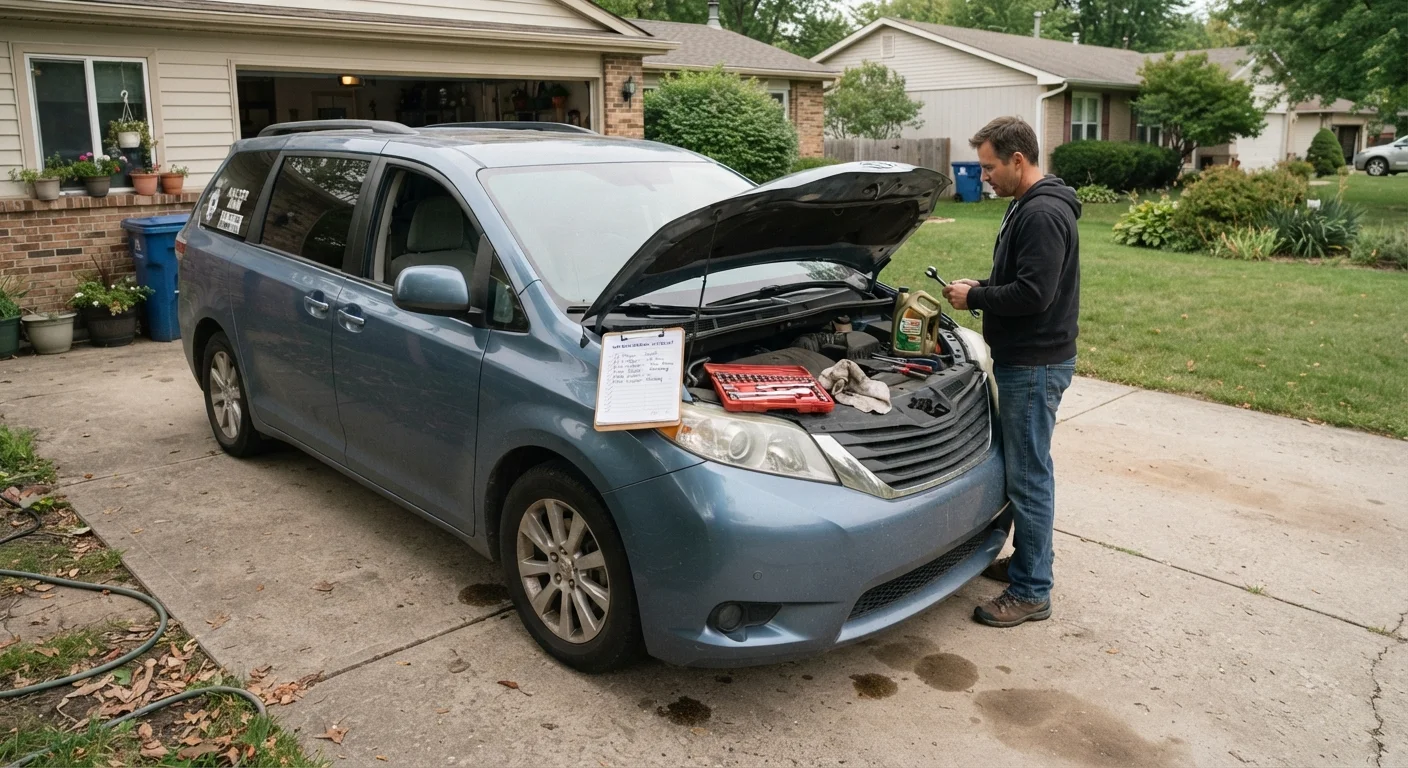
Why Routine Tasks Keep Getting Pushed Back
For most families, the car gets attention when something breaks or when a warning light appears. The rest of the time, it runs - and that's exactly the problem. The maintenance tasks that prevent the biggest repair bills are also the ones with no obvious countdown clock. There's no blinking alert for degraded brake fluid, no smell of a clogged cabin filter, no sound of a coolant system quietly corroding from the inside.
The result is predictable: small, inexpensive services get delayed until a much larger, more disruptive repair lands on the household budget at the worst possible moment. The good news is that understanding which tasks carry the most financial risk when skipped - and why - is enough to change the habit. See our family car maintenance schedule guide for a full breakdown of service intervals by mileage.
$1,200+
Average unexpected car repair bill for US families
Industry repair data consistently shows that unplanned mechanical failures cost households significantly more than scheduled maintenance services would have.
3-5x
Cost multiplier when minor issues become major repairs
Automotive service data suggests that components like blower motors, brake calipers, and radiators can cost three to five times more to replace than the consumable service that could have protected them.
35%
Of vehicles have significantly under-inflated tires
According to the National Highway Traffic Safety Administration, a large share of vehicles on US roads have at least one significantly under-inflated tire, contributing to premature wear and reduced fuel economy.
The Maintenance Mistakes Families Make Most Often
The following errors aren't the result of carelessness - they happen because the consequences are delayed and the tasks are invisible. Each one follows the same pattern: a low-cost service skipped, a high-cost repair eventually required.
Putting off coolant (antifreeze) flushes indefinitely.
Why it happens: Coolant doesn't visibly disappear the way oil does, and most drivers never see it unless there's a leak. Without an obvious cue, the flush interval - typically every 30,000 to 50,000 miles depending on vehicle type - goes unnoticed.
Skipping cabin air filter replacements.
Why it happens: The cabin air filter is out of sight behind the glove box or under the dashboard, so families rarely think about it. Most manufacturers recommend replacement every 15,000 to 25,000 miles, but this often gets overlooked entirely.
Delaying brake fluid changes past the service interval.
Why it happens: Brake fluid is a closed system, so it doesn't appear to go anywhere. Many drivers don't know it absorbs moisture over time, lowering its boiling point and reducing braking effectiveness - a process that happens silently.
Ignoring transmission fluid service until shifting problems appear.
Why it happens: Many newer vehicles have a 'lifetime fluid' label on the transmission, which drivers interpret as no maintenance needed. In practice, transmission fluid degrades from heat and use, and problems often appear only after internal damage has begun.
Skipping tire rotations and alignment checks.
Why it happens: Uneven tire wear develops slowly, and families often don't notice until tires are badly worn on one side. Rotations feel easy to push back when nothing seems wrong.
Neglecting the engine air filter until power loss is noticeable.
Why it happens: Like the cabin filter, the engine air filter is hidden and has no dedicated warning light. Drivers tend to replace it only when a mechanic flags it during another service, which can mean years between changes.
For a closer look at how small components like cabin filters compound into bigger problems, see our guide to the small stuff that adds up. And if you're weighing which of these tasks to handle yourself versus at a shop, this breakdown of DIY vs. professional service can help you decide.
Coolant Neglect Can Total an Engine
Degraded coolant loses its ability to prevent corrosion and regulate temperature. Over time, this can lead to overheating, a blown head gasket, or internal engine damage - repairs that often cost more than the vehicle is worth. Coolant is inexpensive to flush and replace on schedule; engine replacement is not.
Building a System That Keeps You Ahead
The most effective way to avoid deferred maintenance isn't willpower - it's structure. A simple mileage-based service log, whether kept in a notes app or a paper folder in the glove box, makes the invisible visible. When you know your last coolant flush was at 45,000 miles and you're now at 74,000, the next step is obvious rather than uncertain.
Don't Rely on Warning Lights Alone
Many critical fluids and components degrade gradually without triggering any dashboard warning. Brake fluid, transmission fluid, and coolant can all be well past their service life before a light appears - or one never appears at all. Relying solely on warning lights is one of the most common and costly assumptions drivers make.
Budgeting for maintenance as a fixed monthly expense - rather than treating it as an occasional surprise - also removes the financial shock that leads families to postpone services. Our article on keeping repair costs predictable on a family budget walks through practical approaches to doing exactly that. The same discipline applies across household ownership: deferred home maintenance follows the same pattern, with small neglected tasks compounding into expensive damage over time.
Consistent, scheduled maintenance is one of the clearest ways a family can turn an unpredictable car ownership experience into a manageable, budgetable one.
The content provided on our blog site traverses numerous categories, offering readers valuable and practical information. Readers can use the editorial team’s research and data to gain more insights into their topics of interest. However, they are requested not to treat the articles as conclusive. The website team cannot be held responsible for differences in data or inaccuracies found across other platforms. Please also note that the site might also miss out on various schemes and offers available that the readers may find more beneficial than the ones we cover.