

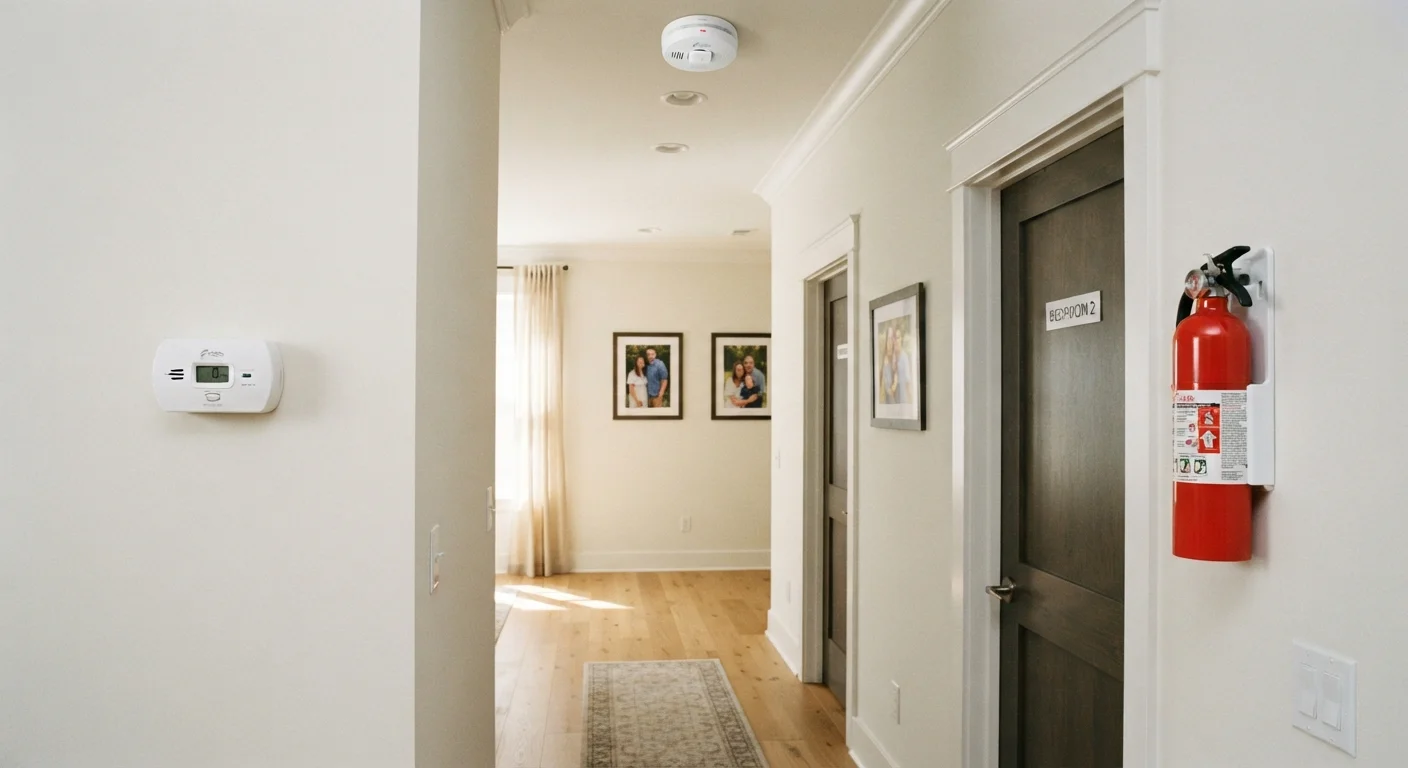
Why These Three Devices Work as a System
Smoke detectors, carbon monoxide (CO) alarms, and fire extinguishers each protect against a distinct threat - and none of them can substitute for the others. A smoke detector gives early warning of a fire but cannot detect odorless CO gas. A CO alarm catches a dangerous buildup from fuel-burning appliances but won't warn you of flames. A fire extinguisher lets you suppress a small, contained fire before it spreads - but only if you've already been alerted in time. Together, they form a layered safety net that buys your household the seconds and minutes that matter most.
Many families treat these devices as one-time purchases, installing them and forgetting them. In reality, each requires a regular maintenance routine to remain reliable. The good news: the time investment is small, the cost is modest, and the tasks are clearly within reach of any household. See our guide to DIY-friendly home maintenance for context on where these tasks fit among your broader responsibilities.
Placement: Where Each Device Belongs
Smoke Detectors
- Inside every bedroom and outside each sleeping area (hallways serving bedrooms).
- On every level of the home, including the basement.
- Mount on the ceiling or high on a wall (within 12 inches of the ceiling), away from cooking appliances to reduce nuisance alarms.
- Keep at least 10 feet from cooking appliances where possible.
Carbon Monoxide Alarms
- On every level of the home.
- Outside each sleeping area so occupants can hear the alarm while asleep.
- In rooms with fuel-burning appliances (furnace room, attached garage entry) - follow manufacturer guidance on exact distance from the appliance.
- CO is roughly the same weight as air, so mid-wall placement (about 5 feet high) or ceiling placement both work; check your device's instructions.
Fire Extinguishers
- At minimum, one in the kitchen - the most common origin point of home fires.
- One on each additional level of the home.
- Mount in a visible, accessible location near an exit path so you are never trapped reaching for it.
- Keep away from the stove itself; heat degrades the unit and a stovetop fire may block access.
Combination Devices and Local Code Requirements
Combination smoke/CO alarm units are widely available and can simplify installation in smaller homes or apartments. However, placement requirements for the two functions can differ slightly, so read the manufacturer instructions carefully. Local building codes and fire codes vary - some jurisdictions specify exact quantities, interconnection requirements, and locations. Check with your local fire marshal's office or building department for requirements that apply to your home, especially if you are doing a renovation or the home was built before modern code requirements were established.
Testing, Inspection, and Replacement Timelines
Smoke Detectors
- Test frequency
- Press the test button monthly. The alarm should sound within a few seconds.
- Battery replacement
- Replace batteries annually (or when the low-battery chirp sounds). Sealed 10-year-battery models exist and eliminate this step.
- Unit replacement
- Replace the entire detector every 10 years from the manufacture date printed on the back. Sensors degrade over time regardless of how the unit looks.
Carbon Monoxide Alarms
- Test frequency
- Test monthly using the test button.
- Battery replacement
- Same annual schedule as smoke detectors for battery-operated units.
- Unit replacement
- Most CO alarms have a lifespan of 5-7 years; check the manufacture date and the manufacturer's stated end-of-life. Many units will chirp a distinct pattern when they reach end-of-life - consult your manual to distinguish this from a low-battery signal.
Fire Extinguishers
- Monthly check
- Verify the pressure gauge needle is in the green (charged) zone, the pin and tamper seal are intact, and the unit shows no visible damage or corrosion.
- Annual inspection
- A qualified fire equipment service provider should inspect extinguishers annually and perform any required maintenance.
- Replacement or recharge
- After any discharge - even a brief one - the extinguisher must be recharged or replaced before it can be relied upon again. Most residential dry-chemical extinguishers should be replaced every 10-12 years, though some can be hydrostatically tested and recharged by a professional.
Keeping up with these timelines is one of the maintenance habits home inspectors most commonly find neglected. Our article on maintenance jobs inspectors flag most often covers additional items in the same category.
Using a Fire Extinguisher Safely: The PASS Method
A fire extinguisher is only useful if household members know how to operate it correctly. The widely taught PASS method covers the four steps:
- Pull the safety pin from the handle.
- Aim the nozzle at the base of the fire, not the flames.
- Squeeze the handle to discharge the agent.
- Sweep side to side at the base of the fire until it is out.
Equally important: know when not to use an extinguisher. If the fire has spread beyond a very small, contained area; if the room is filling with smoke; if you are unsure of the fire's source; or if your exit path is threatened - leave immediately, close doors behind you, and call emergency services from outside. No possession is worth risking your safety. The extinguisher is a tool for escaping a small fire, not fighting a large one.
If you are building out a full home maintenance checklist, these safety checks belong alongside the fundamentals covered in our first-time homeowner's orientation.
This article provides general home safety information for educational purposes only. Always follow the specific instructions provided by your device manufacturer, consult local fire codes and requirements, and contact your local fire department or a licensed professional for guidance specific to your home.
The content provided on our blog site traverses numerous categories, offering readers valuable and practical information. Readers can use the editorial team’s research and data to gain more insights into their topics of interest. However, they are requested not to treat the articles as conclusive. The website team cannot be held responsible for differences in data or inaccuracies found across other platforms. Please also note that the site might also miss out on various schemes and offers available that the readers may find more beneficial than the ones we cover.