

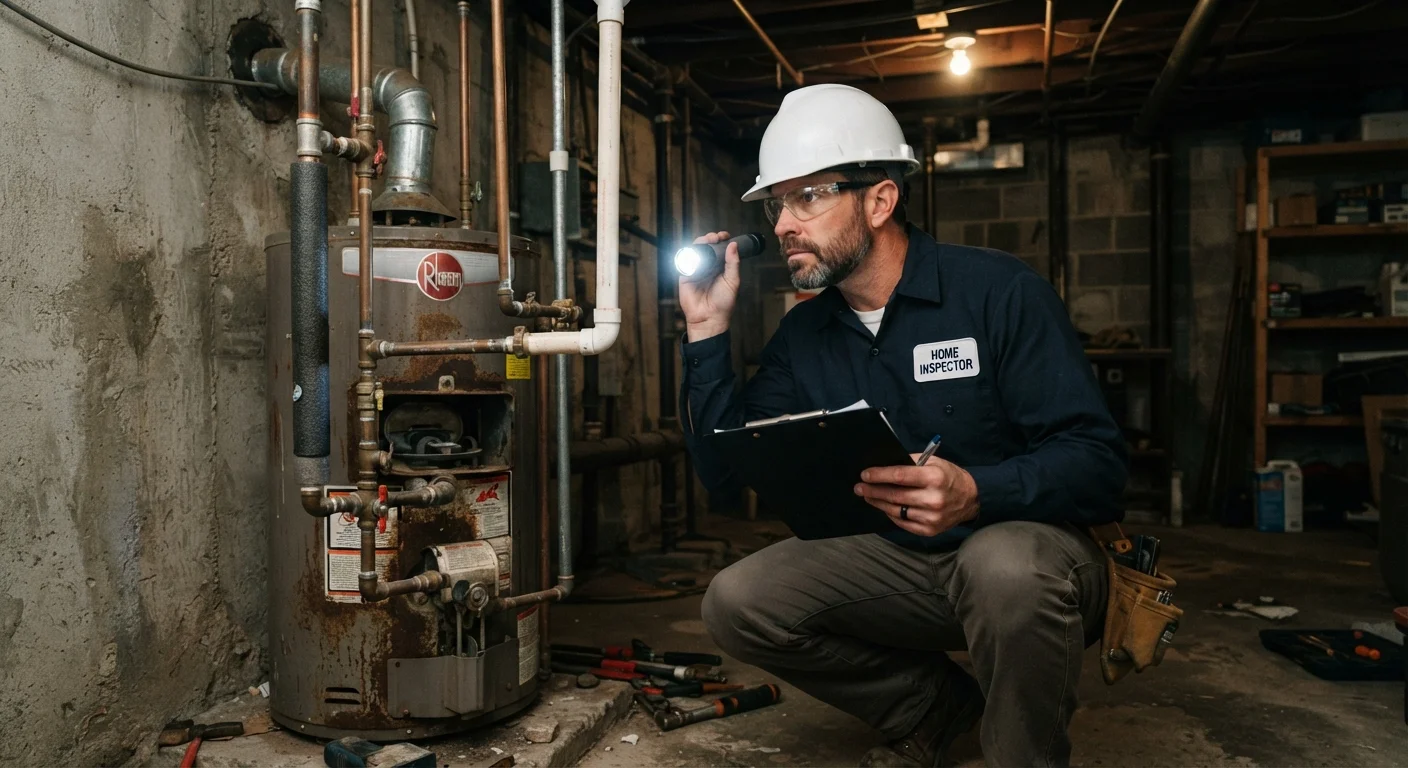
What Inspectors See That Homeowners Miss
A professional home inspection typically covers hundreds of checkpoints in a few hours. Yet inspection reports tend to cluster around a surprisingly consistent set of problems - not because homes are all built the same, but because the same maintenance tasks get quietly pushed aside year after year across households of every type and income level.
Understanding what inspectors flag most often gives you a practical checklist you can act on right now, whether you're preparing to sell, getting ready to buy, or simply trying to stay ahead of expensive surprises. As deferred maintenance compounds, what costs a few hundred dollars today can become a multi-thousand-dollar repair within a few seasons. The list below covers the issues inspectors see most reliably - and what you can do about each one.
Clogged or Damaged Gutters
Gutters have one job: move rainwater away from your foundation and siding. When they're blocked with leaves or pulling away from the fascia board (the board they attach to), water spills directly against your home's structure. Inspectors flag gutter problems at a high rate because the consequences - foundation seepage, rotted fascia, basement moisture - are serious and slow-building.
Check gutters twice a year, typically in late spring and late fall. Clear debris, flush with a garden hose, and look for sagging sections or gaps at the seams. Reattaching a loose gutter spike or installing a gutter guard is a straightforward DIY task for most homeowners; replacing rotted fascia is not.
Blocked gutters quietly direct water into your foundation - one of the costliest slow-developing problems inspectors see.
Inadequate Attic Ventilation and Insulation
Attics need a balanced flow of fresh air - typically through soffit vents at the eaves and ridge vents at the peak - to prevent heat and moisture buildup. Without it, summer heat accelerates shingle deterioration from below, and winter condensation promotes mold growth in the wood framing. Inspectors routinely find attics that are under-ventilated, under-insulated, or both.
Check that attic vents aren't blocked by insulation or debris. The U.S. Department of Energy recommends insulation levels that vary by climate zone - a licensed energy auditor can assess your home's current performance and identify cost-effective improvements. This is one area where professional assessment before DIY action makes sense, particularly if mold or structural moisture is present.
Poor attic ventilation damages shingles from below and breeds mold - a two-problem consequence from one neglected space.
Missing or Deteriorated Caulk and Weatherstripping
Caulk seals the joints where different building materials meet - around windows, doors, tubs, and penetrations through exterior walls. Weatherstripping fills the gaps around moving parts like door edges. Both degrade with UV exposure and temperature cycling, usually within five to ten years.
Inspectors flag failed caulk and weatherstripping because the gaps allow water infiltration, pest entry, and significant heat loss - all preventable with materials that cost a few dollars per linear foot. Removing old caulk, cleaning the surface, and applying a fresh bead of exterior-grade silicone or latex caulk is one of the most accessible and high-return DIY tasks in home maintenance.
Failed caulk around a single window frame can allow enough moisture intrusion to rot the surrounding framing over time.
Faulty Grading Around the Foundation
The soil immediately surrounding your home should slope away from the foundation - generally at least six inches of drop over the first ten feet. When soil settles flat or pitches inward toward the house, every rainstorm channels water directly against the foundation wall. This is one of the leading causes of basement moisture and eventual foundation cracking that inspectors cite.
Walk your perimeter after a heavy rain and look for pooling water near the house. Regrading typically involves adding and compacting soil to restore proper slope - a project most homeowners can handle with a shovel and a few yards of fill dirt, though larger grading work near structural elements warrants a landscaping or foundation professional.
Soil grading costs little to correct early and prevents some of the most expensive water damage a home can sustain.
Water Heater Neglect
Water heaters are expected to operate quietly in the background, so homeowners rarely interact with them between installation and failure. Inspectors consistently flag units that are beyond their useful service life (typically 8-12 years for tank-style units), showing signs of corrosion, improperly connected, or lacking a functioning temperature-pressure relief (TPR) valve - a safety device that prevents dangerous pressure buildup.
Annually flushing sediment from the tank, visually inspecting for rust or moisture around the base, and verifying that the TPR valve's discharge pipe terminates correctly are basic maintenance steps. Any work involving the gas supply line, venting, or the TPR valve itself should be performed by a licensed plumber.
A corroded or improperly vented water heater is both a safety hazard and a repair cost that regular inspection can prevent.
GFCI and AFCI Protection Gaps
Ground fault circuit interrupter (GFCI) outlets protect against electric shock in wet areas like bathrooms, kitchens, garages, and outdoor spaces by cutting power instantly when a ground fault is detected. Arc fault circuit interrupters (AFCIs) protect bedroom and living-area circuits against electrical fires caused by damaged wiring. Inspectors flag missing, non-functional, or improperly wired GFCI and AFCI protection in the majority of older homes.
Test existing GFCI outlets monthly using the built-in test button - if it doesn't trip and reset, the device needs replacement. Installing a GFCI outlet is within reach of a confident DIYer with the power off, but any work involving the panel, wiring runs, or AFCI breakers must be done by a licensed electrician. Verify local code requirements, as standards have evolved over multiple code cycles.
Non-functional GFCI outlets are among the most common electrical safety deficiencies inspectors document - and among the cheapest to fix.
Roof Flashing Failures
Flashing is the thin metal or rubberized material that seals the joints where your roof meets vertical surfaces - chimneys, skylights, vent pipes, and dormers. These transitions are the most vulnerable points on any roof, and flashing that is cracked, lifted, or poorly installed is a reliable path for water to enter the attic and ceiling structure. Inspectors note flashing deficiencies at a high rate, often in homes where the shingles themselves still look serviceable.
Biennial visual inspection from the ground using binoculars can reveal obvious gaps or lifted sections. Roof access for close inspection or repairs carries meaningful fall risk - this is work that generally warrants a licensed roofing contractor, both for safety and to avoid voiding any existing roof warranty.
Roof flashing failures cause water damage that looks like a roof problem but is actually a joint-sealing problem - and costs far less to fix early.
Building a Routine Before Problems Build Up
The common thread running through every item on this list is predictability. None of these failures are sudden or random - they develop gradually, on timelines that a consistent seasonal routine can intercept. A twice-yearly walkthrough of your home's exterior, roof, attic, and major systems takes a few hours and costs nothing beyond your time.
Make a Seasonal Checklist Your Default
Walk through each of the seven areas in this article at least once per year - fall is ideal since it follows summer stress and precedes winter moisture. A simple checklist stored in your phone takes less than two hours to complete and makes the difference between catching a $50 caulk failure and inheriting a $5,000 water damage repair. Consistency matters more than thoroughness on any single walkthrough.
If your home is new to you, the first-time homeowner's maintenance orientation is a strong starting point for building that routine from scratch. For safety devices specifically, confirm that your smoke detectors and CO alarms are correctly placed, tested regularly, and replaced on schedule - inspectors flag these more often than most homeowners expect. Treating your home's systems with the same consistency you'd apply to vehicle maintenance is one of the most cost-effective financial habits a household can build.
This article is for general informational and educational purposes only. Building codes, permit requirements, and safe work practices vary by location. For electrical, structural, gas, or other hazardous work, always consult a licensed professional and verify local requirements before proceeding.
The content provided on our blog site traverses numerous categories, offering readers valuable and practical information. Readers can use the editorial team’s research and data to gain more insights into their topics of interest. However, they are requested not to treat the articles as conclusive. The website team cannot be held responsible for differences in data or inaccuracies found across other platforms. Please also note that the site might also miss out on various schemes and offers available that the readers may find more beneficial than the ones we cover.