

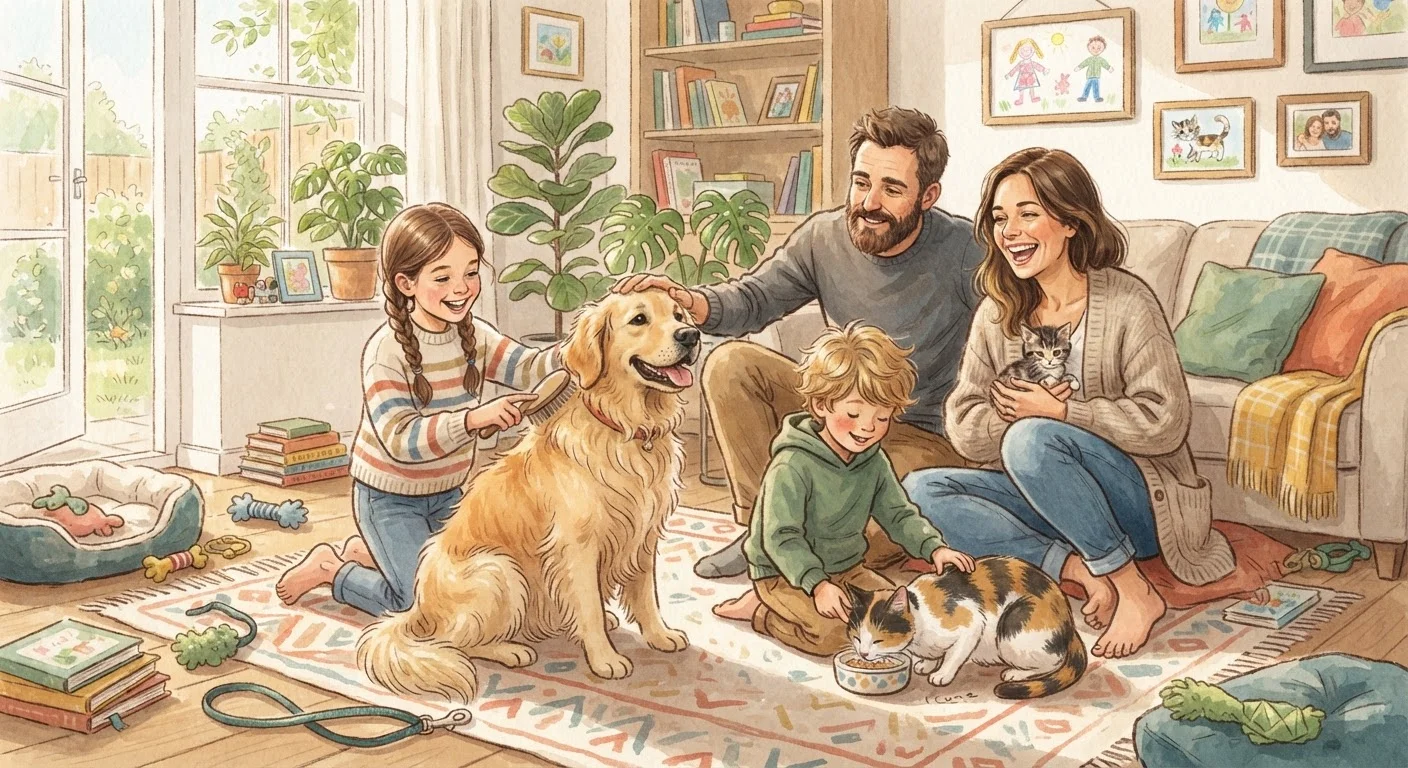
Why Developmental Stage Matters More Than Eagerness
Every child who begs for a puppy is convinced they'll handle all the feeding, the walks, and the vet visits. Parents know better - and that's not cynicism, it's developmental awareness. A child's ability to follow multi-step routines, regulate emotions around an animal, and remember recurring tasks all depend heavily on where they are cognitively and physically.
This guide breaks down pet care responsibilities by age range so you can assign tasks that genuinely build skill rather than set kids up to forget or feel overwhelmed. It complements the fuller picture in our complete family guide to raising kids and pets together.
| Youngest age for solo pet feeding | Around age 7-8, with consistent adult verification (General child development consensus) |
| Age range for first solo dog walks | 8-10+ depending on dog size and neighborhood safety (Pediatric and animal behavior guidance) |
| Key skill developed ages 5-7 | Routine-following and single-step task completion |
| Supervision required | All ages - level of oversight decreases gradually |
| Best first tasks for toddlers | Supervised food-pouring and gentle petting |
A note on supervision: No age range below removes adult oversight entirely. Consistent check-ins protect both the pet and the child's confidence.
Ages 2-4: Participation, Not Responsibility
Toddlers and young preschoolers are best thought of as helpers, not caregivers. Their role is exposure and gentle participation under close, hands-on adult supervision at all times.
- Appropriate tasks: Dropping food into a bowl while an adult holds it steady; pouring a measured cup of pet food with guidance; gently patting a calm, familiar animal; watching and naming what the pet does.
- What to avoid: Unsupervised contact, carrying a pet, reaching into enclosures, or handling feeding equipment independently.
The goal at this stage isn't reliability - it's building a foundation of gentle touch and basic empathy. For more on how this early exposure pays off, see how caring for animals supports children's learning.
Ages 5-7: Supervised Routines Begin
Early school-age children can begin taking on simple, repeated tasks - especially when tied to existing routines like meals or bedtime. They benefit from visual reminders (a chart on the fridge works well) and short, single-step instructions.
- Appropriate tasks: Refilling a water bowl daily; scooping dry food into a measured dish; helping brush a calm dog or cat with guidance; reminding a parent when it's time for a scheduled task; basic litter-box patrol (scooping with adult present).
- Still requires: An adult confirming the task was done correctly and that the pet's needs are fully met.
Children this age are also ready to begin learning body language basics - recognizing when a pet wants space versus attention. Teaching kids to interact safely with pets covers exactly this.
Developmentally appropriate
A task or expectation that matches a child's current cognitive, physical, and emotional abilities. Assigning age-appropriate responsibilities reduces frustration and builds genuine confidence.
Pet body language
The signals an animal uses to communicate comfort, stress, or fear - such as a dog's tucked tail or a cat's flattened ears. Teaching children to read these cues reduces the risk of bites or scratches.
Executive function
A set of mental skills including working memory, planning, and self-regulation that develop throughout childhood. Pet care routines can help strengthen these skills in school-age children.
Routine-based task
A recurring responsibility tied to a consistent time or trigger, such as feeding a pet each morning before school. Routine-based tasks are easier for younger children to remember and maintain.
Ages 8-11: Genuine Ownership of Tasks
Middle-childhood kids can reliably take on recurring pet care duties with periodic adult check-ins rather than constant supervision. They understand consequences - including what happens when a water bowl runs dry - and can problem-solve simple situations.
- Appropriate tasks: Full daily feeding on a schedule; freshening water; walking a manageable dog (in low-traffic areas, with an adult nearby); basic grooming like brushing; cleaning small enclosures (hamster cages, fish tanks with adult help for water chemistry); noting changes in pet behavior and reporting them.
- Stretch tasks with support: Researching a pet's nutritional needs; helping track vet appointment schedules; learning to read a pet's health signals.
This is an excellent age to introduce the concept of a pet's changing needs over time - something families can explore through our pet health lifecycle overview.
Ages 12 and Up: Shared Adult-Level Care
Adolescents can participate in nearly all aspects of pet care, including tasks that require planning, physical strength, or decision-making. The primary adult responsibility shifts to modeling good judgment and remaining available for guidance.
- Appropriate tasks: Full feeding and watering routines independently; solo dog walks in familiar, safe areas; recognizing early signs of illness and flagging them to a parent; cleaning larger enclosures; basic first-aid awareness (knowing what to do while calling a vet); helping research dietary or enrichment needs.
- Emerging skills: Scheduling and participating in vet visits; budgeting for pet supplies; researching what traits make a pet a good fit - see what makes a pet truly kid-friendly for that conversation starter.
The deeper value here isn't just pet care - it's executive function, empathy, and long-term thinking, all developed through genuine responsibility.
This article provides general developmental guidance and is not a substitute for advice from a pediatrician, child development specialist, or veterinarian familiar with your family's specific situation.
The content provided on our blog site traverses numerous categories, offering readers valuable and practical information. Readers can use the editorial team’s research and data to gain more insights into their topics of interest. However, they are requested not to treat the articles as conclusive. The website team cannot be held responsible for differences in data or inaccuracies found across other platforms. Please also note that the site might also miss out on various schemes and offers available that the readers may find more beneficial than the ones we cover.