

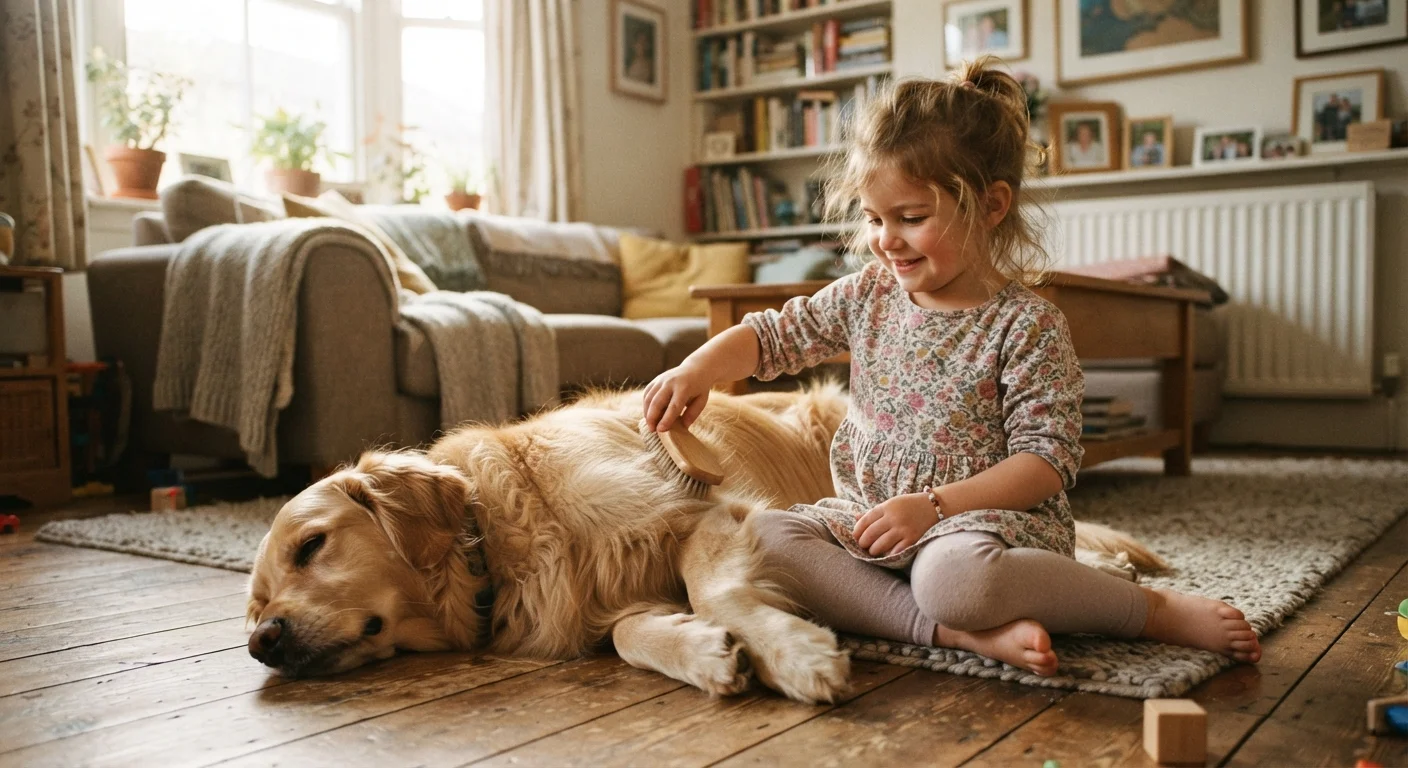
Why Pets Are Quiet, Powerful Teachers
There's a reason so many families describe getting a pet as a turning point - not just emotionally, but in how their children engage with the world. Animals don't lecture. They don't offer gold stars. But they create an environment of immediate, honest feedback that children respond to in ways that traditional instruction sometimes can't replicate.
When a child forgets to feed the rabbit, the rabbit is hungry. When a child approaches a nervous cat too loudly, the cat retreats. These natural consequences - gentle and low-stakes - make abstract lessons like empathy and cause-and-effect concrete and memorable. The pet becomes an everyday teacher that families didn't have to sign up for a curriculum to access.
This dynamic is especially valuable because it meets children where they are developmentally. A six-year-old learning to fill a water bowl is practicing measurement and routine. A ten-year-old researching why their guinea pig isn't eating is applying scientific inquiry. The skill-building scales with the child.
7 in 10
US households with at least one pet
According to the American Pet Products Association's National Pet Owners Survey, the majority of American families share their homes with an animal.
~12%
Improvement in reading fluency in animal-assisted programs
Studies on structured animal-assisted reading interventions, such as the R.E.A.D. program, have reported meaningful gains in children's oral reading skills compared to control groups.
Higher
Empathy scores in children with pets
A study published in the journal Anthrozoös found that children who lived with pets scored measurably higher on empathy assessments than those without companion animals at home.
Responsibility and Routine: The Foundation
Consistent pet care is one of the most effective responsibility-building tools available to families - and it works because the stakes feel real to children. Pets depend on their caregivers, and kids feel that dependency in a visceral way they don't always feel when it comes to homework or household chores.
Establishing a feeding schedule, tracking grooming appointments, or remembering to clean a tank gives children ownership of a living system. Over time, this ownership transfers to self-regulation in other areas. Research in child development broadly supports the idea that competence in one area of responsibility tends to build confidence across others.
For families wondering how to structure this, our age-by-age guide to pet responsibilities for children breaks down exactly what tasks are developmentally appropriate at each stage - from toddlers to teens.
Turn Chores Into Conversations
When you do pet care tasks alongside your child, narrate what you're both observing and doing. Ask open questions - «Why do you think she does that?» or «What do you think will happen if we try this?» - to turn routine moments into learning conversations. This guided approach is what transforms a task into a skill.
Empathy, Emotional Intelligence, and the Animal Bond
Perhaps the most profound thing pets teach children is how to read someone who can't use words. Learning to notice when a dog is anxious, when a cat wants space, or when a bird seems unwell requires careful observation and perspective-taking - exactly the skills that underpin empathy.
Children who practice recognizing and responding to an animal's emotional cues tend to develop stronger emotional literacy overall. They become more attuned to nonverbal signals in human relationships too. This is particularly meaningful for children who struggle with social nuance or emotional regulation.
Teaching safe, respectful interaction from the start is essential to making this dynamic work. Our guide on teaching kids to interact safely with pets walks families through age-appropriate boundaries and body language recognition so that both the child and the animal feel comfortable and safe.
Reading, Curiosity, and Learning That Doesn't Feel Like Learning
One of the more surprising findings in human-animal interaction research is the impact pets can have on literacy. Children who read aloud to calm, non-judgmental animals - a practice used in structured programs like Reading Education Assistance Dogs (R.E.A.D.) - often show improvements in fluency and confidence. The animal doesn't interrupt, correct, or judge, removing the performance anxiety that makes some children reluctant readers.
Beyond literacy, pets spark genuine scientific curiosity. A child wondering why their fish blows bubbles, what a hamster's pouches are for, or how a dog's nose works is practicing inquiry-based learning. Parents can channel this natural curiosity into research projects, nature journals, or trips to the library - extending the learning without it ever feeling like school. Reading aloud past kindergarten is another way families can layer these habits together.
Making the Most of the Pet-Learning Connection
The benefits described here don't happen automatically - they're most consistent when adults actively shape the experience. That means narrating what's happening («notice how she's flattening her ears - she might be nervous»), inviting questions, and framing pet care as something the whole family values together.
Families who are still weighing whether to bring a pet home will find honest guidance in our overview of the real pros and cons of getting a dog when your kids are young, and our broader kid-friendly pets hub covers options well beyond dogs. For families already sharing a home with animals, the complete guide to raising kids and pets together offers end-to-end support from choosing a first pet to navigating loss.
The pet-learning connection isn't a program to enroll in. It's already happening in your home - the question is simply how intentionally you engage with it.
Frequently Asked Questions
Even toddlers can participate in simple tasks like refilling a water bowl with supervision. Responsibilities should grow with the child's developmental stage. For a detailed breakdown, see our <a href="/pets-kids/kid-friendly-pets/age-by-age-guide-to-pet-responsibilities-for-children">age-by-age guide to pet responsibilities</a>.
Smaller pets - fish, hamsters, guinea pigs, and birds - offer real learning opportunities around observation, routine, and empathy. The key is consistent, guided involvement rather than the species itself. Our guide on <a href="/pets-kids/kid-friendly-pets/what-makes-a-pet-truly-kid-friendly-the-traits-that-actually-matter">what makes a pet truly kid-friendly</a> can help families choose wisely.
Yes - several school-based animal-assisted reading programs have documented improvements in reading fluency and confidence when children read aloud to calm, non-judgmental animals. The pet doesn't evaluate mistakes, which reduces performance anxiety and encourages kids to keep practicing.
Assign age-appropriate tasks, keep expectations clear, and treat pet care as a shared family value rather than a punishment or chore. Celebrating consistent effort - rather than perfection - keeps kids motivated and engaged.
This is common and normal, especially in younger children whose attention and developmental capacity shift quickly. Adults should plan to remain primary caregivers and treat children's participation as a bonus rather than a given, stepping in without shame when needed.
The content provided on our blog site traverses numerous categories, offering readers valuable and practical information. Readers can use the editorial team’s research and data to gain more insights into their topics of interest. However, they are requested not to treat the articles as conclusive. The website team cannot be held responsible for differences in data or inaccuracies found across other platforms. Please also note that the site might also miss out on various schemes and offers available that the readers may find more beneficial than the ones we cover.