

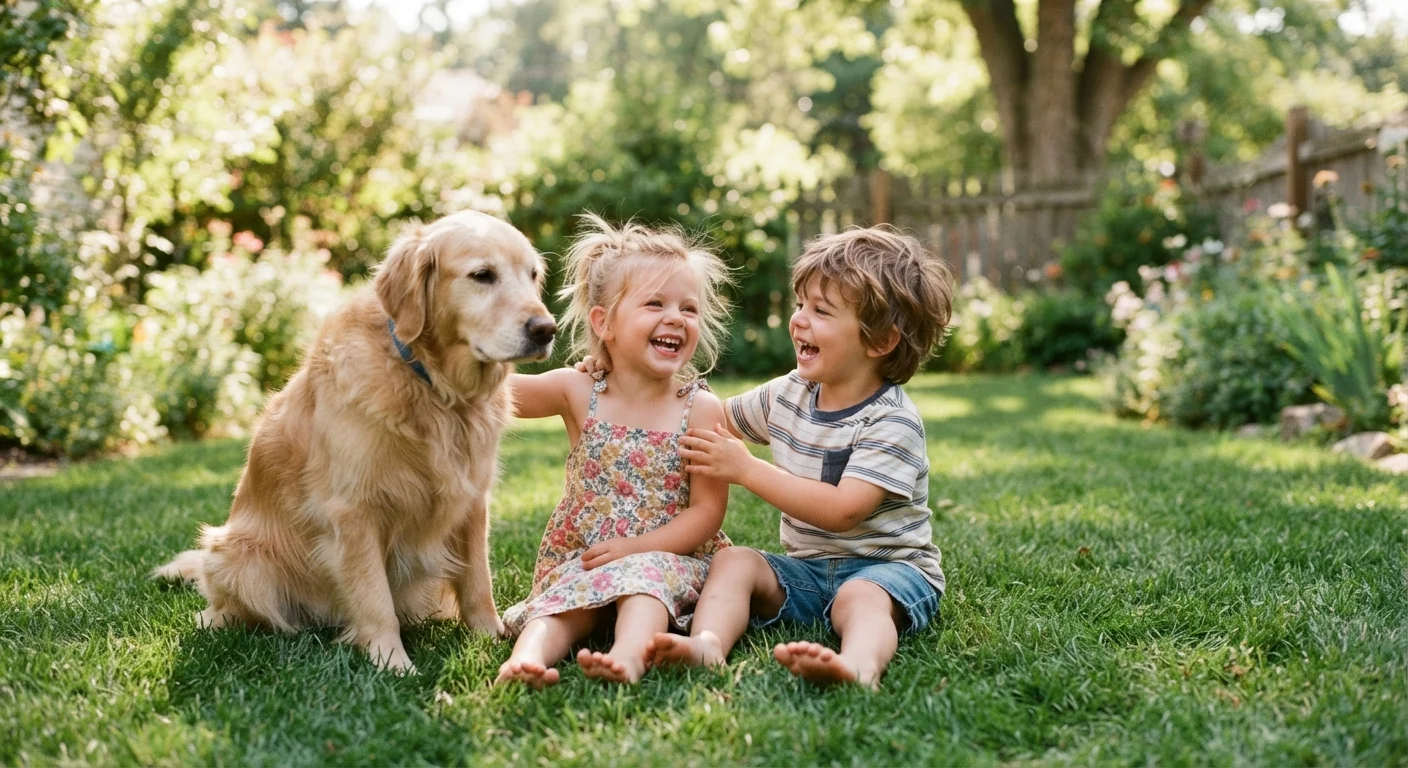
Why 'Kid-Friendly' Is About More Than Species
When families start searching for a pet, the conversation often starts with species: dogs, cats, rabbits, fish. But the label "kid-friendly" is frequently applied at the species level when it actually lives at the individual level. A calm, well-socialized rescue dog may be a far better match for a family with a four-year-old than an anxious, under-socialized puppy of the same breed.
The traits that genuinely predict a safe and happy pet-child relationship span temperament, energy level, stress tolerance, and socialization history. Understanding each of these - rather than relying on broad generalizations - gives families a much clearer picture of what they're actually looking for.
For a broader look at how pets support children's development beyond companionship, see how caring for animals supports children's learning.
~4.5M
Dog bites reported annually in the US
According to the American Veterinary Medical Association, children are disproportionately represented among dog bite victims - underscoring why temperament assessment and supervision matter before any pet joins a family.
77%
Of dog bites involve familiar dogs
The AVMA reports that the majority of bites happen with dogs the child or family already knows, highlighting that ongoing supervision and teaching safe interaction habits are essential even with trusted pets.
Early weeks
Critical socialization window for dogs
Veterinary behaviorists generally identify the period between roughly 3 and 12-14 weeks as the primary socialization window for dogs - when positive exposure to children and varied environments has the greatest lasting impact on adult temperament.
Temperament: The Most Important Trait
Temperament refers to an animal's baseline emotional and behavioral tendencies - how it responds to novelty, stress, and social interaction. For families with children, the most relevant temperamental qualities are tolerance for unpredictability, low reactive aggression, and a tendency to seek rather than avoid human contact.
Children are inherently unpredictable: they move suddenly, make loud sounds, and don't always read an animal's cues before touching. A pet with a resilient, adaptable temperament will typically recover from these moments without escalating. An animal that is easily startled, prone to guarding behavior, or quick to escalate when stressed represents a greater risk, regardless of how it looks on paper.
Temperament is partly genetic but is also meaningfully shaped by early experience - which is why socialization history matters so much when evaluating any individual animal.
Socialization History and Why It Shapes Behavior
Socialization - exposure to a wide variety of people, sounds, environments, and situations during an animal's early developmental window - is one of the strongest predictors of how adaptable it will be as an adult. Animals that experienced limited or negative early socialization may react with fear or defensiveness to the kinds of stimuli children naturally produce.
When evaluating a pet, it's worth asking: Was this animal raised around children? Has it been exposed to loud noises, sudden movements, and busy households? For rescue animals, what is known about their history? These questions aren't just helpful - they're essential to making a well-informed decision.
Families interested in understanding the safety dynamics more deeply may find it useful to read about common safety myths and facts about pets and young children.
Ask Before You Adopt
When visiting a shelter or breeder, ask specifically whether the animal has lived with or been regularly exposed to children of similar ages to yours. Request information about any known triggers, fears, or behavioral patterns. A few direct questions upfront can prevent a poor match that's stressful for both the pet and your family.
Energy Level, Space, and Household Fit
A pet's energy level needs to align with both the household's lifestyle and the children's ages. A high-energy dog in a small apartment with toddlers can become frustrated and hard to manage. Conversely, a low-energy, easily stressed animal in a chaotic, busy home may develop anxiety-related behaviors over time.
Consider your realistic daily routine - not your best-case scenario. How much time is genuinely available for exercise, play, and interaction? Younger children also tend to be noisier and less predictable, so pets that tolerate higher arousal environments are generally a better fit for families with children under six.
Once you've thought through temperament and energy fit, comparing specific animal types becomes much more useful. Our guide to matching pet type to your family's lifestyle walks through how common family pets differ in care demands and compatibility.
Supervision and Teaching Kids How to Interact
Even the gentlest, best-socialized pet can be pushed beyond its tolerance by a well-meaning child who hasn't learned safe interaction skills. Supervision isn't a substitute for teaching - and teaching isn't a substitute for supervision, particularly with children under six.
Children should learn early that animals communicate through body language, not words. A cat that retreats under a bed is asking for space. A dog that turns its head away or yawns during handling may be signaling discomfort. Understanding these signals - and respecting them - protects both the child and the animal.
For practical, age-appropriate guidance on building this foundation, see our resource on teaching kids to interact safely with pets. And if you're weighing pets that can grow alongside your children for years, long-lived animals worth considering is a helpful starting point.
This article is for general informational purposes only. For guidance specific to your family's situation - including any health or safety concerns - consult a qualified veterinarian or certified animal behaviorist.
Frequently Asked Questions
No. Breed can offer general tendencies, but individual temperament, socialization, and training history are stronger predictors of behavior with children. Two dogs of the same breed can respond very differently to a toddler's noise and movement. Meeting and observing a specific animal before adoption is always advisable.
Most experts suggest that children under 6 should always have adult supervision around pets. Older children can take on more interaction independently once they've demonstrated reliable knowledge of safe handling and animal body language. Our <a href="/pets-kids/kid-friendly-pets/age-by-age-guide-to-pet-responsibilities-for-children">age-by-age guide to pet responsibilities</a> breaks this down by developmental stage.
Not necessarily. Small animals can be easily injured by rough handling, and some are prone to stress-related biting when startled. They can be wonderful pets for the right family, but they still require adult guidance on how children interact with them.
Size affects physical risk - a large dog can accidentally knock over a small child - but gentleness is a matter of temperament, not dimensions. Some large breeds are notably calm around children, while some small animals can be easily stressed and reactive.
Very important. Animals raised around children, diverse sounds, and unpredictable movement are generally more adaptable than those with limited early exposure. When adopting, asking about an animal's socialization history and any known behavioral triggers is a key step.
Often yes, with patient and structured introduction. Gradual exposure, consistent routines, and guidance from a qualified trainer or veterinary behaviorist can help many pets adapt. However, some animals with trauma histories or strong reactivity may not be a safe fit, and that assessment should be made honestly.
The content provided on our blog site traverses numerous categories, offering readers valuable and practical information. Readers can use the editorial team’s research and data to gain more insights into their topics of interest. However, they are requested not to treat the articles as conclusive. The website team cannot be held responsible for differences in data or inaccuracies found across other platforms. Please also note that the site might also miss out on various schemes and offers available that the readers may find more beneficial than the ones we cover.