

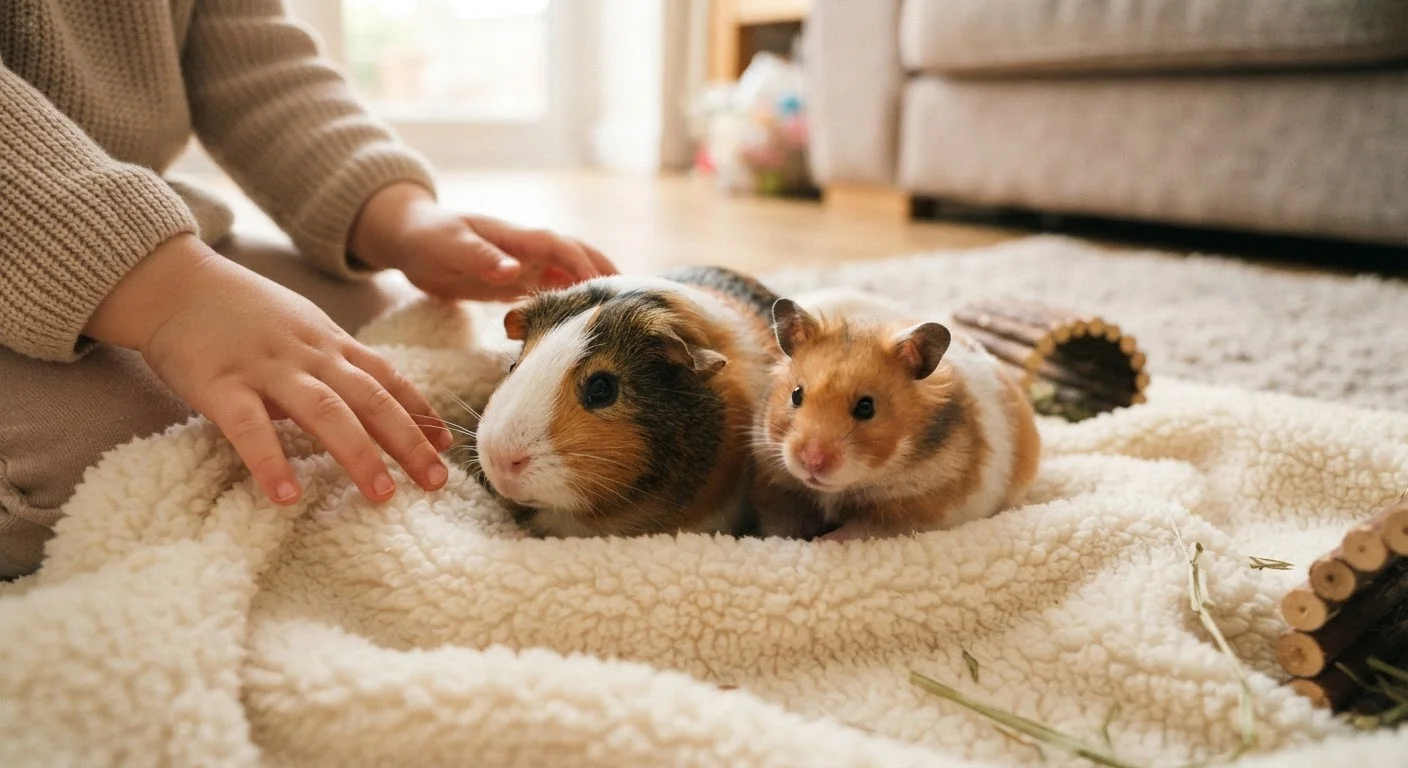
Option A
Guinea Pig
The sociable, daytime companion.
Best for: Families with young children who want an interactive, handleable pet that is active during the day.
Option B
Hamster
The compact, independent night owl.
Best for: Older children or families who appreciate a lower-maintenance small pet and can work around nocturnal habits.
Temperament and Handling: The Biggest Difference for Kids
When families picture a child scooping up a small furry animal and carrying it around safely, they're usually imagining a guinea pig - and for good reason. Guinea pigs are naturally social herd animals. They have been selectively bred for docility over centuries, which means most individuals tolerate - and even enjoy - calm handling once they are comfortable with their environment. They rarely bite unprovoked, and their stocky build makes them easier for small hands to hold securely.
Hamsters tell a very different story. As nocturnal animals, hamsters spend most of the day in deep sleep. Waking them abruptly - which children inevitably do - triggers a defensive stress response. A startled hamster will bite, and its small size means it can twist quickly in a child's grip. This isn't a character flaw; it's normal hamster biology. But it does make hamsters a genuinely poor match for young or impulsive children.
Understanding what makes any small animal truly kid-friendly goes beyond cuteness. Learn which animal traits genuinely predict a safe, happy fit with young children before making a decision.
| Criterion | Guinea Pig | Hamster |
|---|---|---|
| Activity schedule | Diurnal (daytime active) | Nocturnal (nighttime active) |
| Bite risk with kids | Low when handled calmly | Higher, especially if disturbed |
| Social needs | Needs a companion (pair minimum) | Solitary; prefers to live alone |
| Typical lifespan | 5-7 years | 2-3 years |
| Space requirement | Larger enclosure for a pair | Smaller footprint for one |
| Best age of child | 5 and up with supervision | 10 and up recommended |
| Expressiveness | Highly vocal and communicative | Quieter, less interactive |
Sleep Schedules, Social Needs, and Daily Life
A guinea pig's diurnal (daytime-active) schedule aligns naturally with a family's rhythm. Kids come home from school, the guinea pig is awake and curious. Guinea pigs also communicate clearly - their wheeking, purring, and popcorning (happy jumping) give children immediate feedback that builds connection and empathy.
One important caveat: guinea pigs are highly social and can develop serious stress and depression when housed alone. Veterinary and animal welfare organizations generally recommend keeping at least two guinea pigs together. That means doubling most care costs and space requirements, which is worth factoring into any decision.
Hamsters, by contrast, are solitary by nature and can be territorial with other hamsters. One animal, one habitat - that simplicity is appealing. But a hamster truly comes alive after dusk, which means a child who wants to watch or interact with their pet during after-school hours will mostly see a sleeping lump. Evening interaction is possible for older kids, but for younger children, the mismatch in schedules often leads to disappointment or - worse - persistent disruption of the hamster's sleep.
5-7 yrs
Average guinea pig lifespan
Guinea pigs live significantly longer than hamsters, making them a multi-year family commitment that can parallel a child's early school years.
2-3 yrs
Average hamster lifespan
The shorter lifespan means hamsters are often a child's first experience with pet loss - something families should be prepared to navigate thoughtfully.
2+
Recommended guinea pigs per household
Animal welfare organizations broadly advise keeping guinea pigs in pairs or small groups to prevent loneliness and associated stress behaviors.
For a broader look at how small mammals compare to other family pet categories, see this guide to matching pet type to your family's lifestyle.
Care Demands, Health, and What Parents Should Expect
Neither guinea pigs nor hamsters are low-effort pets, despite their small size. Guinea pigs need a spacious enclosure (the minimum recommended floor space for a pair is substantially larger than most starter cages marketed for them), daily fresh vegetables, unlimited hay, and regular spot-cleaning. Their lifespan of five to seven years means a longer commitment - meaningful for families thinking through the arc of pet ownership.
Hamsters live two to three years on average. Their cages require enrichment like deep bedding for burrowing and a sufficiently large wheel (too-small wheels cause spinal problems). Both species benefit from annual veterinary checkups with an exotic-animal-savvy vet, and both can develop health conditions that require professional care.
This guide to health basics for small pets covers diet, housing standards, and warning signs every family should know before bringing either animal home.
Ultimately, the "easier" pet depends on what easy means to your household. A guinea pig pair demands more space and social interaction but offers more in return for children who want an engaged, expressive companion. A hamster demands less daily interaction but requires patience, respect for its schedule, and realistic expectations from younger kids.
This article is for general informational purposes only. For health concerns about your pet, always consult a licensed veterinarian with experience in small exotic mammals.
The content provided on our blog site traverses numerous categories, offering readers valuable and practical information. Readers can use the editorial team’s research and data to gain more insights into their topics of interest. However, they are requested not to treat the articles as conclusive. The website team cannot be held responsible for differences in data or inaccuracies found across other platforms. Please also note that the site might also miss out on various schemes and offers available that the readers may find more beneficial than the ones we cover.