

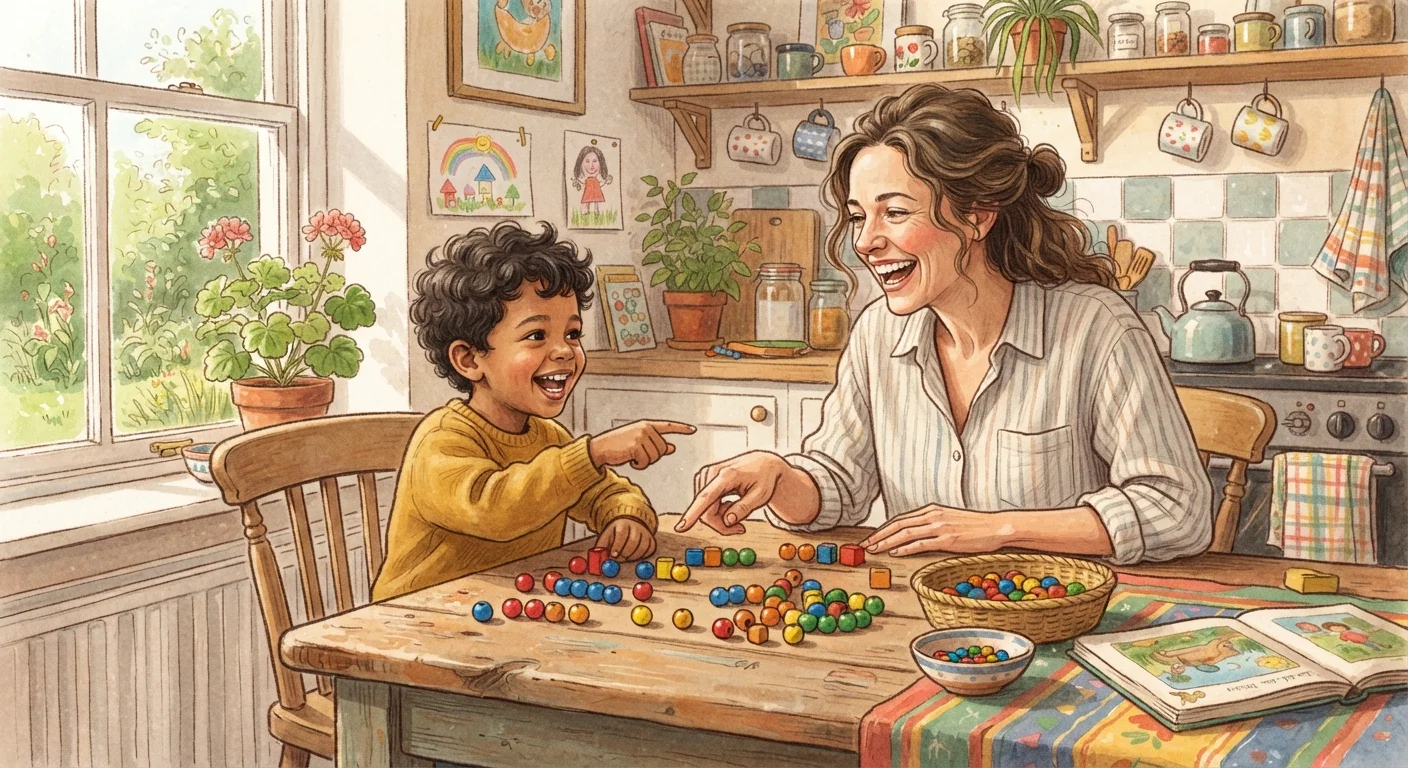
Why Parents Feel Stuck - and Why They Don't Need to Be
If you've ever stared at your child's math worksheet and quietly panicked, you're far from alone. Many parents feel genuinely under-qualified when it comes to supporting math at home - especially as methods have shifted since they were in school. But here's what research consistently shows: the single biggest factor in a child's math development at home isn't parental expertise. It's parental engagement.
That distinction matters. You don't need to re-learn long division or understand the new curriculum framework. What children benefit from most is a home environment where numbers feel normal, approachable, and even interesting. As our guide to what learning at home actually means explores, kids absorb knowledge through everyday family life far more than many parents realize.
Turn cooking and baking into math practice
Measuring ingredients, doubling a recipe, and timing multiple dishes all require real arithmetic. Because the context is concrete and purposeful, children engage more deeply than with abstract worksheet problems.
Use grocery shopping to build number sense
Comparing prices, estimating totals, and calculating change are practical math skills with immediate feedback. Shopping makes numbers meaningful in a way that a textbook rarely can.
Ask 'how did you figure that out?' instead of correcting immediately
When children explain their reasoning, they consolidate their own understanding. Jumping in with the right answer short-circuits that process and can quietly communicate that speed matters more than thinking.
Model a positive - or at least neutral - attitude toward math
Children absorb parental attitudes quickly. Research suggests that parents who express anxiety about math can unintentionally transmit that anxiety to their children, particularly when helping with homework.
Play games that involve counting, strategy, or probability
Board games, card games, and dice games build numerical fluency and logical thinking without any association with school pressure. Play naturally encourages repetition, which is how skills solidify.
Connect math to money management in age-appropriate ways
Giving children a small allowance or involving them in simple household budgeting decisions teaches arithmetic alongside financial thinking - skills that reinforce each other. You can explore practical family budgeting ideas at family budgeting resources for broader context.
Practical Approaches That Actually Work
The strategies below are designed for real family life - not tutoring sessions. Most can be slipped into routines you already have, and none require a whiteboard or lesson plan.
If you notice your child shutting down or becoming frustrated during these moments, it may be worth reading about signs a child is struggling to learn at home - avoidance and anxiety around numbers are patterns worth addressing early.
Creating a Home Where Math Feels Natural
Beyond specific activities, the broader home environment plays a real role in how children relate to numbers long-term. When parents speak openly about math - including their own mistakes and confusion - kids learn that struggle is a normal part of understanding, not evidence of failure.
Try thinking aloud when you're doing mental math in front of your child: estimating a grocery bill, splitting leftovers evenly, or timing a recipe. These small moments of visible thinking are more instructive than a formal explanation.
It's also worth being mindful about homework boundaries. There's a meaningful difference between guiding a child through their thinking and completing problems for them. Our article on when helping with homework becomes doing the homework outlines where that line sits and how to stay on the right side of it.
For families looking to take stock of their home learning setup more broadly, the parent's checklist for a strong home learning environment is a useful starting point. Small adjustments to routine and space can make a surprising difference in how confidently children approach independent work.
~40%
Parents reporting math anxiety when helping with homework
Studies in mathematics education have found that a significant proportion of parents experience discomfort with math when assisting their children, which can affect children's own attitudes.
2x
Impact of positive home math environment on number sense
Education researchers have noted that children in households where math is discussed naturally in everyday contexts tend to develop stronger early numeracy compared to those without that exposure.
Math confidence built at home doesn't just serve children in school - it shapes how they think about money, planning, and problem-solving for life. That's a return worth investing in, even in small daily doses.
This article is for general informational and educational purposes only. For concerns about a child's learning development, please consult a qualified educator or child development professional.
The content provided on our blog site traverses numerous categories, offering readers valuable and practical information. Readers can use the editorial team’s research and data to gain more insights into their topics of interest. However, they are requested not to treat the articles as conclusive. The website team cannot be held responsible for differences in data or inaccuracies found across other platforms. Please also note that the site might also miss out on various schemes and offers available that the readers may find more beneficial than the ones we cover.