

Our Verdict
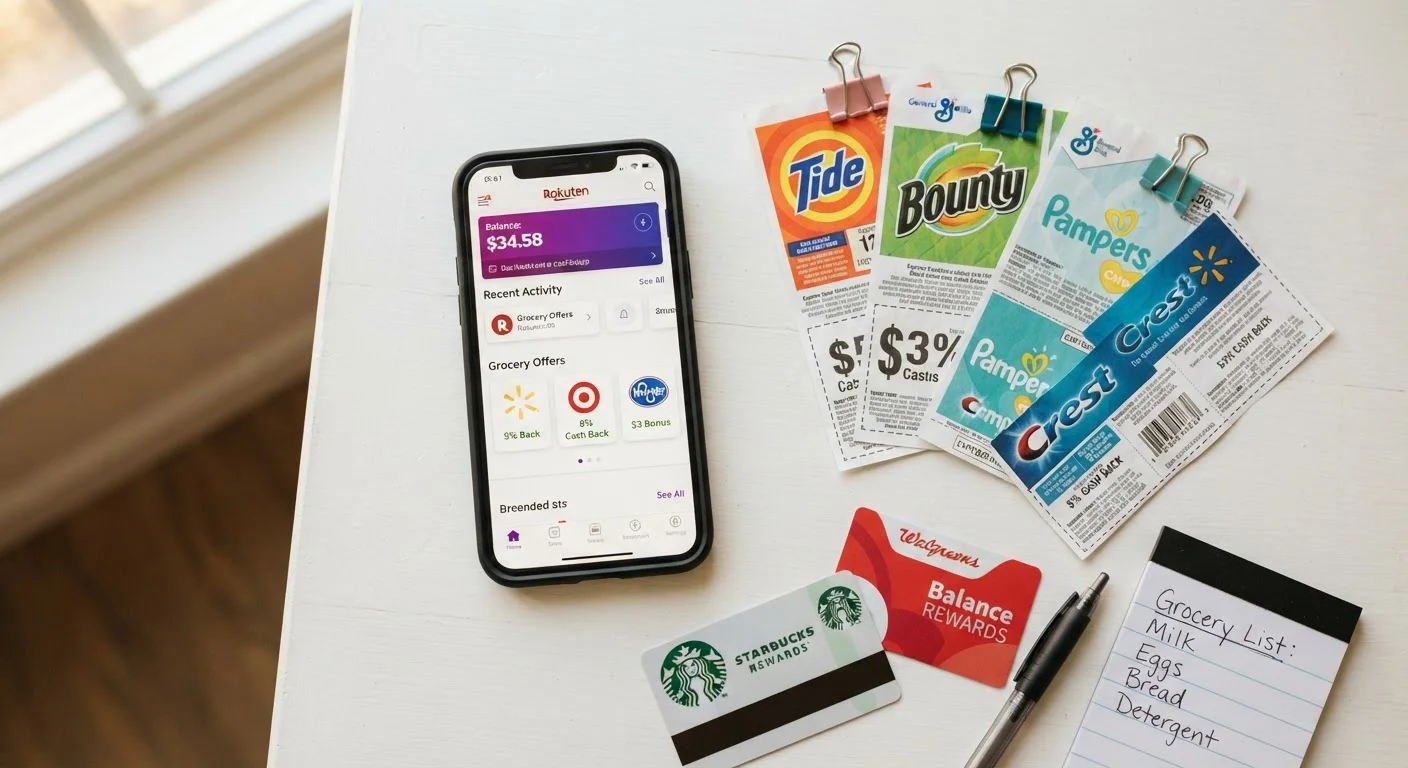
No single savings tool is universally superior - each works best in specific circumstances. Coupons deliver the clearest, most immediate value when you already planned to buy something. Cashback suits consistent, recurring purchases where you can reliably redeem rewards. Loyalty programs pay off most for shoppers who concentrate spending at one retailer or brand. The critical constant across all three: the savings are only real if they don't push you to spend more than you otherwise would.
| Best for | Recommended |
|---|---|
| Reducing the cost of a specific, planned purchase | Coupons |
| Earning real-money returns on routine household spending | Cashback |
| Families who shop consistently at the same retailers or travel with the same airline | Loyalty Points |
| Maximising savings on a single qualifying transaction | Stacking (coupon + cashback) |
How Cashback Actually Works
Cashback programs return a portion of your spending - typically 1% to 5% - back to you as real money, statement credits, or direct deposits. They operate through two main channels: credit cards that apply cashback automatically on qualifying categories, and third-party apps or browser extensions that activate rewards when you shop through their platform.
The key mechanic to understand is that cashback is paid by the retailer or card network, not taken from your account. Retailers fund these programs because they drive purchase volume. That's also why cashback rates vary by category - groceries, gas, and dining tend to earn higher rates because those categories see frequent, recurring spending.
Where cashback falls short: there's usually a redemption threshold before you can access the money, and it only has value if you're not carrying a credit card balance that generates interest charges. Interest costs will quickly cancel out any rewards earned. For a disciplined look at pairing savings tools with a broader financial plan, see how automated savings strategies work.
Cashback Only Pays If You Pay Off Your Balance
If you're earning 2% cashback on a credit card but carrying a balance at 20% APR, the math doesn't work in your favor. Cashback rewards make the most sense when the card balance is paid in full each month. If you're managing existing debt, prioritizing payoff is generally the more impactful financial move.
How Coupons Work - and Where Digital Has Changed the Rules
Coupons reduce the stated price of a product before or at the point of sale. Manufacturer coupons are issued by the brand and accepted at most retailers; store coupons are issued by the retailer and apply only at that store. Both can usually be used together, a practice called stacking.
Digital coupons have largely replaced paper clipping, but the mechanics differ in important ways. Digital coupons must typically be clipped or activated in an app before checkout. They can be retailer-specific, single-use, and subject to per-account limits. Some require a loyalty card scan to apply. The full mechanics of digital coupons are worth understanding before relying on them at checkout.
Coupons are the most transparent savings tool because the discount is visible before you commit to buying. The risk is purchasing something you wouldn't have bought otherwise - a $1.50 off coupon doesn't save money if you spent $4 on a product you didn't need.
| Cashback | Coupons | Loyalty Points | |
|---|---|---|---|
| When value is received | After spending, upon redemption | At point of purchase | After accumulation and redemption |
| Form of reward | Real money or statement credit | Direct price reduction | Points redeemable within program |
| Expiration risk | Varies by program; usually low | Fixed expiry date on coupon | High - often expire with inactivity |
| Flexibility of use | High - money is money | Low - product-specific | Low - ecosystem-restricted |
| Ease of valuation | Straightforward percentage | Exact dollar amount shown | Complex - varies by redemption |
| Overspending risk | Moderate - tied to card use | Moderate - drives unplanned buys | High - encourages brand concentration |
How Loyalty Points Work
Loyalty programs award points or credits based on dollars spent or transactions completed at a specific retailer, airline, hotel chain, or brand network. Points accumulate in an account and can be redeemed for discounts, free products, travel, or other perks - but only within that program's defined ecosystem.
The value of a loyalty point is rarely fixed. Retailers set their own redemption rates, and the per-point value often varies depending on how you redeem. Redeeming for gift cards may yield a different effective value than redeeming for merchandise or travel. Families interested in travel-specific programs can find a plain-language overview in our guide to understanding travel rewards programs.
Watch for expiration policies. Many programs cancel unredeemed points after 12 to 24 months of account inactivity. Points also carry no monetary guarantee - program terms can change, and retailers have reduced point values or restricted redemptions with little notice.
Loyalty Points Are Not a Guaranteed Asset
Loyalty points exist at the discretion of the issuing company. Program terms can change, point values can be devalued, and accounts can be closed for inactivity. Treat accumulated points as a bonus - not a savings account. Don't make purchasing decisions primarily to earn points you aren't certain you'll redeem.
Choosing the Right Tool for the Situation
Each savings mechanism serves a different purpose, and they're not mutually exclusive. The practical question is which tool fits the transaction in front of you - and whether using it keeps you on budget or nudges you off it.
Use coupons when you've already decided to buy a specific product and a discount exists for it. Use cashback for routine, necessary purchases - groceries, gas, utilities - where the spending would happen regardless. Use loyalty points when you already concentrate your spending at one retailer or travel provider and can realistically redeem before expiration.
Stacking - applying a coupon, then earning cashback through a portal, while accruing loyalty points - can work, but only when the underlying purchase was already planned. Stacking on an unplanned purchase is just organized overspending. This connects to a broader principle: savings tools work best when integrated into a household budget rather than used reactively. The complete guide to everyday savings covers how families structure this systematically.
This article is for general informational purposes only and does not constitute personalised financial advice. Consult a qualified financial professional for guidance specific to your situation.
The content provided on our blog site traverses numerous categories, offering readers valuable and practical information. Readers can use the editorial team’s research and data to gain more insights into their topics of interest. However, they are requested not to treat the articles as conclusive. The website team cannot be held responsible for differences in data or inaccuracies found across other platforms. Please also note that the site might also miss out on various schemes and offers available that the readers may find more beneficial than the ones we cover.