

The Six Fluids Every Car Depends On
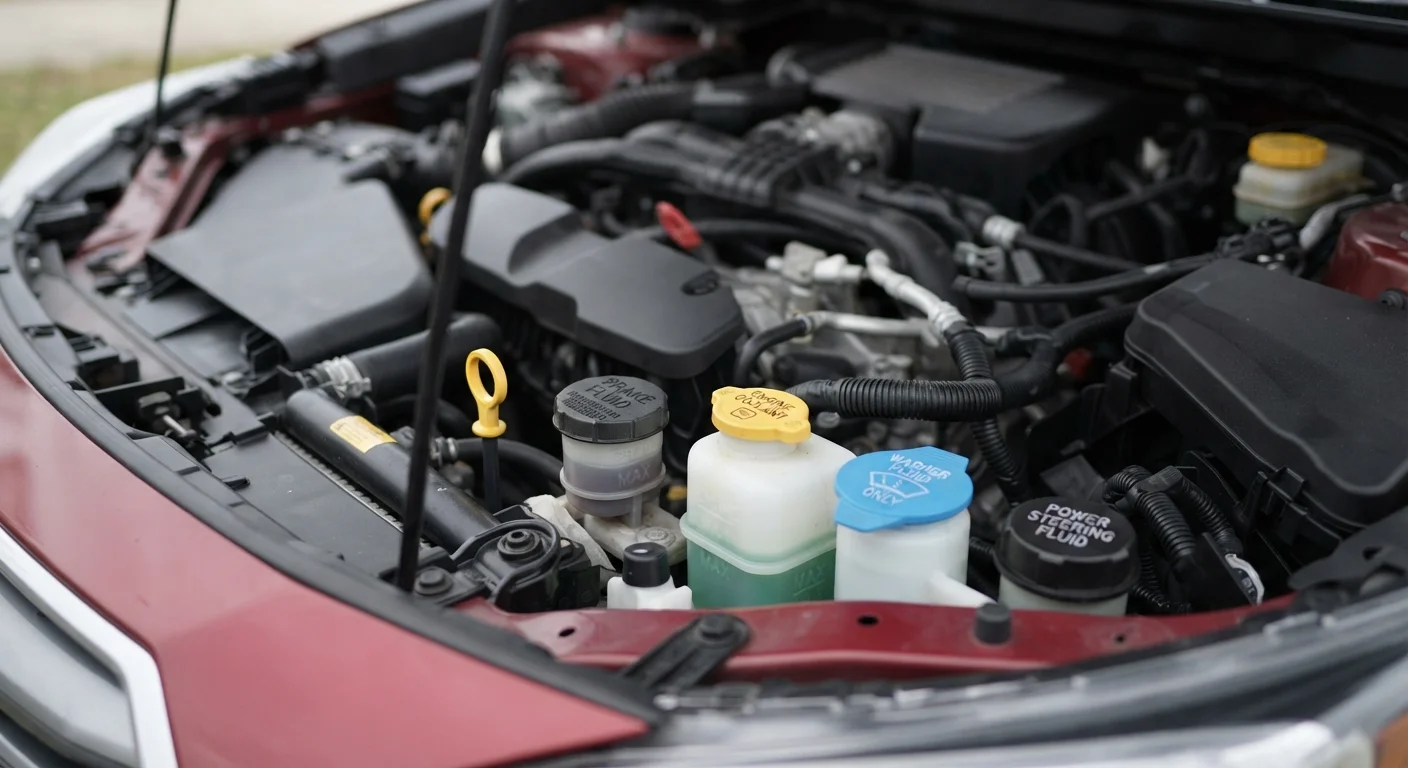
Your car relies on six primary fluids to keep its systems running safely and efficiently: engine oil, coolant, transmission fluid, brake fluid, power steering fluid, and windshield washer fluid. Each serves a distinct mechanical function - lubrication, heat management, hydraulic pressure, or visibility. When any one of them drops too low or degrades past its useful life, the consequences range from reduced performance to outright component failure.
Most of these fluids can be checked at home with nothing more than a clean rag and your eyes. Your family car's maintenance schedule should include regular fluid inspections - not just oil changes. Understanding what each fluid does is the first step toward catching problems before they turn expensive.
What Each Fluid Does - and What Happens When You Ignore It
Engine Oil lubricates moving metal parts and carries heat away from the engine. Low or dirty oil causes friction, accelerated wear, and eventually engine seizure - one of the most expensive failures a car can suffer. Check it monthly with the dipstick and change it per your manufacturer's interval.
Coolant (Antifreeze) regulates engine temperature, preventing both overheating in summer and freezing in winter. Neglecting it can warp cylinder heads, crack engine blocks, or trigger full engine failure. See the seasonal car care guide for temperature-specific advice.
Transmission Fluid lubricates gears and enables smooth shifting. Low or burnt fluid causes rough gear engagement, slipping, and - if ignored long enough - transmission replacement, which can cost thousands of dollars. Many drivers forget this fluid exists until the transmission starts to fail.
Brake Fluid is a hydraulic fluid that transfers force from your brake pedal to your brake calipers. It absorbs moisture over time, which lowers its boiling point and can cause brake fade or spongy pedal feel. This is a safety-critical fluid - never defer inspection if you notice changes in how your brakes feel.
Brake Fluid: Don't Delay on This One
Brake fluid is hygroscopic, meaning it actively pulls moisture from the air over time. As moisture content rises, the fluid's boiling point drops - which can cause brake fade during hard stops. Most manufacturers recommend inspection or replacement every two to three years, but your owner's manual has the definitive interval. If your brake pedal feels soft or lower than usual, have the system inspected by a qualified mechanic before driving.
Power Steering Fluid (on vehicles with hydraulic steering) keeps steering light and responsive. A low reservoir causes stiff, noisy steering. Many newer vehicles use electric power steering and have no fluid to check - consult your owner's manual.
Windshield Washer Fluid is the simplest of the six but still matters for visibility. Never substitute water, which can freeze in cold weather and doesn't clean effectively. For everything your manufacturer recommends fluid-by-fluid, the owner's manual is the authoritative source.
Warning Signs and When to Act
Many fluid problems announce themselves before permanent damage occurs - if you know what to look for. Dashboard warning lights (oil pressure, temperature, brake system) are the most obvious signals, but physical symptoms often appear first.
- Burning smell - can indicate oil or transmission fluid leaking onto hot engine components
- Puddles under the car - color helps identify the fluid: bright green or orange typically means coolant; dark brown or black is usually oil
- Spongy or low brake pedal - a potential sign of brake fluid loss or air in the brake lines; have this inspected by a qualified mechanic immediately
- Rough or delayed shifting - often linked to low or degraded transmission fluid
- Overheating gauge - stop driving and allow the engine to cool before checking coolant; opening a hot radiator cap is dangerous
Routine fluid checks are among the most effective maintenance habits for keeping ownership costs manageable. If you're new to checking fluids yourself, the first-time owner's guide to routine car care walks through the basics step by step. When in doubt about any fluid-related symptom - especially brakes or steering - have a licensed mechanic inspect the vehicle before driving further.
The content provided on our blog site traverses numerous categories, offering readers valuable and practical information. Readers can use the editorial team’s research and data to gain more insights into their topics of interest. However, they are requested not to treat the articles as conclusive. The website team cannot be held responsible for differences in data or inaccuracies found across other platforms. Please also note that the site might also miss out on various schemes and offers available that the readers may find more beneficial than the ones we cover.