

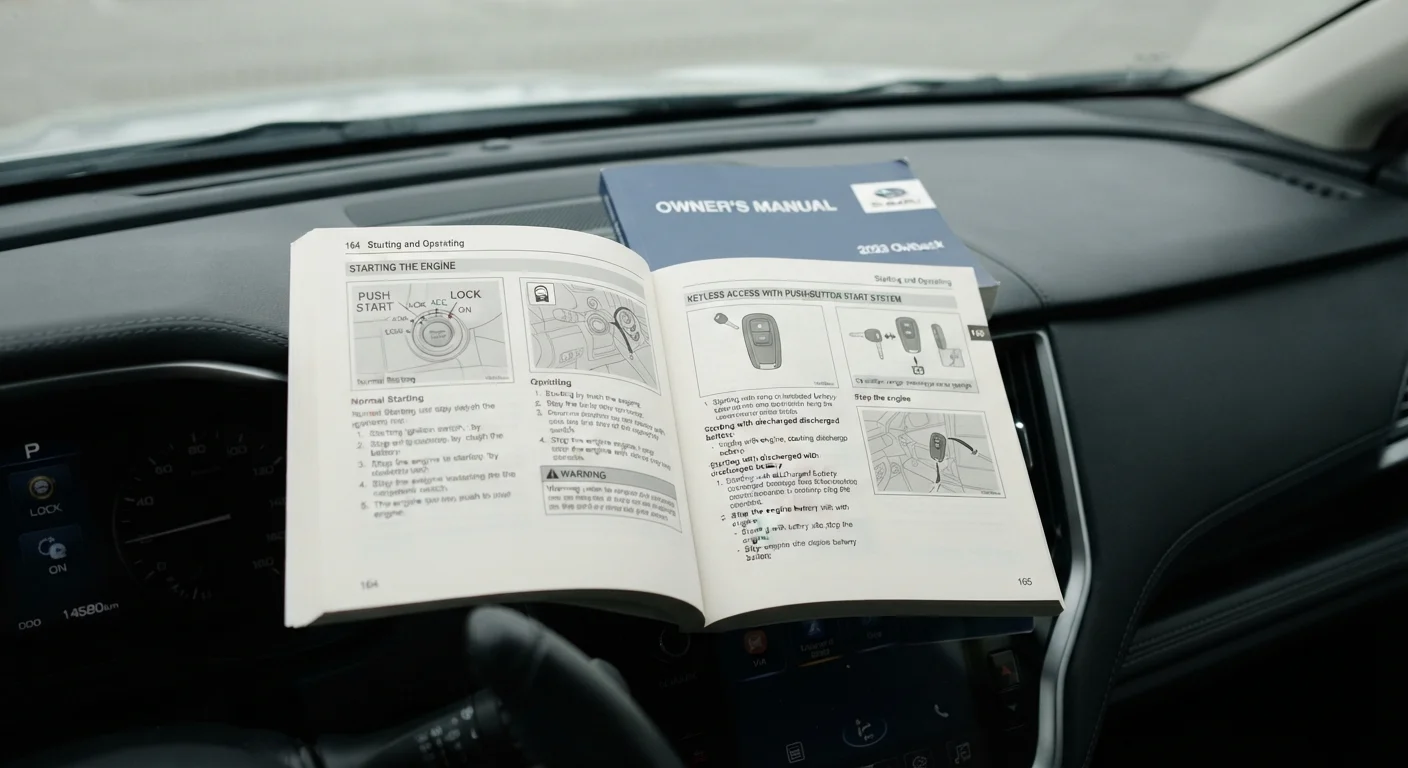
Why Most Drivers Never Open It
It typically lives in the glove box, sealed in its original plastic sleeve, untouched from the day the car was purchased. Studies and dealership surveys consistently find that a significant share of drivers have never read their owner's manual - and many aren't sure what's in it.
That's a costly habit. The manual isn't marketing material; it's a technical document written specifically for your vehicle's make, model, trim level, and engine configuration. Generic maintenance advice found online or from well-meaning friends is often close - but close isn't the same as correct. The consequences of using the wrong oil viscosity, ignoring a tire rotation schedule, or misreading a warning light can add up to real repair costs over time.
The good news: you don't need to read the manual cover to cover. Knowing which sections to consult - and when - puts the most valuable information at your fingertips exactly when you need it. This guide walks you through the most important things your manual is communicating, in plain language.
Service Intervals: The Numbers That Matter Most
The maintenance schedule section is one of the most practical parts of the manual. It outlines, by mileage and sometimes by time elapsed, when specific services are due - oil changes, filter replacements, spark plugs, transmission fluid, coolant flushes, and more.
Many drivers rely on the old rule of thumb - change your oil every 3,000 miles - but that interval hasn't applied to most modern vehicles for years. Depending on your engine design and the oil grade specified, your manufacturer may recommend intervals of 5,000, 7,500, or even 10,000 miles. Following a shorter interval than necessary isn't harmful, but it costs money you don't need to spend. Following a longer interval without the right oil type can leave your engine under-protected.
When you take your car in for service, bring your manual's maintenance schedule and compare it against what the shop recommends. This one habit can save you from paying for services that aren't yet due for your specific vehicle.
Service advisors sometimes follow generic schedules that don't match your manufacturer's actual recommendations - the manual is the authoritative source for your specific model.
If you bought your vehicle used and don't have the manual, search the manufacturer's official website using your model year and trim - most offer free PDF downloads that cover your exact configuration.
Missing manuals are one of the most common gaps for used-car buyers, and a model-specific manual is far more reliable than general internet advice for maintenance decisions.
The manual also distinguishes between normal and severe driving conditions. Severe conditions include frequent short trips, extreme heat or cold, towing, or heavy stop-and-go traffic. If your driving matches those patterns, shorter intervals apply. See our family car maintenance schedule guide for a deeper breakdown of what each service interval means.
Fluid Specifications Your Car Actually Needs
Every fluid reservoir in your vehicle has a specification - a grade, formulation, or standard that the manufacturer engineered the system around. Using a fluid that doesn't meet that spec isn't just a minor deviation; in some cases it can cause component wear, trigger warning lights, or affect your warranty coverage.
The manual lists the correct specification for:
- Engine oil - viscosity grade (e.g., 0W-20, 5W-30) and any required API or manufacturer certifications
- Transmission fluid - often a proprietary type; using a generic substitute can cause shifting problems
- Coolant - color-coded systems use chemically incompatible formulations; mixing them degrades protection
- Brake fluid - DOT rating matters; lower-rated fluid in a high-spec system can compromise performance under heat
- Power steering and differential fluids - where applicable
Before topping off any fluid, check the manual's specification. Our article on car fluids and what happens when you ignore them covers each fluid type and how to tell when it's low or degraded.
Warning Lights and What the Manual Says About Them
Modern vehicles can display dozens of different warning lights, and their urgency varies enormously. A tire pressure warning is very different from an oil pressure warning, even though both appear as dashboard symbols. The manual's warning light section - usually accompanied by a symbol reference chart - tells you exactly what each light means for your specific vehicle and whether to stop immediately, schedule service soon, or simply monitor the situation.
Some Warning Lights Require Immediate Action
Not all dashboard warning lights are equal. Oil pressure, engine temperature, and brake system warning lights can indicate conditions that risk serious mechanical damage or compromise vehicle safety if you continue driving. When these appear, pull over safely as soon as possible and do not drive the vehicle further until the issue is diagnosed by a qualified mechanic.
A few lights do warrant pulling over right away: oil pressure, engine temperature, and brake system warnings can indicate conditions that risk serious damage or safety compromise if driving continues. Others, like a service reminder or a loose gas cap indicator, are less urgent. For more context on interpreting the check engine light specifically, see why your check engine light doesn't always mean disaster.
Tire and Load Information Hidden in Plain Sight
Your manual contains vehicle-specific tire information that's easy to overlook: the recommended tire size, load index, speed rating, and the correct inflation pressure for front and rear tires - which sometimes differ. The pressure printed on the tire sidewall is the maximum pressure the tire can hold, not the target pressure for your vehicle. Your manual (and the door jamb sticker on the driver's side) gives you the correct operating pressure.
The manual also lists your vehicle's Gross Vehicle Weight Rating (GVWR) and payload capacity - the maximum total weight the vehicle is designed to carry, including passengers and cargo. Exceeding this limit affects braking distance, suspension wear, and tire integrity. Families who frequently haul gear, use roof racks, or carry a full passenger load benefit from understanding these limits.
For practical guidance on checking and maintaining tire pressure, see our article on tire pressure, tread depth, and the checks that keep your family safe.
How to Use Your Manual as an Ongoing Reference
Think of the owner's manual less as something to read once and more as a reference tool you return to at specific moments: before a road trip, when a warning light appears, when a mechanic recommends a service you're unfamiliar with, or when you want to confirm whether a maintenance task is due.
A few practical habits help:
- Photograph the maintenance schedule - keep a photo on your phone so you can reference it anywhere.
- Use the index - it's faster than flipping through the full document when you need one specific answer.
- Download the digital version - most manufacturers offer free PDF downloads of current and previous model year manuals on their official websites. This is useful if your printed copy is missing or damaged.
- Cross-reference before accepting add-on services - if a shop recommends a service, check whether the manual supports that interval for your vehicle before agreeing.
Staying on top of what your manual recommends is one of the most straightforward ways to protect your investment and avoid unnecessary repair bills. See our overview of vehicle maintenance tasks that prevent expensive repairs later to see how manual-guided care fits into a broader ownership strategy.
The content provided on our blog site traverses numerous categories, offering readers valuable and practical information. Readers can use the editorial team’s research and data to gain more insights into their topics of interest. However, they are requested not to treat the articles as conclusive. The website team cannot be held responsible for differences in data or inaccuracies found across other platforms. Please also note that the site might also miss out on various schemes and offers available that the readers may find more beneficial than the ones we cover.