

Summary
18 items · 30-60 minutes
Why the Small Stuff Deserves Attention
Wiper blades, cabin air filters, and washer nozzles rarely make the top of any to-do list. They don't trigger warning lights, and they fail gradually-so gradually that most drivers don't notice until visibility is already compromised or the air inside the car smells stale. Yet these minor components directly affect safety and comfort every single time you drive.
The good news: inspecting and replacing them is among the most accessible maintenance work any driver can do at home. The tools required are minimal, the parts are generally inexpensive, and the process is well-documented in your owner's manual. As our guide to deferred maintenance explains, it's exactly these low-urgency items that quietly become costly when ignored for too long.
This checklist walks you through a complete audit of these overlooked components so you can address them in a single focused session-typically 30 to 60 minutes in your driveway.
Don't Ignore Reduced Wiper Performance in Wet Conditions
Streaking or skipping wiper blades significantly reduce your ability to see the road during rain or snow. Degraded visibility is a leading contributor to wet-weather collisions. If blades are leaving large uncleared arcs, replace them before driving in precipitation-this is a safety item, not a cosmetic one.
Avoid Using Plain Water in the Washer Reservoir in Cold Climates
Plain water can freeze inside the reservoir, hoses, and pump, cracking components that are expensive to repair. Always use a washer fluid formulated for the lowest temperatures in your area. Check the label for the freeze-protection rating before purchasing.
What You'll Need Before You Start
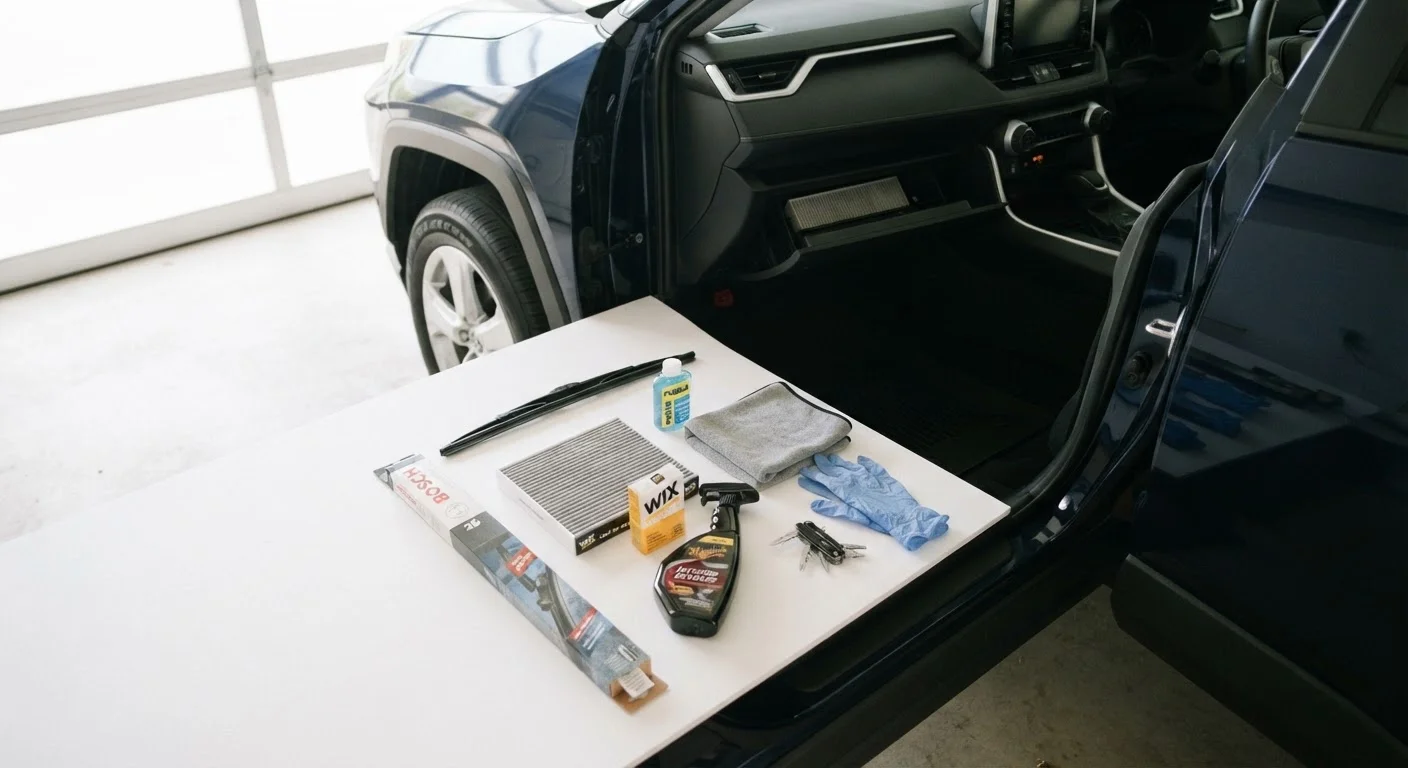
Before working through the checklist, gather your supplies. Your owner's manual is the single most important reference-it tells you exactly where the cabin filter is housed, what wiper blade sizes fit your vehicle, and which service intervals apply. If you've never opened it, our article on getting the most from your owner's manual is a practical starting point.
Owner's Manual
Provides vehicle-specific filter locations, part specifications, and replacement intervals for all components in this checklist.
Flat-head and Phillips screwdrivers
Used to open glove box retainers or filter housing panels when accessing the cabin air filter.
Lint-free microfiber cloth
Cleans wiper blades and the interior windshield surface without scratching.
All-season or winter washer fluid
Refills the washer reservoir with a fluid rated for local temperatures to prevent freezing.
Fine pin or thin needle
Clears clogged washer nozzle openings without damaging plastic housings.
Maintenance log (notebook or app)
Records dates, mileage, and completed tasks so nothing falls through the cracks between service intervals.
Once you have everything on hand, work through the checklist in the order presented. Grouping these tasks together saves time and helps you build a reliable picture of your vehicle's condition at a single moment.
Working Through the Checklist
The checklist below is organized by system so you can move methodically from one area to the next without backtracking. Items marked must are non-negotiable for safety and function. Items marked should are strongly recommended and will prevent minor issues from escalating. Nice-to-have items add longevity but can be deferred if time is short.
Windshield Wipers
Cabin Air Filter
Washer Fluid and Nozzles
Interior Lights and Visibility Aids
Final Audit and Record-Keeping
If you're unsure whether a DIY approach is right for a particular task, our DIY versus shop guide can help you decide when professional help is genuinely worth the cost.
When to Let a Mechanic Take Over
Most items in this checklist are straightforward for a careful DIYer working with their owner's manual. However, if you encounter a wiper arm that won't seat correctly, a washer pump that runs but produces no fluid, or a cabin filter housing that appears damaged, have a qualified mechanic inspect the system. Forcing components that don't fit correctly can cause damage that costs far more to fix.
Building These Checks Into Your Routine
The most effective maintenance habit is linking these checks to events you already track-seasonal changes, oil changes, or annual inspections. Wiper blades, for instance, take predictable abuse from summer UV exposure and winter ice scraping, making the seasonal transitions a natural trigger. Our seasonal car care guide maps out which tasks are most time-sensitive heading into each season.
Cabin air filters follow mileage more than calendar time, so pairing that check with an oil change appointment is a practical approach. The same logic applies to washer fluid-top it off whenever you're already under the hood.
Keeping a simple written or digital maintenance log pays dividends over time. When you can see at a glance what was last changed and at what mileage, you spend less energy guessing and more time driving confidently. For a broader look at which routine tasks have the biggest impact on long-term costs, see our overview of maintenance tasks that prevent expensive repairs.
The content provided on our blog site traverses numerous categories, offering readers valuable and practical information. Readers can use the editorial team’s research and data to gain more insights into their topics of interest. However, they are requested not to treat the articles as conclusive. The website team cannot be held responsible for differences in data or inaccuracies found across other platforms. Please also note that the site might also miss out on various schemes and offers available that the readers may find more beneficial than the ones we cover.