

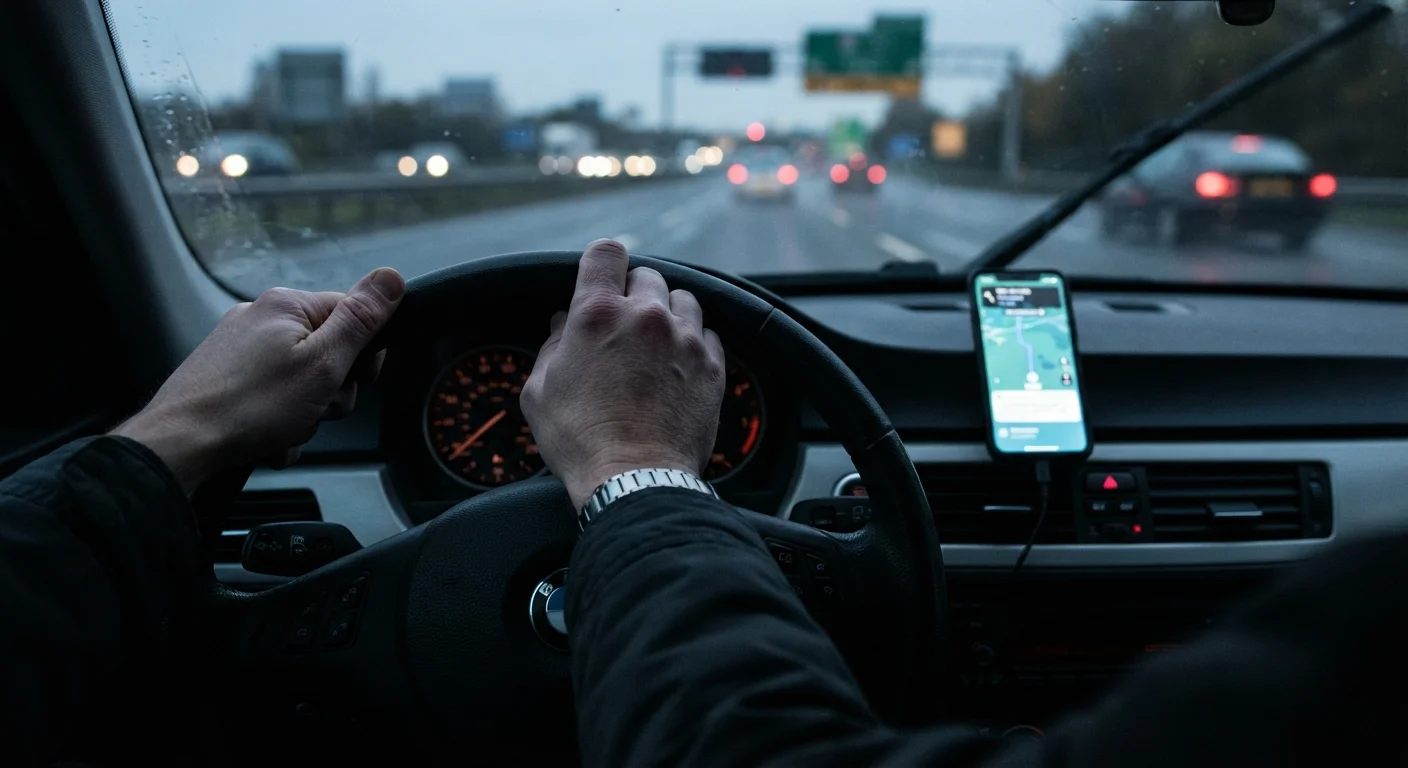
Why Cognitive Distraction Is the Hardest to See
Most drivers can recognize when they're physically distracted - looking at a phone screen, reaching for a drink, or adjusting the radio. What's far harder to notice is cognitive distraction: the mental load that pulls attention away from the road even when your eyes are forward and your hands are on the wheel.
When you hold a conversation while driving, your brain attempts to divide its processing power between two demanding tasks. Research published by the AAA Foundation for Traffic Safety found that mental workload from secondary tasks can significantly impair a driver's response time and ability to detect hazards - even when the driver feels fully in control. This gap between perceived safety and actual impairment is precisely why cognitive distraction is so dangerous.
Understanding this distinction is a foundational piece of situational awareness behind the wheel, which is the capacity to read your environment and anticipate hazards before they escalate.
Myth
Using a hands-free device makes phone calls safe while driving.
Fact
Hands-free calls reduce manual distraction but do not eliminate the cognitive distraction that impairs driving performance.
The physical act of holding a phone is only one component of distraction. The cognitive demand of sustaining a conversation - following the other person's meaning, formulating responses, managing emotional content - continues regardless of how the phone is held. Research from the AAA Foundation for Traffic Safety found that hands-free phone calls produced measurable impairment in reaction time and hazard detection, comparable in some studies to handheld use.
Myth
Talking to a passenger is just as distracting as talking on the phone.
Fact
Passenger conversations generally pose less cognitive risk because passengers naturally adjust their communication when driving demands increase.
A passenger can see traffic, sense tension, and pause the conversation when the driver needs to focus. A phone caller has none of that context and tends to maintain conversational demands regardless of road conditions. Studies have shown that passenger conversations are associated with lower crash risk than phone conversations, in part because of this built-in adaptive behavior. That said, highly engaged or emotionally loaded conversations with passengers still carry distraction risk.
Myth
Voice-to-text messaging is a distraction-free alternative to typing.
Fact
Voice-to-text is faster than typing but still imposes cognitive load that measurably affects driving performance.
Composing a message verbally requires mental effort: choosing words, reviewing what was captured, and deciding whether to send or correct. AAA research found that using voice-to-text systems produced cognitive distraction levels rated as high or higher than some other in-vehicle tasks. The hands-free format reduces visual and manual distraction, but the mental engagement of message composition remains a significant factor.
Myth
Experienced drivers can handle phone conversations safely because they're more skilled.
Fact
Driving experience reduces the effort needed for routine maneuvers but does not protect against the cognitive limits imposed by dual-task demands.
Experienced drivers do process familiar road scenarios more automatically. However, cognitive distraction research shows that the brain's capacity to divide attention between complex tasks has fundamental limits that experience does not overcome. When an unexpected hazard appears - a child stepping off a curb, a car braking suddenly - the response time gap caused by phone conversation affects experienced and novice drivers alike. This is especially relevant when teaching new drivers safe habits, since overconfidence about multitasking is a common misconception to address early.
Myth
If you feel focused, cognitive distraction isn't affecting you.
Fact
Drivers frequently underestimate distraction's impact on their performance - feeling attentive and being attentive are not the same thing.
One of the most consistent findings in distraction research is that drivers rate their own performance higher than objective measures support. This metacognitive gap - the difference between how capable you feel and how capable you actually are - means self-assessment is an unreliable safety check. Inattention blindness, in particular, is invisible to the person experiencing it: you don't notice what you're not seeing. This is why risk profiles shift across a driver's lifetime, and why all age groups are susceptible to this specific blind spot.
What the Research Actually Tells Us
Studies from the National Safety Council and academic transportation researchers consistently show that drivers engaged in phone conversations - handheld or hands-free - miss up to 50% of the visual information in their driving environment. This effect is sometimes called inattention blindness: the brain filters out what it isn't actively prioritizing.
50%
Visual information missed during phone calls
According to the National Safety Council, drivers using phones - handheld or hands-free - can miss roughly half of what's happening in their driving environment.
4x
Increased crash risk while using a phone
The National Safety Council estimates that cell phone use while driving is associated with approximately four times the crash risk of undistracted driving.
This has direct relevance for families navigating everyday driving situations. If you're managing a work call on the highway or talking through logistics while dropping kids at school, the cognitive cost is real even if it feels manageable. Parents driving with children face layered distraction challenges - the habits that protect families in the car often start with reducing non-essential communication during trips.
It's also worth noting that distraction and fatigue interact in compounding ways. Drivers who are already tired before picking up a call face steeper cognitive deficits. The comparison between drowsy and distracted driving shows how both forms of impairment erode the same critical skills: reaction time, hazard detection, and judgment.
No Phone Call Is Worth a Collision
Even brief, low-stakes phone conversations impose measurable cognitive costs during driving. The safest practice supported by research is to complete calls before a trip begins, or to pull over safely before engaging in any phone conversation. Establishing this habit is especially important when driving with passengers, in heavy traffic, or in unfamiliar areas.
This article is for general informational and educational purposes only. For guidance specific to your state's distracted driving laws, consult your state DMV or a qualified legal resource.
The content provided on our blog site traverses numerous categories, offering readers valuable and practical information. Readers can use the editorial team’s research and data to gain more insights into their topics of interest. However, they are requested not to treat the articles as conclusive. The website team cannot be held responsible for differences in data or inaccuracies found across other platforms. Please also note that the site might also miss out on various schemes and offers available that the readers may find more beneficial than the ones we cover.