

Why Driving With Kids Demands a Different Standard of Attention
Transporting children changes the stakes of every driving decision. Kids are physiologically more vulnerable in a crash than adults - their developing skeletons, smaller body mass, and higher center of gravity mean that forces which injure an adult seriously can be fatal to a child. Yet distraction, rushed routines, and habit gaps remain common among otherwise careful parents.
The good news: a handful of consistent, learnable habits dramatically reduce risk. This article covers the practices that safety experts and road safety research consistently point to - from restraint use to managing the chaos that young passengers naturally generate. For a broader pre-departure framework, see our family safety checklist before any long drive.
Car Seat and Seatbelt Practices That Cannot Be Skipped
Restraint systems are the backbone of child passenger safety, and their effectiveness depends entirely on correct use. Studies from the National Highway Traffic Safety Administration (NHTSA) consistently find that a significant proportion of child safety seats are installed or used incorrectly - often in ways that look right but aren't.
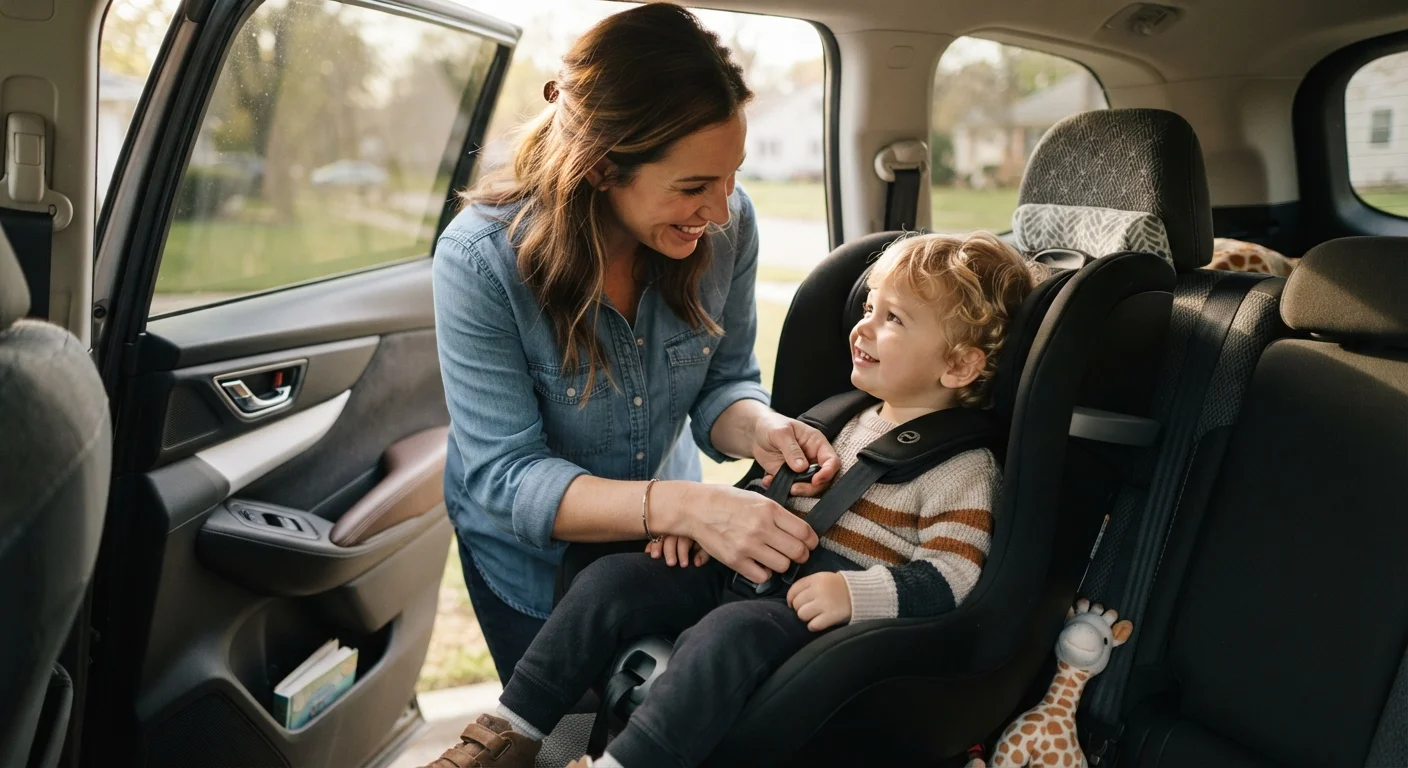
Keep children rear-facing until they reach the maximum height or weight limit of their seat.
Rear-facing seats distribute crash forces across the entire back, head, and neck - the most protective position for young children whose neck muscles and spine are still developing. Moving to forward-facing too early removes this protection before a child is physiologically ready.
Check harness snugness and chest clip position on every single trip.
Harnesses loosen through routine use, and the chest clip must sit at armpit level to keep the harness in position during a crash. A harness loose enough to pinch an inch of slack provides far less protection than it should.
Enforce seatbelt use for every child on every trip, without exceptions.
Children learn from inconsistency - a short trip without a belt communicates that the rule is negotiable. It also happens that many serious injuries and fatalities occur on familiar, short-distance routes where drivers feel least vigilant.
Never place heavy or loose objects on rear window ledges or unsecured in the cargo area.
In a sudden stop or collision, unsecured objects become high-velocity projectiles. A five-pound object can generate hundreds of pounds of force in a moderate-speed crash, creating serious injury risk for any passenger - especially children seated nearby.
Pull over safely before addressing a child's urgent need rather than turning around while driving.
Looking away from the road for even two seconds at highway speed covers the length of a football field without visual monitoring. Reaching into the backseat compounds this risk by also removing physical control of the wheel.
For an in-depth guide to choosing and fitting the right seat for your child's age and size, our article on car seat safety and vehicle fit covers rear-facing, forward-facing, and booster seat essentials.
Managing In-Cabin Distractions: A Real Safety Risk
Children are one of the most significant sources of driver distraction - a fact that often goes unacknowledged because the cause feels unavoidable. Research published in Injury Prevention found that child passengers generated distracting events at rates that took drivers' eyes off the road for meaningful periods during short trips.
12x
More distracting than adult passengers
Research published in Injury Prevention found children generated distraction events at rates roughly 12 times higher than adult passengers on typical short trips.
~46%
Car seats misused in some way
NHTSA data has historically shown that a substantial share of child safety seats are not used correctly, including installation and harness errors.
Managing this isn't about silencing kids - it's about building habits that reduce the demand on your attention while driving. Preparing engaging, self-contained activities before departure, setting expectations with older children before the car moves, and pulling over safely when a situation genuinely requires your hands or eyes off the road are all proven strategies. For ideas on keeping children occupied on longer trips, see keeping kids engaged on long travel days.
Speed, Smoothness, and Following Distance With Young Passengers
How you drive - not just how you prepare - protects children in the vehicle. Smooth acceleration and braking reduce the physical stress on child passengers, particularly infants and toddlers in rear-facing seats. Abrupt maneuvers can cause head and neck loading in young children even in non-crash events.
Maintaining generous following distance gives you more reaction time, which directly reduces crash probability and severity. The standard two-second rule is a minimum; three to four seconds in family driving conditions provides meaningful additional buffer. Reducing speed - even modestly below the posted limit in complex urban environments - compresses stopping distances and reduces impact forces significantly if a collision occurs.
“Speed is the common factor in crash severity - reducing it by even a few miles per hour can mean the difference between a survivable impact and a fatal one.”
— Road Safety Research Community, Consensus view reflected in traffic safety literature and public health guidance
For a deeper look at how these principles fit together, our guide on defensive driving in everyday traffic provides actionable context. Also consider reviewing what research shows about phone distraction - hands-free is not risk-free, especially with children aboard.
This article provides general road safety information for educational purposes. Always consult official sources such as NHTSA or a certified Child Passenger Safety Technician for guidance specific to your vehicle and child's needs.
The content provided on our blog site traverses numerous categories, offering readers valuable and practical information. Readers can use the editorial team’s research and data to gain more insights into their topics of interest. However, they are requested not to treat the articles as conclusive. The website team cannot be held responsible for differences in data or inaccuracies found across other platforms. Please also note that the site might also miss out on various schemes and offers available that the readers may find more beneficial than the ones we cover.