

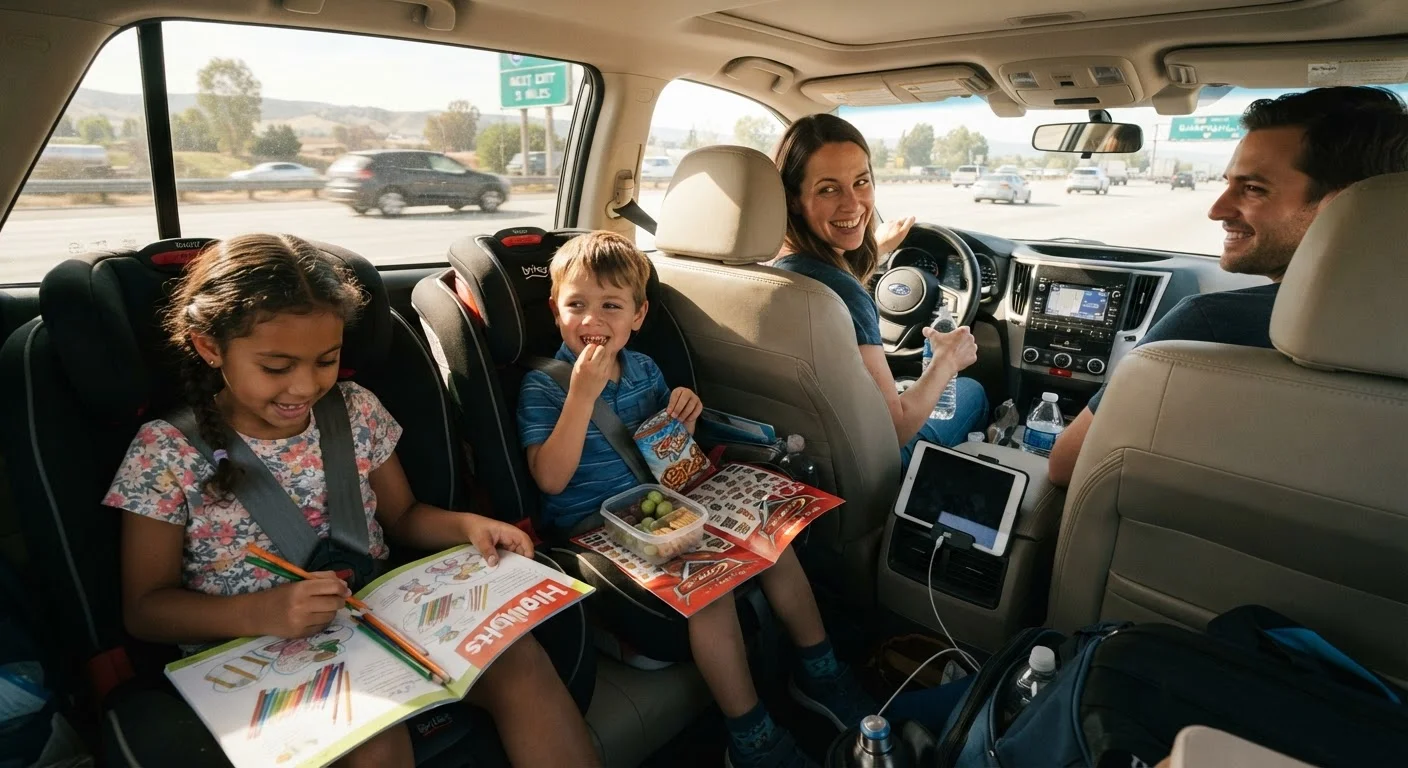
Why Long Travel Days Are Hard-and Fixable
A six-hour drive or a layover-heavy flight isn't just boring for kids-it's physically and cognitively demanding. Children have shorter attention spans and fewer internal coping tools than adults, which means restlessness, conflict, and meltdowns are predictable outcomes without a plan. The good news: they're also largely preventable.
The families who handle long travel days best tend to share one trait-they plan activities in advance rather than reacting to crises in the moment. The list below pulls together concrete, field-tested strategies across pacing, snacks, entertainment, and movement that work across different ages and travel modes. For families with a child who processes sensory input differently, see our companion piece on traveling with sensory-sensitive children for additional tailored guidance.
Build an activity rotation before you leave
Rather than dumping a bag of toys in the back seat and hoping for the best, assign activities to rough time blocks. Alternate between screen time, a creative task (coloring, sticker books, simple origami), and a verbal game. A predictable rotation gives kids something to look forward to and prevents any single activity from wearing out its welcome too fast.
For younger children, keep individual activity windows short-20 to 30 minutes. Older kids can sustain focus longer but still benefit from built-in transitions.
A predictable activity rotation keeps kids engaged longer than open-ended access to screens alone.
Use snacks as pacing tools, not just fuel
Hunger is one of the fastest triggers for travel meltdowns, but so is the sugar crash after eating too many processed snacks in one sitting. Pack a mix of protein-rich options (nuts, string cheese, hard-boiled eggs) alongside familiar treats, and space them out deliberately across the journey rather than releasing the whole supply at once.
Individually portioned snack bags for each travel segment also give kids a sense of structure-and limit the negotiation. For broader food planning, our guide on food strategies for traveling families covers how to keep costs and chaos manageable throughout a trip.
Space snacks deliberately across the journey to avoid both hunger and the inevitable sugar crash.
Let kids help plan the trip
Children who feel ownership over a trip are significantly more cooperative during the less glamorous parts of it. In the days before departure, involve them in age-appropriate decisions: which audiobook to download, what snacks to pack, which rest stop game to try. Even small choices build buy-in.
For older kids, giving them a paper map or a printed itinerary to follow along creates a sense of progress-"we just passed the halfway point"-that makes the remaining distance feel manageable rather than infinite.
Kids who help plan a trip are more cooperative when the journey gets long and boring.
Prioritize movement at every stop
Sitting still for hours is physically uncomfortable for children and contributes to irritability. At rest stops, prioritize movement over speed-let kids run, do jumping jacks, or play a quick round of tag before returning to the vehicle. Even five to ten minutes of physical activity can reset the mood for another stretch of travel.
For inspiration on active games that work anywhere, our roundup of active games the whole family enjoys includes options that translate well to rest stop spaces.
Five to ten minutes of movement at each rest stop can reset kids' mood for the next stretch.
Pack a "surprise" activity bag
A small bag of inexpensive, never-before-seen items-a new small puzzle, a pack of stickers, a simple card game-held in reserve for the hardest stretch of the journey can be surprisingly effective. The novelty factor matters more than the cost. Introduce it when energy is flagging, not as a reward, but as a planned tool to bridge the gap to the destination.
This works particularly well on flights or long train rides where stopping for a movement break isn't an option.
A bag of novel, unseen items held in reserve can salvage the hardest stretch of any long journey.
Set screen time expectations in advance
Screens are a legitimate travel tool-don't feel pressure to avoid them entirely. The issue is that unrestricted access often leads to battles over devices and diminished effectiveness when you actually need them. Set clear expectations before the trip starts: how long, which content, and when screens come out. Download shows and games in advance so connectivity isn't a factor.
Consider noise-canceling headphones for older children to reduce cabin noise fatigue, which can compound irritability on longer journeys.
Pre-set screen time rules before departure to avoid mid-trip negotiations and device conflicts.
Bringing It All Together
No single strategy works for every family or every child. The most effective approach combines a few elements from this list into a loose routine-structured enough to provide predictability, flexible enough to adapt when things go sideways. Think of it as a travel toolkit rather than a rigid schedule.
Once you arrive, the energy kids conserved during transit can go straight into enjoying the destination. For ideas on keeping the momentum going without blowing the budget, explore our guide to free and low-cost activities that actually entertain kids on vacation. And if the journey includes a car leg, driving safely with kids in the car offers practical habits to keep everyone safer on the road.
Prepare a simple travel day checklist
A short checklist reviewed with kids the night before departure-what to pack in their personal bag, what activities are planned, what the rest stop rules are-reduces morning chaos and helps children feel prepared. Predictability is calming, especially for younger travelers. Keep it to five or six items and let kids check off each one themselves.
The content provided on our blog site traverses numerous categories, offering readers valuable and practical information. Readers can use the editorial team’s research and data to gain more insights into their topics of interest. However, they are requested not to treat the articles as conclusive. The website team cannot be held responsible for differences in data or inaccuracies found across other platforms. Please also note that the site might also miss out on various schemes and offers available that the readers may find more beneficial than the ones we cover.