

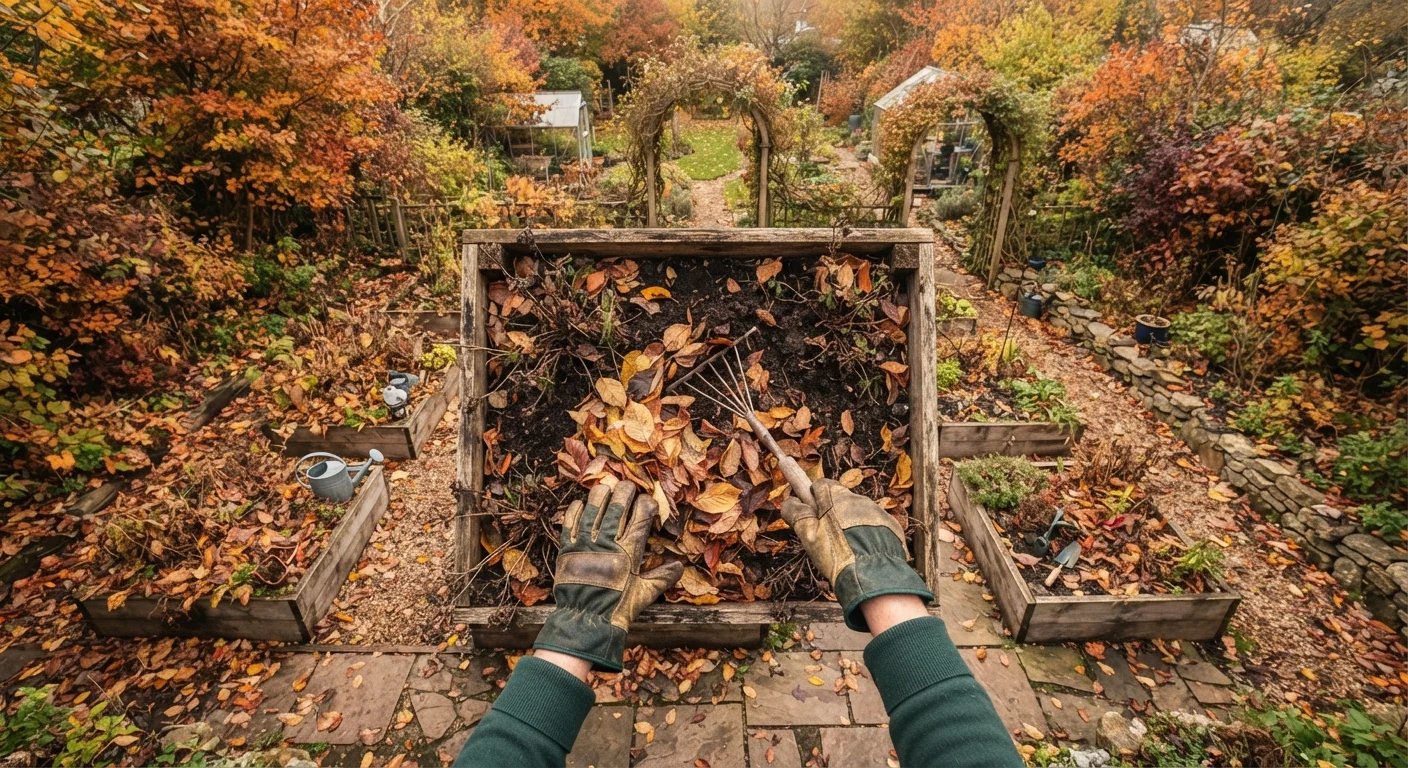
Summary
18 items · 1.5-3 hours over one or two weekends
Why Fall Closedown Matters
Most gardeners put in serious effort in spring, but the work you do in fall is what makes that spring effort pay off. Skipping a proper closedown means carrying last season's problems - fungal spores, pest eggs, depleted soil - straight into the new growing year.
Timing matters: you want to act after your plants have finished their seasonal work but before the ground freezes solid. For most US gardeners, that window falls between the first light frosts and the hard freeze that locks the soil. Check your USDA hardiness zone if you're unsure when your first hard freeze typically arrives - your zone's average dates are a reliable planning guide.
The checklist below is organized into logical phases. Work through it in order and you'll protect your investment in perennials, improve soil structure, and avoid scrambling next March.
Garden fork or spade
Loosening soil before adding amendments and digging up tender bulbs for winter storage.
Soil test kit or mail-in test
Measuring pH and nutrient levels so you can make targeted amendments before spring.
Shredded bark, straw, or leaf mulch
Insulating perennial crowns and bare soil against freeze-thaw cycles.
Compost or aged manure
Improving soil structure and fertility over winter when worked into bed surfaces in fall.
Air compressor or irrigation blowout kit
Clearing water from irrigation lines to prevent freeze damage - or hire an irrigation professional.
Tool oil and sharpening stone
Cleaning and conditioning hand tools before winter storage to extend their working life.
Your Fall Garden Closedown Checklist
Use this list as a walk-through on a cool fall morning. A clipboard or notes app helps so you can flag tasks for a second session if needed.
Cleanup and Debris Removal
Soil Amendment
Perennial and Bulb Care
Tools, Equipment, and Irrigation
Planning and Documentation
Don't Mulch Too Early
Applying mulch to perennial beds while soil is still warm can trap heat and encourage late-season growth that's vulnerable to frost damage. Wait until after the ground has cooled - typically after the first few hard frosts in your area - before laying down insulating mulch. The goal is to keep soil temperature stable, not to warm it.
A Few Things Worth Knowing
Not every garden task is worth doing in fall. Pruning most flowering shrubs and ornamental grasses too early removes next year's buds or eliminates winter habitat for beneficial insects. Leave seed heads on black-eyed Susans, coneflowers, and similar plants - birds use them through winter, and the dried stems protect crown tissue from temperature swings.
If you're growing annuals alongside perennials, it helps to understand how each type behaves over time. Our guide on perennials versus annuals walks through which plants earn their keep year after year and which ones are worth replanting fresh each spring.
For vegetable beds specifically, fall is the ideal moment to correct whatever went wrong. Poor germination, leggy seedlings, or stunted growth often traces back to soil quality and sun exposure. Our vegetable garden soil and sun guide can help you diagnose the problem before you replant.
Finally, fall garden work pairs naturally with broader home winterization. While you're outside, it's worth checking exterior spigots, draining garden hoses, and inspecting any exposed pipes near the foundation. Our home winterizing checklist covers the indoor and structural tasks that complement what you're doing outside.
This article provides general gardening guidance for informational purposes only. Local climate conditions, soil types, and plant varieties vary significantly - consult your local cooperative extension service for region-specific recommendations.
The content provided on our blog site traverses numerous categories, offering readers valuable and practical information. Readers can use the editorial team’s research and data to gain more insights into their topics of interest. However, they are requested not to treat the articles as conclusive. The website team cannot be held responsible for differences in data or inaccuracies found across other platforms. Please also note that the site might also miss out on various schemes and offers available that the readers may find more beneficial than the ones we cover.