

Our Verdict
Drip irrigation is a genuinely effective tool for water conservation and plant health, but it rewards gardeners who have stable, established beds and the patience to maintain the system annually. The efficiency gains are real - reduced disease, lower water bills, and less daily effort - but those gains require an honest investment of setup time and occasional troubleshooting. For gardeners who frequently reorganize their plots or grow in containers, simpler alternatives may deliver better value.
Best suited to homeowners with established vegetable gardens, fruit beds, or perennial borders who want to automate watering, reduce water waste, and lower foliar disease pressure over multiple seasons.
What Drip Irrigation Actually Does
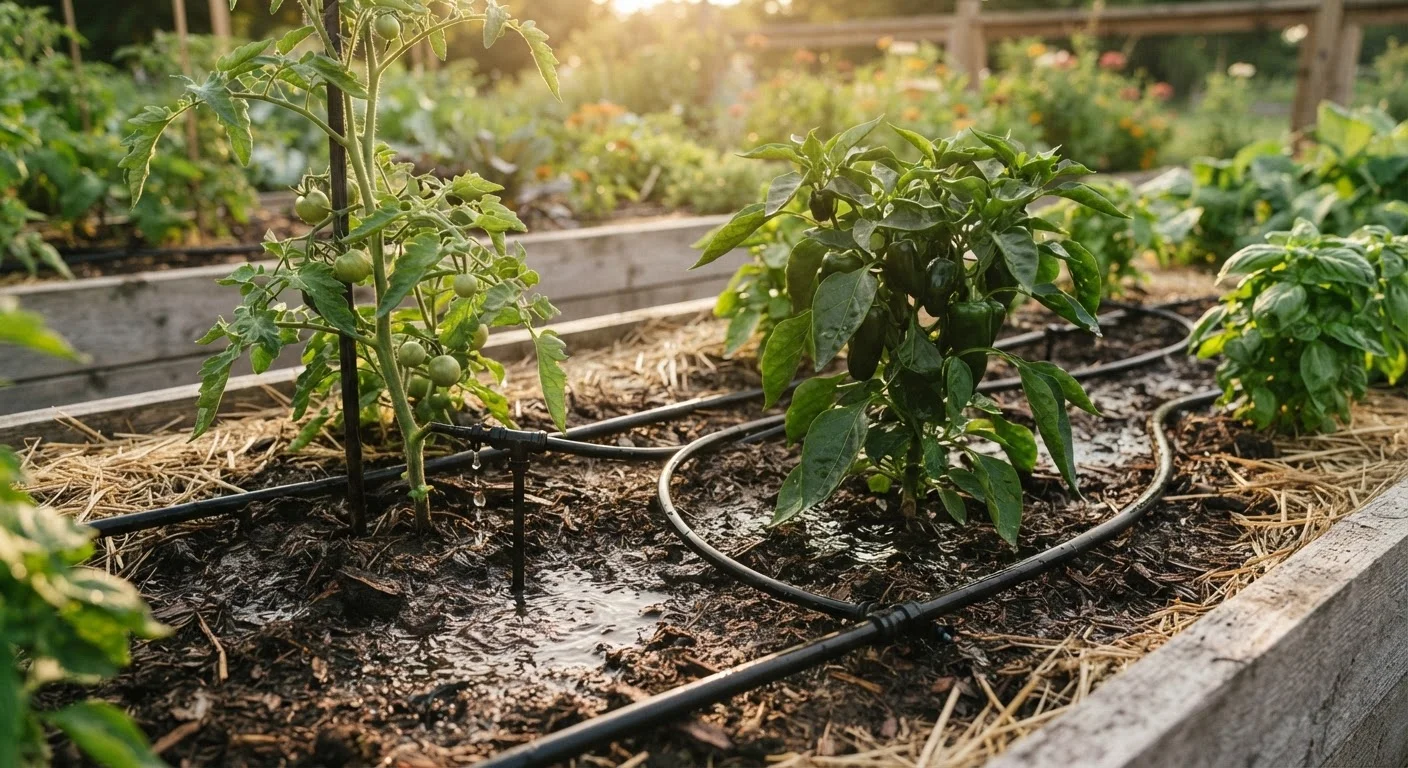
Drip irrigation - also called micro-irrigation - delivers water slowly and directly to the root zone of individual plants through a network of tubing and small emitters. Unlike overhead sprinklers that broadcast water across an entire area, drip systems target specific spots in the soil, allowing moisture to penetrate deeply before it can evaporate.
The system typically consists of a main supply line connected to your outdoor spigot, distribution tubing that runs along or just below the soil surface, and individual emitters or micro-sprayers positioned near each plant. A pressure regulator and filter are usually added at the connection point to protect the small emitters from debris and pressure fluctuations.
Understanding this structure matters before weighing tradeoffs - because how the system works explains both its strengths and its failure points. For a broader view of outdoor water management and garden planning, see how plants absorb moisture at the root zone.
The Genuine Advantages
Significant reduction in water use
Drip irrigation can use up to 30-50% less water than conventional overhead sprinklers by targeting the root zone and minimizing evaporation and runoff.
Reduces foliar disease pressure
Keeping leaves dry limits conditions that fungal pathogens require to spread, which is particularly beneficial for disease-prone crops like tomatoes, cucumbers, and roses.
Suppresses weed growth in pathways
Because drip emitters hydrate only the planting zone, surrounding soil stays drier - creating less favorable conditions for weed germination in aisles and pathways.
Compatible with fertilizer injection (fertigation)
Some drip systems can be fitted with a fertilizer injector, allowing liquid nutrients to be delivered directly to the root zone with minimal waste.
Automatable with a basic timer
A battery-operated or hose-end timer added to the system allows consistent watering without daily attention, reducing the risk of underwatering during busy periods.
Water efficiency is the headline benefit. Drip systems deliver moisture where roots can immediately use it, which sharply reduces evaporation losses common with overhead watering. This matters both for water bills and for plants during dry stretches.
Keeping foliage dry also reduces the spread of fungal diseases like powdery mildew and early blight - a meaningful advantage for tomatoes, squash, and roses, which are highly susceptible when leaves stay wet. Gardeners who pair a drip system with good spacing practices (as outlined in common garden myths about plant spacing) often see measurable improvements in plant health.
When connected to a simple timer, drip systems also reduce the daily labor of watering - a practical benefit for households with busy schedules or for managing raised beds and in-ground plots simultaneously. See how bed type affects your irrigation needs in our comparison of raised beds vs. in-ground planting.
The Real Disadvantages
Higher upfront cost than basic hose watering
A properly equipped drip system - including pressure regulator, filter, tubing, and emitters - requires a meaningful initial purchase and several hours of installation time.
Emitters clog and require seasonal cleaning
Mineral scale from hard water and soil particles can block emitters, silently starving plants. Regular inspection, ideally at the start and end of the growing season, is necessary.
Inflexible when beds change frequently
Repositioning tubing and emitters every time plant layout shifts is time-consuming; the system rewards stable, predictable planting arrangements over experimental or rotating plots.
Tubing degrades under UV exposure
Polyethylene tubing left on the soil surface becomes brittle after two to four seasons of sun exposure, requiring periodic replacement to prevent leaks.
Can promote shallow roots if emitters are too close together
If moisture is delivered too frequently or densely, some plants may develop shallower root systems than they would with deeper, less frequent watering cycles.
Setup complexity and cost are the most common friction points. Even a modest drip system for a 200-square-foot garden requires purchasing tubing, emitters, connectors, a filter, and a pressure regulator - plus several hours of initial layout and testing. Costs vary, but a complete kit for a small garden can run from roughly $50 to over $150 depending on bed size and emitter count.
Maintenance is ongoing. Emitters clog with mineral deposits or soil particles, especially in areas with hard water. Tubing degrades in UV light after a few seasons. Mice and other small animals occasionally chew through supply lines. If you're newer to home systems generally, the first-time homeowner's guide to home systems offers useful context for building inspection habits that translate to outdoor infrastructure too.
Winterizing Your Drip System
In climates where temperatures drop below freezing, drip tubing and emitters must be drained and stored - or at minimum blown out with compressed air - before the first hard freeze. Water left in the lines can expand, crack fittings, and split tubing. Check local frost dates and make winterization part of your end-of-season garden routine, similar to shutting off outdoor spigots.
When Drip Irrigation Makes the Most Sense
Drip systems deliver the best return - financially and practically - in beds with stable, predictable layouts. Established perennial borders, fruit bushes, dedicated vegetable rows, and orchard trees are ideal candidates. For gardeners who rearrange plantings frequently or grow primarily in containers, the inflexibility of fixed tubing can create more hassle than it solves.
Climate matters too. In regions with hot, dry summers, the water savings and disease-reduction benefits are amplified. In cooler, consistently humid climates, overhead watering may be perfectly adequate and drip irrigation's advantages shrink. Consider your plant selection alongside your watering strategy - perennials vs. annuals explores how plant type affects long-term garden maintenance demands, including watering routines.
Starting with a small section of your garden - a single raised bed or a row of tomatoes - lets you evaluate whether the system suits your habits before committing to a full installation. Most drip components are modular, so a starter setup can be expanded gradually.
30-50%
Potential water savings vs. overhead sprinklers
The U.S. Environmental Protection Agency's WaterSense program notes that drip irrigation can be significantly more efficient than conventional landscape watering methods.
~2-4 hrs
Typical initial setup time for a small bed
University cooperative extension guides commonly estimate that a first-time installer should budget several hours for planning, laying tubing, and testing a basic drip system.
The content provided on our blog site traverses numerous categories, offering readers valuable and practical information. Readers can use the editorial team’s research and data to gain more insights into their topics of interest. However, they are requested not to treat the articles as conclusive. The website team cannot be held responsible for differences in data or inaccuracies found across other platforms. Please also note that the site might also miss out on various schemes and offers available that the readers may find more beneficial than the ones we cover.