

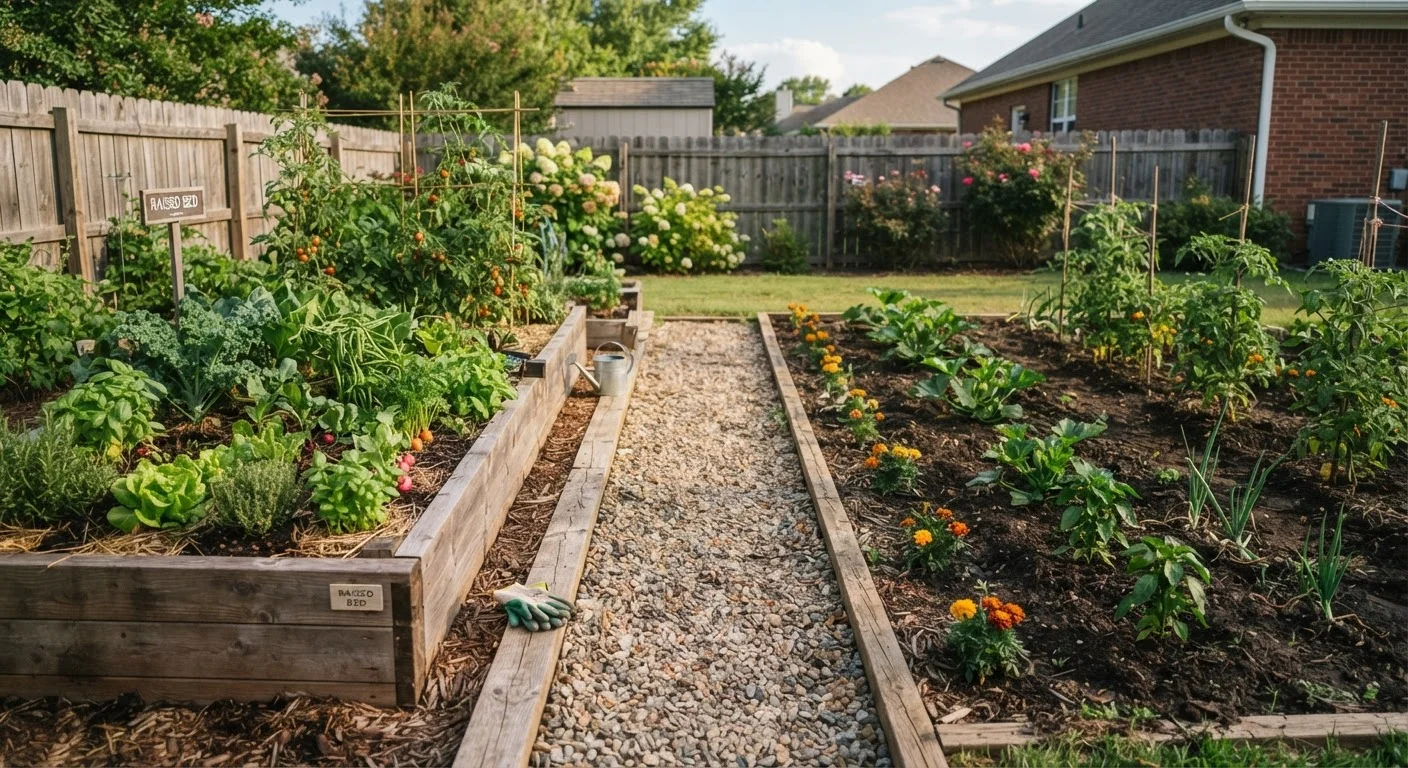
Option A
Raised Beds
The controlled, accessible growing environment.
Best for: Gardeners dealing with poor native soil, limited mobility, or high weed pressure who want precise control over growing conditions.
Option B
In-Ground Planting
The traditional, low-barrier approach to garden growing.
Best for: Families with decent native soil, larger growing areas, and tighter budgets who want to scale up without significant upfront investment.
Understanding the Core Difference
Raised beds are enclosed growing structures - typically made from wood, galvanized metal, or concrete block - filled with imported soil and positioned above ground level. In-ground planting means cultivating directly in your yard's native soil, amended as needed. The distinction sounds simple, but it drives meaningful differences in drainage, cost, maintenance, and what you can realistically grow.
Neither method is universally superior. Choosing between them is really a question of what constraints and goals your specific yard and family present. Before committing, it helps to evaluate your native soil quality, available budget, physical needs, and how much growing space you actually want.
For families curious about which plants suit each setup, our guide on planning perennials vs. annuals is a useful companion read.
| Criterion | Raised Beds | In-Ground Planting |
|---|---|---|
| Upfront cost | Higher (frames + imported soil) | Lower (primarily labor and amendments) |
| Soil control | Full - custom mix from the start | Dependent on native soil quality |
| Drainage | Excellent in most conditions | Varies - poor in clay-heavy soils |
| Spring soil warm-up | Faster - extends growing season | Slower in cold or wet climates |
| Weed pressure | Lower initially, increases over time | Higher, especially in early seasons |
| Scalability | Limited by cost of additional beds | Easy to expand without added cost |
| Deep-rooted crops | Restricted by bed depth | No restriction |
| Accessibility | High - adjustable height possible | Requires kneeling or bending |
| Long-term soil biology | Builds well with consistent amendment | Connects to existing soil ecosystem |
Cost and Setup: What Each Method Actually Requires
In-ground gardening is the lower-barrier entry point. If your soil has reasonable structure and drainage, the main investment is time - tilling or loosening the bed, adding compost, and planting. Even significant soil amendment is usually less expensive than building and filling a raised bed from scratch.
Raised beds carry real upfront costs. Frame materials alone can range considerably depending on what you choose. Cedar and galvanized metal tend to last longer but cost more; untreated pine is cheaper but degrades faster. Our article on raised bed material trade-offs breaks down durability by material type. Beyond the frame, filling a raised bed requires purchasing bulk soil - often a blend of topsoil, compost, and aeration material - which adds significant per-square-foot cost.
Over time, the math can shift. In-ground gardens may require more annual inputs (fertilizer, compost, pest management) on degraded or clay-heavy soils, while raised beds - once established with good soil - can be maintained with lighter annual top-dressing.
2-4 weeks
Earlier spring planting in raised beds
University cooperative extension programs in the northern US commonly note that raised beds warm faster, allowing earlier planting compared to in-ground plots in the same location.
Up to 50%
Reduction in weed pressure reported
Gardeners using raised beds with imported, weed-seed-free soil mixes often report significantly less weed management effort, particularly in the first two to three seasons.
$100-$300+
Typical cost per 4×8 raised bed
Material and soil costs for a single standard raised bed vary widely by region and material choice; this is a general range for informational context, not a guarantee of actual costs.
Drainage, Soil Control, and Growing Season
One of the most consistent advantages of raised beds is drainage. Because they sit above grade (the surrounding ground level) and are filled with a custom-blended mix, water moves through more freely. This matters most in regions with heavy clay soils, where in-ground plots can stay waterlogged for days after rain - a condition that stresses roots and encourages rot.
Raised beds also warm faster in spring. Soil that sits above ground absorbs heat more quickly, which can extend your planting window by two to four weeks in cooler climates - a meaningful advantage for families trying to maximize harvests. Pair that early-season advantage with efficient drip irrigation, and raised beds can be highly productive per square foot.
In-ground plots, by contrast, connect directly to the broader soil ecosystem. This allows deep-rooted crops - squash, corn, melons, and root vegetables in particular - to spread without restriction. It also means that over time, a well-tended in-ground garden builds a richer microbiome. Our piece on long-term soil health explains why that biology matters for sustained productivity.
Weed, Pest, and Maintenance Realities
Raised beds start with a significant weed advantage. Imported soil typically carries far fewer weed seeds than native ground, and the defined borders make physical weed barriers - like landscape fabric or cardboard underlayers - straightforward to install. Weed pressure does increase over time as seeds blow in, but it remains more manageable than in most in-ground plots.
In-ground gardens require consistent weeding, particularly in the first few seasons. Mulching is one of the most effective tools for suppressing weeds and conserving moisture in both systems - our guide to organic mulch covers the practical differences between wood chips, straw, and shredded leaves.
Pest management varies by situation. Slugs, root pests, and some soil-borne diseases are often less prevalent in raised beds, partly due to better drainage and imported soil. However, raised beds don't provide immunity - aphids, caterpillars, and other above-ground insects affect both setups equally. And it's worth being skeptical of gardening folklore: our article on garden myths that waste time and money helps separate tested practice from popular misinformation.
A Note on Wood and Soil Safety
If you're building raised beds for food crops, material choice matters. Older pressure-treated lumber contained arsenic-based preservatives that are no longer approved for residential use, but wood salvaged from demolition sites may still carry them. Modern pressure-treated lumber uses different chemistry, though debate continues about its suitability directly adjacent to edible crops. Cedar and untreated pine are common choices for food gardens. Our comparison of pressure-treated lumber vs. cedar covers durability trade-offs in more detail. When in doubt, consult your local cooperative extension office for current guidance.
The content provided on our blog site traverses numerous categories, offering readers valuable and practical information. Readers can use the editorial team’s research and data to gain more insights into their topics of interest. However, they are requested not to treat the articles as conclusive. The website team cannot be held responsible for differences in data or inaccuracies found across other platforms. Please also note that the site might also miss out on various schemes and offers available that the readers may find more beneficial than the ones we cover.