

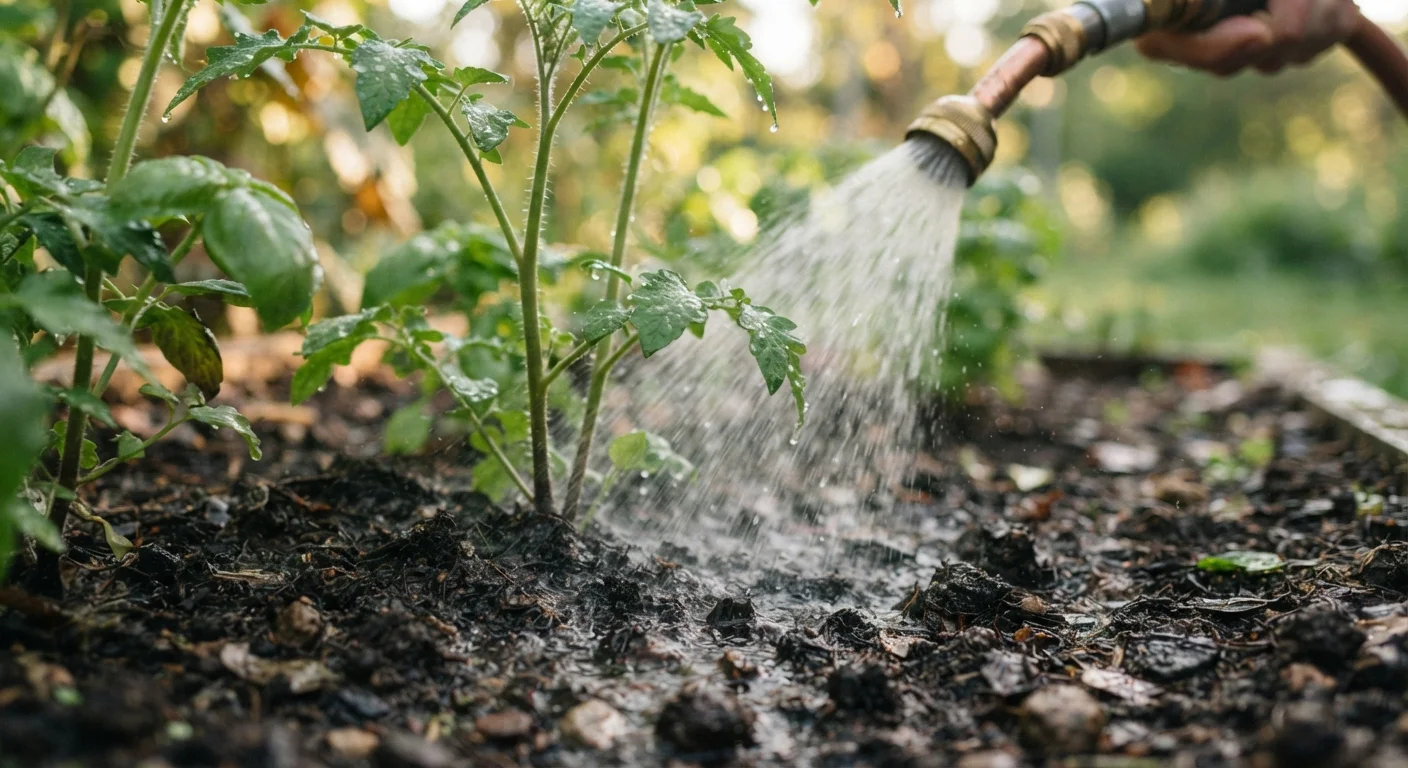
Why Standard Watering Advice Often Misses the Mark
Most watering rules of thumb - "water twice a week" or "give plants an inch of water" - are starting points, not prescriptions. They ignore soil texture, root depth, climate, and plant stage. A tomato seedling and an established fruit tree share almost no watering needs in common, yet both might receive the same generic instruction.
The deeper problem is that the two most common watering mistakes look almost identical. Yellowing leaves, wilting, and poor growth are symptoms of both waterlogged roots (deprived of oxygen) and drought stress (deprived of moisture). Treating the wrong cause makes things worse. Effective watering starts with understanding what happens below the surface, not just what plants look like above ground.
Symptoms Overlap: Always Check Soil Depth
Wilting, yellowing, and stunted growth are caused by both overwatering and underwatering. Because the symptoms overlap significantly, visual diagnosis alone is unreliable. Always confirm by checking soil moisture at root depth - not just at the surface - before adjusting your watering schedule in either direction. Acting on appearance without checking soil conditions is one of the most common reasons garden problems persist despite additional attention.
See our overview of common garden myths for more examples of popular advice that doesn't hold up to scrutiny.
How Soil Type Controls Water Availability
Soil texture determines how quickly water moves through the ground and how long it stays in a form roots can access. Three basic categories matter for home gardeners:
- Sandy soil drains rapidly. Water passes through large pore spaces quickly, which means roots have a narrow window to absorb it. Gardens in sandy soil typically need more frequent watering in smaller volumes.
- Clay soil holds water for a long time but drains slowly. The risk here is waterlogging - saturated clay excludes oxygen from the root zone, suffocating roots even when the soil appears moist. Clay benefits from infrequent, measured watering that allows partial drying between cycles.
- Loamy soil - a balanced mix of sand, silt, and clay particles - retains moisture while still draining adequately. It's the easiest to manage and generally the most forgiving of timing errors.
You can improve both sandy and clay soils over time by incorporating organic matter. Building long-term soil health changes how your soil holds and releases water - which ultimately reduces how much irrigation your garden needs.
~50%
Outdoor residential water used on landscapes
The U.S. Environmental Protection Agency estimates that roughly half of residential outdoor water use goes to landscape irrigation, much of it applied inefficiently.
2-3 in
Mulch depth that meaningfully reduces evaporation
Research from university cooperative extension programs consistently identifies a 2-3 inch organic mulch layer as effective at reducing soil moisture loss and moderating root-zone temperature.
6-12 in
Target water penetration depth for most gardens
Cooperative extension horticulture guidelines generally recommend watering to 6-12 inch depth for vegetable gardens and annual flower beds to encourage deeper, more resilient root systems.
The Case for Deep, Infrequent Watering
Plants develop root systems in response to where moisture is reliably available. Frequent, shallow watering concentrates roots near the soil surface - a zone that heats up quickly and dries out first. These shallow-rooted plants are far more vulnerable to heat waves, drought periods, and uneven irrigation.
Deep watering - applying enough water to penetrate 6-12 inches into the soil for most vegetable and flower gardens - draws roots downward into cooler, more stable soil layers. This isn't about applying more total water; it's about applying it less often and allowing the soil to partially dry between cycles. That partial drying phase matters: it allows air back into the soil pore spaces that roots need for respiration.
A practical method for checking penetration depth: after watering, push a wooden dowel or long screwdriver into the soil. It slides easily through moist soil and stops at the dry layer. This tells you exactly how deep your water reached - far more useful than a timer or a fixed schedule.
For gardeners using raised beds, drainage behavior differs from in-ground planting. See our comparison of raised beds vs. in-ground planting to understand how container depth and drainage affect watering frequency.
Timing, Evaporation, and Protecting Root-Zone Moisture
When you water is nearly as important as how much you apply. Midday watering during summer isn't harmful to plants - the old folk belief that wet leaves act as magnifying glasses and burn foliage has been largely debunked. However, midday watering is inefficient: high temperatures and wind accelerate evaporation, meaning a meaningful percentage of applied water never reaches roots.
Morning watering - between 6 and 10 a.m. - captures the advantages of cooler air, lower wind, and adequate time for foliage to dry before evening. Evening watering keeps leaves wet overnight, which can promote fungal diseases including powdery mildew and early blight on susceptible plants.
Mulching the root zone is the single most effective low-effort step for retaining soil moisture between waterings. A 2-3 inch layer of organic material - wood chips, straw, or shredded leaves - slows evaporation significantly and moderates soil temperature. Our practical guide to organic mulch explains which materials suit different garden types and how to apply them correctly.
Use the Finger Test Before Every Watering
Before reaching for the hose, push your index finger 2-3 inches into the soil near the plant's root zone. If the soil feels moist at that depth, skip watering - regardless of when you last watered. This simple test accounts for recent rain, evaporation rate changes, and seasonal variation in ways that a fixed calendar schedule cannot. It takes about five seconds and saves plants from both drought stress and root rot.
Frequently Asked Questions
Both conditions can cause wilting, yellowing leaves, and stunted growth, which makes visual diagnosis unreliable. The most reliable method is the finger test: push your finger 2-3 inches into the soil near the root zone. If the soil feels soggy, you're overwatering; if it feels bone dry at that depth, the plant needs water. Wilting on a hot afternoon followed by recovery at night usually signals underwatering, while persistent wilting in cool conditions often points to waterlogged roots.
Early morning - roughly between 6 and 10 a.m. - is generally best. Cooler temperatures and lower wind speeds reduce evaporation, so more water reaches the root zone. Watering in the evening can leave foliage wet overnight, increasing the risk of fungal diseases like powdery mildew. Midday watering isn't harmful to plants but loses significant water to evaporation.
A general guideline is 6-12 inches for most vegetable and perennial gardens, and 12-18 inches for established shrubs and trees. Shallow watering encourages roots to stay near the surface, making plants more vulnerable to heat and drought. To check penetration depth, water thoroughly and then push a wooden dowel or screwdriver into the soil - it moves easily through moist soil and stops where the soil is dry.
Yes, significantly. Sandy soils drain quickly and may require more frequent watering, while clay soils hold moisture longer but can become waterlogged. Loamy soil - a balanced mix of sand, silt, and clay - retains moisture well while still draining adequately, making it the easiest to manage. Understanding your soil type helps you calibrate both frequency and volume.
Yes. A 2-3 inch layer of organic mulch over the root zone can measurably slow soil moisture evaporation, reducing how often you need to water. Mulch also moderates soil temperature, which further limits water stress on plants. See our <a href="/home-garden/garden-outdoors/organic-mulch-in-the-garden-a-practical-field-guide">guide to organic mulch types</a> for details on which materials work best in different situations.
Drip irrigation delivers water directly to the root zone at a slow, steady rate - well-matched to how roots absorb moisture. It reduces water waste and limits leaf wetness. However, it requires upfront setup time and occasional maintenance to clear clogged emitters. Our <a href="/home-garden/garden-outdoors/the-tradeoffs-of-drip-irrigation-for-home-gardens">balanced overview of drip irrigation</a> covers what to realistically expect before you invest.
The content provided on our blog site traverses numerous categories, offering readers valuable and practical information. Readers can use the editorial team’s research and data to gain more insights into their topics of interest. However, they are requested not to treat the articles as conclusive. The website team cannot be held responsible for differences in data or inaccuracies found across other platforms. Please also note that the site might also miss out on various schemes and offers available that the readers may find more beneficial than the ones we cover.