

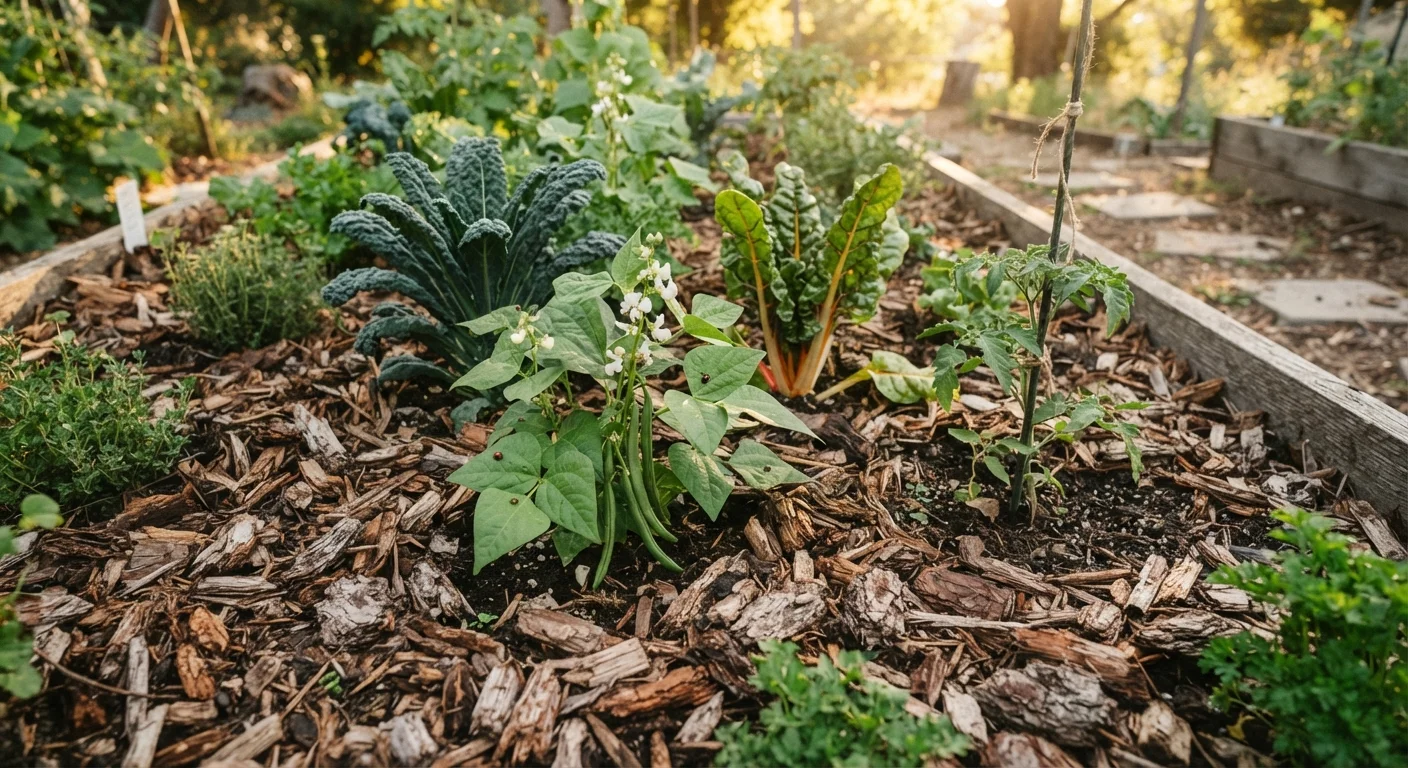
What Organic Mulch Does (and Why It Matters)
Organic mulch is any plant-derived material spread over the soil surface to moderate conditions at the root zone. Unlike synthetic landscape fabric or rubber mulch, organic options gradually decompose - releasing nutrients and improving soil structure in the process. That slow breakdown is the defining advantage.
Three core functions apply to virtually every organic mulch type:
- Moisture retention: A 2-4 inch layer meaningfully slows evaporation, reducing how often you need to water. See how root-zone moisture and evaporation cycles work for context on why this matters.
- Weed suppression: Mulch blocks light from reaching weed seeds in the soil, limiting germination without chemicals.
- Soil biology: As mulch breaks down, it feeds earthworms, fungi, and beneficial bacteria - the living infrastructure that makes nutrients available to plant roots. Feeding the soil ecosystem over time pays dividends well beyond any single season.
The type of mulch you choose affects how quickly these benefits arrive, how long they last, and whether any trade-offs apply to your specific plants or soil.
| Recommended mulch depth | 2-4 inches for most organic types |
| Gap required from stems/trunks | 2-3 inches minimum |
| Wood chip breakdown time | 2-4 years (surface application) |
| Straw breakdown time | Approximately one growing season |
| Best mulch for slopes | Pine needles (resist displacement) |
| Lowest-cost mulch option | Shredded autumn leaves (free if you have trees) |
Main Organic Mulch Types: A Side-by-Side Reference
Each mulch material has a distinct profile. Use this section as a lookup guide when deciding what fits your beds, budget, and goals.
Wood Chips
Coarse wood chips - often available free from municipal programs or tree services - are among the most durable surface mulches. They break down slowly (typically 2-4 years), providing long-lasting weed suppression and moisture retention in ornamental beds and around trees and shrubs. One important note: fresh wood chips temporarily tie up nitrogen in the top inch of soil during decomposition. Keep chips a few inches away from plant stems to prevent rot, and avoid working them into the soil before they've composted. Wood chips are less ideal in vegetable beds where you're turning soil seasonally.
Straw
Straw (the dry stalks left after grain harvest - not hay, which contains seeds) is a popular vegetable garden mulch. It's lightweight, easy to apply, and breaks down within a single season, adding modest organic matter. Its loose texture allows good air flow around plant stems. The primary drawback is that straw purchased in bales can harbor weed seeds if it's not properly cleaned, so source from reputable agricultural suppliers. If you're just starting out, read up on soil preparation basics before applying any mulch to new beds.
Shredded Leaves
Shredded leaves are arguably the most cost-effective mulch available - they're free if you have deciduous trees. Run dry autumn leaves through a lawn mower or leaf shredder before applying; whole leaves can mat together and repel water. Shredded leaves break down in one season, improving soil organic matter noticeably. They're suitable for both vegetable and ornamental beds.
Compost
Finished compost applied as a 1-2 inch top-dressing functions as mulch and soil amendment simultaneously. It breaks down quickly, so it offers less weed suppression than coarser materials but delivers a direct nutrient contribution. Pair it with a coarser mulch on top for better moisture retention. Making your own compost from kitchen scraps reduces material costs significantly.
Grass Clippings
Fresh grass clippings work well as a thin (1-2 inch) mulch layer in vegetable beds. Apply thickly and they mat into an anaerobic layer that smells and can block water - keep layers thin and let them dry slightly before spreading. Avoid using clippings from lawns recently treated with herbicides or pesticides.
Pine Needles (Pine Straw)
Pine needles interlock loosely, resist compaction, and decompose slowly. They are a practical mulch for slopes because they don't wash away easily. Despite a reputation for strongly acidifying soil, research suggests their effect on soil pH is modest in most situations - but they are a natural fit for acid-preferring plants like blueberries and azaleas.
Organic mulch
Any plant-derived material spread over soil to moderate moisture, temperature, and weed growth. Unlike inorganic mulches, organic types decompose and contribute to soil organic matter over time.
Nitrogen drawdown
A temporary reduction in plant-available nitrogen that occurs when soil microbes break down high-carbon materials like fresh wood chips. This happens at the soil surface and rarely affects deep root zones significantly.
Soil organic matter
The fraction of soil composed of decomposed and decomposing plant and animal material. Higher organic matter improves soil structure, water retention, and nutrient availability.
Mulch volcano
A common but harmful practice of piling mulch in a deep mound directly against a tree trunk or plant stem. This traps moisture against bark and promotes rot and disease.
C:N ratio (Carbon-to-Nitrogen ratio)
A measure of the relative amounts of carbon and nitrogen in an organic material. High-carbon materials (wood chips, straw) break down slowly; low-carbon materials (grass clippings, compost) break down quickly.
Anaerobic decomposition
Decomposition that occurs without oxygen, producing unpleasant odors and byproducts that can be harmful to plant roots. Thick, matted layers of wet grass clippings often decompose anaerobically.
Practical Application Guidelines
Knowing the right mulch is only half the job. Applying it correctly determines whether you see the benefits or create new problems.
- Depth: Most organic mulches perform best at 2-4 inches. Thinner layers won't suppress weeds effectively; thicker layers can suffocate roots and encourage fungal disease at plant crowns.
- Keep mulch off stems and trunks: The "mulch volcano" - a mounded pile against a tree trunk - is one of the most common application mistakes. It traps moisture against bark, inviting rot and pest damage. Maintain a 2-3 inch gap around any stem or trunk.
- Timing: Apply mulch after the soil has warmed in spring, not before - mulching cold, wet soil traps moisture and slows warming. Fall application after the first frost helps insulate roots through winter.
- Weed first: Mulch suppresses new weed seeds but won't smother established weeds with deep root systems. Clear existing weeds before applying.
- Replenish seasonally: Faster-decomposing mulches like straw and shredded leaves need annual topping-up. Slower materials like wood chips may only need refreshing every two to three years.
For gardeners deciding between raised beds and in-ground plots, mulch strategy can differ between the two setups - see how drainage and soil control compare between the two approaches. And if you've heard claims about mulch that seem too good to be true, it's worth checking against common garden myths before committing to a method.
This article provides general gardening information for educational purposes. Local conditions, plant types, and soil characteristics vary - consult your local cooperative extension service for region-specific guidance.
The content provided on our blog site traverses numerous categories, offering readers valuable and practical information. Readers can use the editorial team’s research and data to gain more insights into their topics of interest. However, they are requested not to treat the articles as conclusive. The website team cannot be held responsible for differences in data or inaccuracies found across other platforms. Please also note that the site might also miss out on various schemes and offers available that the readers may find more beneficial than the ones we cover.