

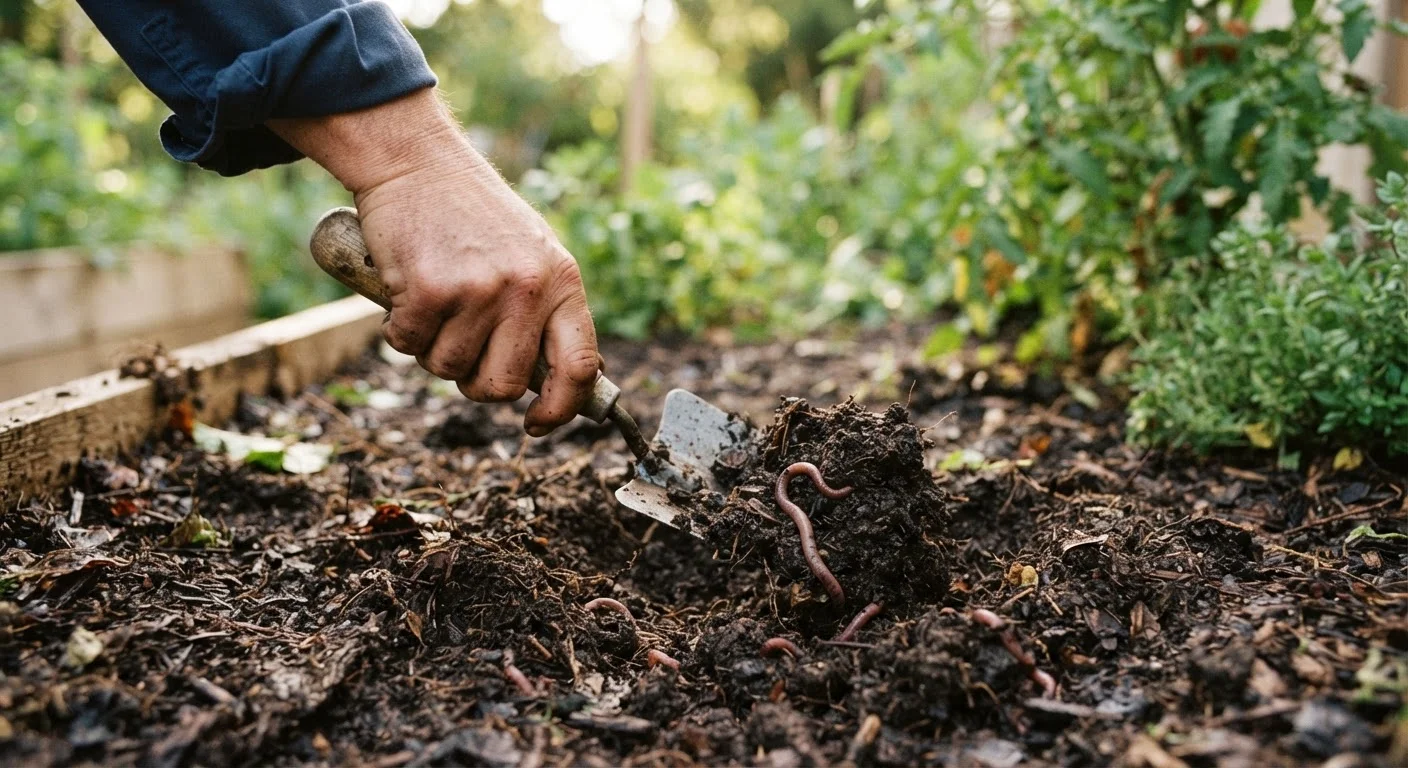
Why Soil Biology Is the Foundation of a Productive Garden
Most gardeners think about feeding their plants. Few think about feeding their soil - and that distinction matters enormously. Beneath every thriving garden bed is a living ecosystem made up of bacteria, fungi, protozoa, nematodes, and larger organisms like earthworms. These organisms collectively break down organic material into plant-available nutrients, suppress certain soil-borne diseases, and create the porous structure that allows roots to breathe and water to drain properly.
Synthetic fertilizers (products that deliver concentrated, water-soluble nutrients) bypass this ecosystem entirely. They work quickly - plants absorb nutrients in days - but they feed the plant, not the soil web. Over time, soil that receives only synthetic inputs can become compacted, lose biological diversity, and require ever-higher fertilizer applications to achieve the same results. Think of it as the difference between handing someone a meal versus teaching them to cook: one solves today's hunger, the other builds long-term capacity.
This matters practically for families on a budget. Biologically active soil retains moisture more effectively, meaning lower water bills. It recycles nutrients from garden debris, meaning less need to purchase amendments. And it supports plants that are naturally more resilient to stress. Whether you're gardening in raised beds or in the ground - see our comparison of raised beds vs. in-ground planting - building soil biology pays dividends in both beds.
Best Practices for Building Long-Term Soil Health
The following practices are supported by horticultural research and the experience of home gardeners. None require expensive equipment. Most rely on materials you already generate at home.
Add finished compost to your beds at least once per season.
Compost introduces organic carbon, which feeds soil microbes and improves soil structure simultaneously. It also supplies a slow-release, balanced range of nutrients without the risk of burning roots that concentrated fertilizers can pose.
Minimize soil disturbance - avoid tilling where possible.
Repeated tilling destroys the fungal networks (called mycorrhizae) that connect plant roots to nutrients and water in the surrounding soil. These networks take months to re-establish after disruption. Reducing tillage preserves them and reduces weed germination by not bringing dormant seeds to the surface.
Keep soil covered with organic mulch year-round.
Bare soil loses moisture rapidly, erodes under rain, and experiences temperature extremes that stress soil organisms. Mulch moderates all three while slowly decomposing to add organic matter.
Plant cover crops during off-season periods.
Cover crops (fast-growing plants like clover, winter rye, or buckwheat grown specifically to benefit the soil) protect soil from erosion, add organic matter when turned in, and some legume varieties fix atmospheric nitrogen, reducing the need for purchased fertilizers.
Reduce or eliminate synthetic fertilizer applications in established beds.
High-nitrogen synthetic fertilizers can stimulate rapid plant growth at the expense of root depth, and some research suggests they may suppress certain beneficial fungal populations. As organic matter builds up, plants increasingly access nutrients through biological channels rather than needing supplemental inputs.
Test your soil before adding amendments.
Adding compost or fertilizer without knowing your soil's baseline can lead to nutrient imbalances. A basic soil test reveals pH and major nutrient levels, letting you amend precisely rather than guessing - saving money and avoiding over-application.
Quick Wins You Can Start This Weekend
You don't need to overhaul your entire garden at once. These actions have an outsized impact relative to the effort involved.
For gardeners with limited outdoor space, these same principles apply in containers and vertical setups - our guide to growing food in small spaces covers how to manage soil health when your garden fits on a balcony.
Thinking Long-Term: Soil as an Investment
Building healthy soil is a compounding investment. In year one, you may notice modest improvements - better water retention, fewer compaction problems. By year three, a garden fed with organic matter and left largely undisturbed can have measurably higher levels of beneficial microbial activity and earthworm populations than when you started.
1 tsp
Healthy soil organisms per teaspoon
USDA Natural Resources Conservation Service estimates that one teaspoon of healthy soil can contain up to one billion bacteria and hundreds of feet of fungal strands.
~5%
Organic matter in productive garden soil
Many horticultural guidelines suggest that productive garden soil contains roughly 5% organic matter by weight, though most typical garden soils start well below this level.
30-50%
Less water needed in biologically active soil
Well-structured soil with high organic matter content can hold significantly more water per unit volume than compacted or depleted soil, according to general soil science principles.
The long-term financial logic is straightforward: healthy soil reduces dependence on purchased inputs. Compost made from kitchen scraps costs almost nothing - our guide to composting at home walks through exactly how to build a system that works. Mulch from shredded leaves or wood chips, covered in our organic mulch field guide, adds organic matter at no cost while suppressing weeds.
Soil Health Takes Seasons, Not Days
Expect incremental improvement rather than dramatic overnight results. Most gardeners notice better water retention and easier digging within one season of adding organic matter, but robust fungal networks and full biological diversity develop over several years. This is a normal part of the process, not a sign that the approach isn't working.
Gardening plans that include long-lived plants benefit especially from a strong soil foundation. If you're deciding between perennials and annuals, see how perennials vs. annuals interact with soil health over multiple seasons. Soil investments also complement smart watering schedules: biologically rich soil buffers moisture swings, giving plants a more forgiving root environment.
“The nation that destroys its soil destroys itself. The single most important thing any gardener can do is to improve the biological life of the soil, year after year.”
— Franklin D. Roosevelt, 32nd President of the United States, speaking on soil conservation
The content provided on our blog site traverses numerous categories, offering readers valuable and practical information. Readers can use the editorial team’s research and data to gain more insights into their topics of interest. However, they are requested not to treat the articles as conclusive. The website team cannot be held responsible for differences in data or inaccuracies found across other platforms. Please also note that the site might also miss out on various schemes and offers available that the readers may find more beneficial than the ones we cover.