

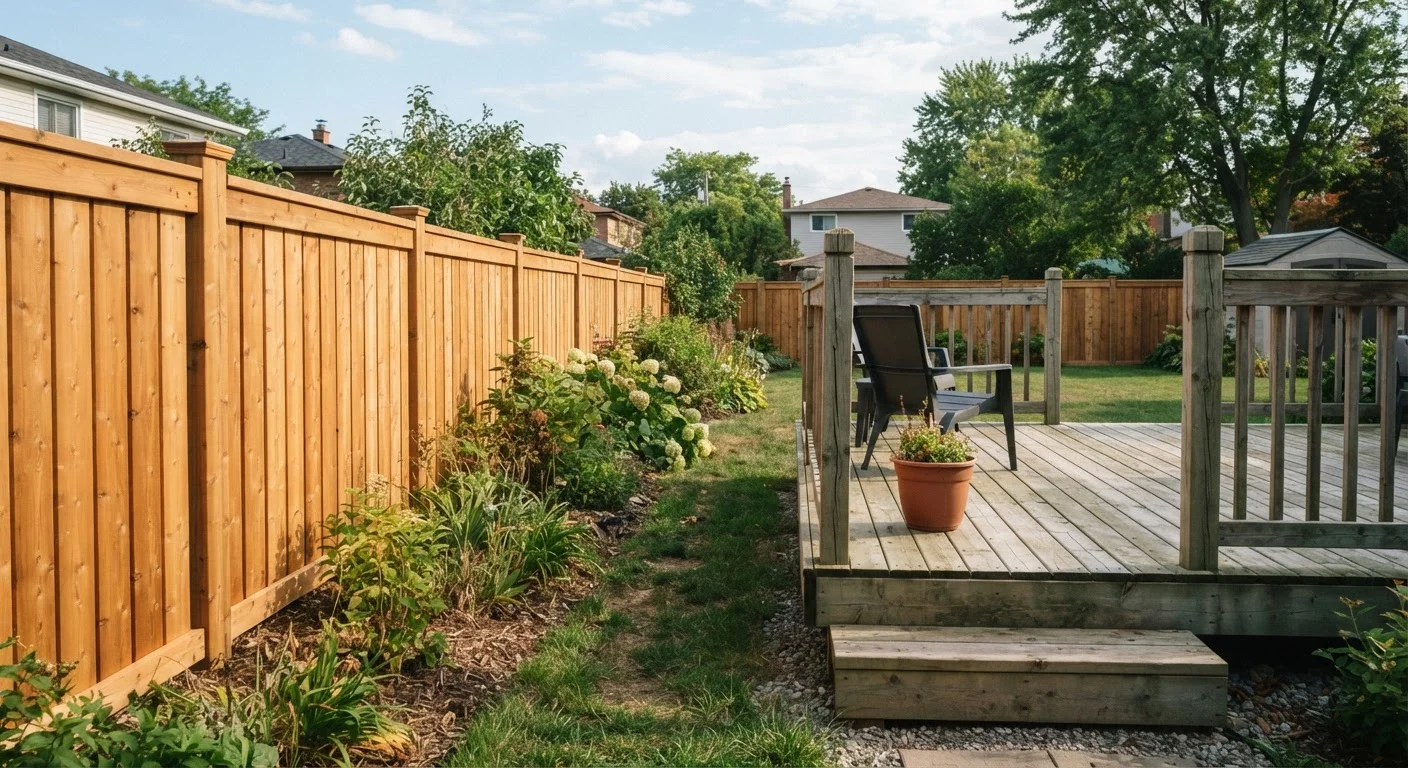
Option A
Pressure-Treated Lumber
The workhorse choice for structural durability at lower upfront cost.
Best for: Decks, pergolas, and ground-contact framing where maximum rot and insect resistance is the priority.
Option B
Cedar
The naturally beautiful, food-safe option that ages gracefully.
Best for: Raised garden beds, fences, and decorative structures where aesthetics and chemical-free wood matter.
What Makes Each Wood Tick
Understanding what sets these two materials apart starts with how they're made. Pressure-treated lumber is typically pine or another softwood that has been infused with chemical preservatives - most commonly ACQ or copper azole - under high pressure. These preservatives penetrate deep into the wood fibers, creating a barrier against rot fungi, moisture damage, and wood-boring insects like termites. The result is a structurally strong, affordable board well-suited for demanding outdoor conditions.
Cedar, by contrast, earns its durability the natural way. The wood contains naturally occurring oils and tannins - aromatic compounds that make it inherently resistant to moisture, decay, and insects without any chemical treatment. Western red cedar is the variety most commonly sold for outdoor construction, prized for its light weight, dimensional stability (it resists warping and shrinking), and appealing grain. It won't last as long as pressure-treated lumber in direct ground contact, but it performs admirably in above-ground applications.
Knowing this distinction shapes every decision downstream - from where you place each material to how you maintain it. If you're also exploring how structural choices affect your home's exterior presentation, see how exterior improvements affect perceived home value for broader context.
| Criterion | Pressure-Treated Lumber | Cedar |
|---|---|---|
| Rot & insect resistance | Chemical preservatives, very high | Natural oils, moderate to high |
| Typical lifespan (above ground) | 25-40+ years | 15-25 years |
| Ground-contact performance | Excellent (rated UC4B/UC4C) | Poor; not recommended |
| Safe for food-growing contact | Not recommended | Yes |
| Upfront cost | Lower | Higher |
| Maintenance frequency | Moderate (seal cut ends; periodic stain) | Higher (reseal every 1-3 years) |
| Aesthetic appeal | Greenish/grey cast; less natural | Warm grain; visually attractive |
| Weight & workability | Heavier; denser | Lighter; easier to cut and handle |
Durability, Longevity, and Maintenance Reality
Both woods can last for decades - but the conditions matter enormously. Pressure-treated lumber rated for ground contact (labeled UC4B or UC4C) can last 40 years or more in direct soil contact under normal conditions. Above-ground pressure-treated wood typically carries a 25-to-40-year lifespan when properly maintained. Cedar, used above ground in a fence or deck, generally holds up for 15 to 25 years with consistent care, and closer to 10 to 15 years when used in raised beds directly contacting moist soil.
Maintenance is where many homeowners underestimate the ongoing cost of ownership. Cedar's natural oils gradually deplete with sun and rain exposure. Without resealing or staining every one to three years, cedar will grey, crack, and lose much of its rot resistance. Pressure-treated wood also benefits from sealing, particularly on cut ends - sealing an end cut immediately after sawing is a best practice that can significantly slow moisture intrusion.
2004
Year arsenic-based wood treatments were phased out
The U.S. EPA reached a voluntary agreement with manufacturers to phase out CCA (chromated copper arsenate) for most residential uses by December 31, 2003, transitioning to safer alternatives.
40+ years
Potential lifespan of ground-contact pressure-treated lumber
Lumber rated UC4B or UC4C for ground contact can achieve this longevity under normal conditions when properly installed and maintained, according to the American Wood Protection Association.
1-3 years
Recommended resealing interval for cedar
Most wood finishing guidelines suggest reapplying a penetrating oil sealer or stain to cedar every one to three years to preserve its natural decay resistance in outdoor conditions.
For projects like raised garden beds, the material longevity calculus shifts. The trade-offs between raised beds and in-ground planting include more than just wood type - but material choice is a foundational decision. For a broader look at what different raised bed materials actually deliver, the guide to low-cost raised bed materials is a useful companion read.
Safety, Cost, and Application-Specific Guidance
The chemical treatment in pressure-treated lumber raises reasonable questions about safety. Modern formulations - phased in after 2004 when arsenic-based treatments were phased out for residential use - are considered safe for most applications, including decks and fences. However, the EPA and most extension services advise against using pressure-treated wood in direct contact with soil where food crops are grown, or in applications where children will have prolonged skin contact with unfinished surfaces. Always wear gloves and a dust mask when cutting pressure-treated lumber, and never burn it.
Cedar carries no such caveats for food-growing contexts, which is why it remains the go-to choice for vegetable and herb beds. Its natural oils pose no documented risk to soil chemistry or plant health.
On cost, pressure-treated lumber is generally less expensive per linear foot - sometimes significantly so, depending on regional lumber markets. Cedar's premium reflects its slower growth and natural properties. For a large deck frame, that difference adds up. For a small raised bed or decorative fence panel, cedar's extra cost may be easy to absorb.
If you're planning an outdoor seating area where material choice directly affects comfort and longevity, the guide to planning an outdoor seating area on a budget covers how to make smart material decisions at different price points.
Always Check Local Building Codes
Deck construction, pergolas, and certain fence heights may require a building permit and inspection in your municipality. Requirements vary widely by location. Before beginning any structural outdoor project, check with your local building department to confirm what permits, inspections, or licensed contractor involvement may be required. Unpermitted work can complicate home sales and insurance claims.
The content provided on our blog site traverses numerous categories, offering readers valuable and practical information. Readers can use the editorial team’s research and data to gain more insights into their topics of interest. However, they are requested not to treat the articles as conclusive. The website team cannot be held responsible for differences in data or inaccuracies found across other platforms. Please also note that the site might also miss out on various schemes and offers available that the readers may find more beneficial than the ones we cover.