

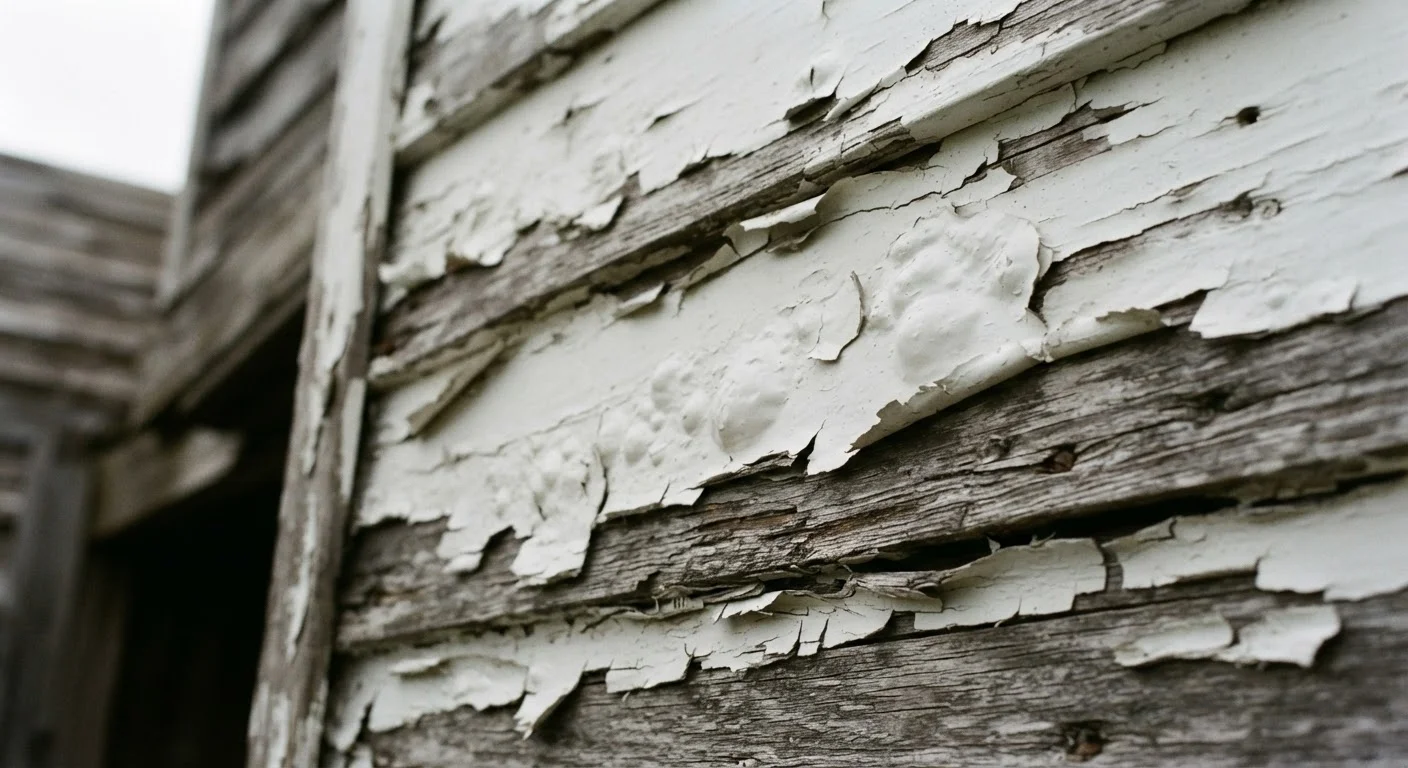
What Failing Exterior Paint Actually Looks Like
Exterior paint doesn't fail all at once - it sends signals first. Knowing what to look for lets you intervene before the damage spreads beyond the surface layer.
Peeling or flaking is the most obvious sign. When paint separates from the substrate in sheets or curls away at the edges, it has lost adhesion - usually because moisture got beneath it. Bubbling or blistering (raised pockets under the paint film) often appears before full peeling sets in and typically points to trapped moisture or a surface that wasn't properly dry before painting.
Chalking is subtler. Run your hand across painted siding and a powdery residue transfers to your palm - that's the binder in the paint breaking down from UV exposure. Some chalking on older paint is normal, but heavy chalking means the protective layer is nearly spent. Cracking or alligatoring - a pattern of cracks resembling reptile scales - signals that the paint film has lost elasticity, often because too many layers have built up or an incompatible primer was used.
Finally, watch for fading or staining that doesn't wash off. Severe color loss suggests the pigment can no longer shield the substrate, while dark streaks below trim or caulk joints often indicate active water movement behind the paint film.
These signs together give you a reliable picture of your home's exterior health. For a parallel on reading warning signs in other systems, see how the same diagnostic mindset applies: reading early warning signs before they become costly repairs.
What Happens When You Ignore the Warning Signs
Paint's primary job isn't aesthetic - it's protective. Once that barrier is compromised, water finds its way to the wood, masonry, or composite substrate underneath, and the damage that follows is progressive and expensive.
Wood rot is the most common consequence on timber-framed and wood-sided homes. Moisture trapped beneath failing paint creates ideal conditions for fungal decay. Soft, spongy, or discolored wood means rot has already taken hold; at that point, painting over it accomplishes nothing. Rotted boards must be replaced before any new paint will hold.
5-10 years
Typical exterior paint lifespan
Most manufacturers rate quality exterior latex paint at five to ten years depending on climate exposure, substrate type, and application quality.
Up to 10x
Cost multiplier for ignored water damage
Home maintenance professionals commonly note that water intrusion caught early - at the paint or caulk stage - can cost a fraction of what structural repair runs once rot sets in.
Structural compromise can follow if rot reaches sheathing, framing members, or window and door surrounds. What starts as a few failed paint chips on a windowsill can eventually mean replacing structural components - a job that costs many times what timely repainting would have.
Mold and mildew can migrate inward. Once moisture penetrates siding regularly, it can reach wall cavities, insulation, and interior surfaces. Mold remediation is both costly and disruptive to household health.
The financial logic is straightforward: deferred maintenance compounds quickly, and exterior paint is one of the clearest examples of a small preventive cost that forestalls a much larger corrective one. Failing paint also affects perceived home value - exterior condition shapes first impressions for appraisers and buyers alike.
Wood Rot Cannot Be Painted Over
If you find soft, discolored, or crumbling wood beneath peeling paint, repainting is not a solution. Rotted material must be fully removed and replaced - or treated with an appropriate wood consolidant for minor surface rot - before any new paint or primer is applied. Painting over rot traps moisture and accelerates decay rather than stopping it. When in doubt about the extent of structural rot, consult a licensed contractor before proceeding.
Common Mistakes Homeowners Make with Exterior Paint
Most exterior paint failures aren't random - they trace back to predictable, avoidable decisions. Understanding these mistakes helps you protect your investment before a problem starts or address one that's already developing.
Painting over failing or contaminated surfaces without proper preparation.
Why it happens: Homeowners often prioritize getting paint on the wall quickly, especially when trying to refresh appearance before a season change or sale. Scraping, sanding, and cleaning feel like optional steps.
Skipping or underestimating the primer coat on bare or patched areas.
Why it happens: Paint-and-primer-in-one products create the impression that a separate primer step is unnecessary, even on exposed wood or repaired sections.
Applying exterior paint in poor weather conditions - too cold, too hot, or too humid.
Why it happens: Project windows feel narrow, and homeowners push through regardless of conditions. Paint labels with temperature ranges are easy to overlook.
Caulking over cracked or open joints after the new paint is already applied.
Why it happens: Caulk and paint are often treated as separate jobs, so caulking is sometimes forgotten until gaps become visible after painting is done.
Waiting too long to repaint, treating exterior paint as lower priority than interior updates.
Why it happens: Interior wear is seen daily; exterior paint degrades gradually and is easier to overlook, especially on sides of the home that aren't the front facade.
Surface preparation is the factor that most consistently separates a paint job that lasts a decade from one that begins failing in two years. The same principle applies indoors: interior paint longevity also depends on prep and primer, not just the topcoat quality.
Older Homes May Have Lead-Based Paint
Homes built before 1978 may have exterior paint containing lead. Sanding, scraping, or pressure-washing lead paint creates hazardous dust. Before disturbing paint on an older home, have surfaces tested by a certified lead inspector or risk assessor. The EPA's Renovation, Repair, and Painting (RRP) Rule governs work on pre-1978 homes, and certain projects legally require certified contractors. Check with your local health department or the EPA for guidance specific to your situation.
The content provided on our blog site traverses numerous categories, offering readers valuable and practical information. Readers can use the editorial team’s research and data to gain more insights into their topics of interest. However, they are requested not to treat the articles as conclusive. The website team cannot be held responsible for differences in data or inaccuracies found across other platforms. Please also note that the site might also miss out on various schemes and offers available that the readers may find more beneficial than the ones we cover.