

Our Verdict
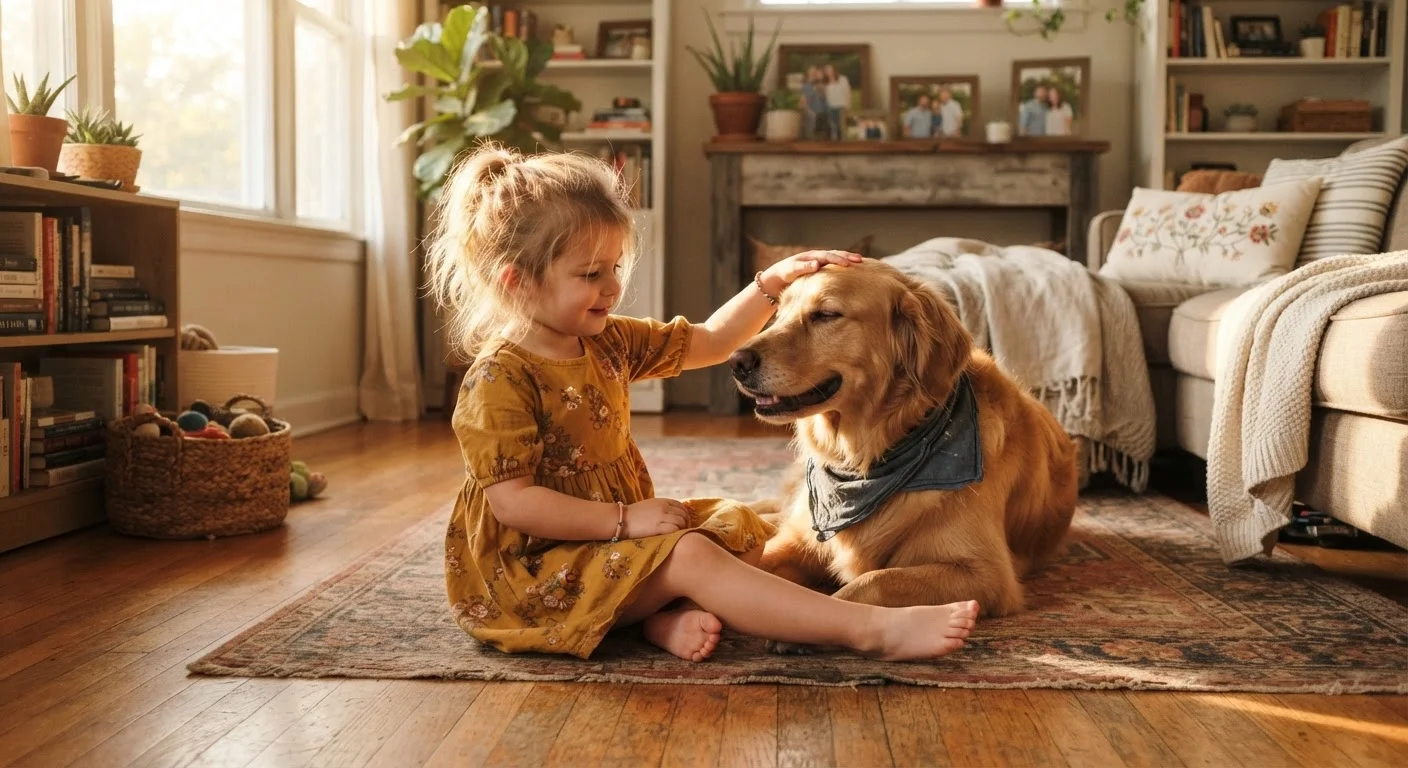
Getting a dog when your kids are young can be genuinely enriching, but it adds a layer of daily responsibility that stretched families sometimes underestimate. The families who do best are those who research temperament carefully, set up realistic routines before the dog arrives, and commit to ongoing supervision and training. There is no universally right answer - only the answer that fits your household's real capacity right now.
Families with at least one parent who has time for daily dog care, some prior pet experience, and the financial cushion to handle veterinary costs without serious strain.
Why This Decision Deserves More Than Gut Feeling
A puppy under the Christmas tree is a powerful image. But the day-to-day reality of raising a dog alongside toddlers or school-age children looks quite different from that first joyful morning. For families weighing this step, the most useful thing isn't a cheerleader or a warning - it's an honest inventory of what life with a young child and a dog actually involves.
This is a decision shaped by your household's specific energy, schedule, living space, and budget. The complete family guide to raising kids and pets together explores the full arc of that journey - but here, we focus specifically on the advantages and real costs of bringing a dog home during the early childhood years.
Builds empathy and emotional awareness in young children
Caring for a creature that can't speak encourages children to pay attention to body language and nonverbal cues. This kind of attunement is a building block of emotional intelligence that extends well beyond the family pet.
Introduces consistent daily routines
Dogs thrive on predictable schedules, and that structure benefits young children too. Feeding times, walks, and bedtime routines become natural anchors in the family's day.
Provides a source of unconditional companionship
For children navigating the social complexity of early childhood, a dog offers a relationship that is reliably warm and non-judgmental. Many adults describe their childhood dog as one of their most trusted early companions.
Encourages physical activity outdoors
Regular walks and outdoor play sessions benefit both the dog and the children who join them. Families with dogs tend to spend more time outside, which supports children's physical development and mental wellbeing.
Can teach age-appropriate responsibility
Even young children can participate in simple tasks like pouring kibble or retrieving the leash. These contributions give children a meaningful role and a sense of accomplishment within the family.
The Genuine Downsides Families Often Underestimate
None of the following should be treated as reasons to avoid dogs altogether - but they are the areas where families most commonly feel blindsided in the first year.
Demands significant time during already busy years
Young children are time-intensive. Adding a dog - especially a puppy - means doubling down on caregiving during years that are already stretched. Training, exercise, and emotional reassurance for the dog don't pause when a toddler is having a hard week.
Veterinary costs can be unpredictable and significant
Routine care (vaccinations, annual exams, parasite prevention) runs into hundreds of dollars per year, and unexpected illnesses or injuries can add thousands more. Families without a financial cushion can find these costs genuinely stressful.
Constant supervision between dog and child is essential
Children under five and dogs should not be left unsupervised together, full stop. For parents already managing nap schedules, school runs, and work demands, maintaining that vigilance takes real ongoing effort.
Travel and childcare logistics become more complicated
Every trip away from home now requires a plan for the dog - boarding, a pet sitter, or a willing family member. This adds cost and coordination to family travel that many parents don't fully anticipate before bringing a dog home.
A poorly matched dog can create lasting stress
A high-energy or anxious dog in a chaotic household can develop behavioral problems that are difficult and expensive to address. Choosing a dog whose temperament genuinely suits young children takes research and, ideally, time spent with the individual animal.
Timing Matters More Than You Might Think
Families who bring a dog home when children are between ages five and eight often find the transition smoother than those who do so with infants or toddlers. Older young children can better understand boundaries and participate meaningfully in care - but that doesn't mean younger families can't succeed. It simply means going in with eyes open about the additional supervision required in those earliest years.
If you're comparing dogs with other family pets, the practical comparison of dogs and cats as family pets breaks down differences in supervision needs, costs, and daily demands that can help you weigh your options clearly.
Safety: What Parents Need to Know
One of the most common concerns parents raise is safety - and it deserves a straightforward answer. Dog bites do happen, and children under age five are among the most frequently affected. This isn't a reason to panic, but it is a reason to plan.
The most protective thing a family can do is never leave a dog and a young child alone together, even briefly, and even with a dog that has always been gentle. Children move unpredictably, make sudden sounds, and may not recognize signs of stress in a dog's body language. See what the evidence says about pets and young children's safety for a grounded look at which risks are real and which are overstated.
Understanding a dog's individual personality - not just its breed - is equally important. The traits that make a pet truly kid-friendly include energy level, tolerance for noise, and how a dog responds to being handled unexpectedly.
~50%
Dog bites involving children under 14
The American Veterinary Medical Association notes that children are disproportionately represented in dog bite statistics, with most incidents occurring with familiar dogs.
~$1,500
Estimated average first-year dog ownership cost
The American Society for the Prevention of Cruelty to Animals estimates first-year costs for a medium-sized dog, including supplies and routine vet care, at roughly $1,500 or more, not including emergencies.
The Educational and Emotional Upside for Kids
When the fit is right and the structure is in place, growing up with a dog can offer children something genuinely valuable. Responsibility built into daily routines - filling a water bowl, walking alongside a parent, learning to read a dog's mood - contributes to emotional literacy in ways that are hard to replicate artificially.
Research suggests that children who care for animals regularly show stronger empathy and a greater sense of competence. How caring for animals supports children's learning explores this connection in more depth, including how even simple pet-care tasks can reinforce skills developed in the classroom.
These benefits don't happen automatically, though. They emerge when parents create age-appropriate roles for children in the dog's care and model respectful, calm interactions themselves.
This article is for general informational purposes only and does not constitute professional veterinary, medical, or financial advice. Consult qualified professionals for guidance specific to your family's circumstances.
The content provided on our blog site traverses numerous categories, offering readers valuable and practical information. Readers can use the editorial team’s research and data to gain more insights into their topics of interest. However, they are requested not to treat the articles as conclusive. The website team cannot be held responsible for differences in data or inaccuracies found across other platforms. Please also note that the site might also miss out on various schemes and offers available that the readers may find more beneficial than the ones we cover.