

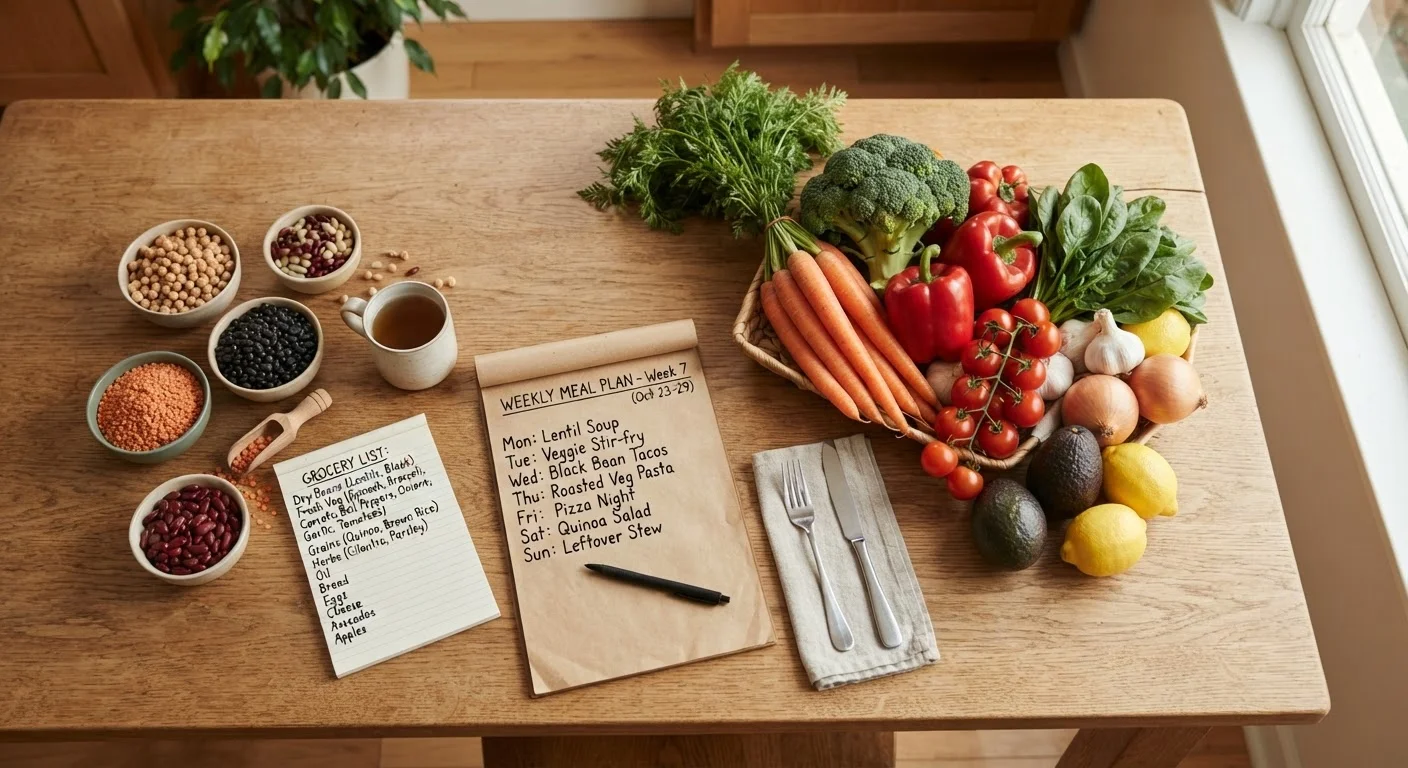
Why Most Budget Meal Plans Fail After a Few Weeks
Plenty of families start a meal plan with genuine enthusiasm - and abandon it within a month. The most common reason isn't a lack of effort; it's that the plan was built around recipes rather than a system. Individual recipes can be cheap, but without a repeatable framework, each week feels like starting from scratch.
Effective budget meal planning isn't about finding the lowest-cost dishes. It's about building habits that make planning, shopping, and cooking easier over time - so the savings compound rather than disappear when life gets busy. See our approach to meal planning as a financial habit for a fuller look at how this mindset shift pays off.
Core Principles for Meals That Save Money Consistently
The practices below aren't hacks or shortcuts - they're structural habits that experienced budget cooks use to keep costs predictable and meals satisfying. Apply them together, and they reinforce each other.
Plan around ingredient overlap, not individual recipes
When multiple meals share a core ingredient - say, a large batch of cooked beans or roasted vegetables - you buy less overall and reduce the chance that a single item gets used once and forgotten. This also cuts prep time, which matters for busy families.
Track what your family actually eats, not what you wish they'd eat
Meal plans fail when they're aspirational rather than realistic. Food bought for meals no one wants ends up wasted - and wasted food is wasted money. A simple running note of which meals were hits and which were skipped gives you reliable data to plan from.
Set a per-week grocery target before you write the plan
Without a number to plan toward, grocery spending tends to expand to fill whatever is available. Establishing a target - even a rough one - creates a useful constraint that shapes which meals you choose. This connects meal planning directly to household budgeting.
Rotate a small set of reliable, low-cost meals rather than seeking constant novelty
Variety is valuable, but chasing new recipes every week drives up ingredient costs and decision fatigue. Families who maintain a rotation of 10-15 tested, affordable meals can plan faster, shop more efficiently, and waste less.
Do a pantry and freezer check before every planning session
Buying duplicates of what you already have is one of the quieter budget leaks in grocery spending. A pre-planning check takes five minutes and ensures your meal plan uses what's already on hand before adding new purchases.
Build one or two "use-it-up" meals into each weekly plan
Planned leftover nights and intentional "clean out the fridge" meals reduce food waste and lower the effective cost per meal for the week. They also act as a buffer when the plan shifts due to schedule changes.
Building Flexibility Into Your Weekly Plan
A rigid plan - seven dinners locked in with no substitutions - breaks the moment a schedule changes or an ingredient isn't available. Budget planners who stick with it long-term almost always build in what experienced home economists call "flex nights": one or two evenings per week reserved for leftovers, pantry meals, or a simple repeat from earlier in the week.
This isn't laziness - it's waste prevention. Leftovers used deliberately rather than discarded are one of the highest-leverage moves in grocery budgeting. Our smarter weekly grocery planning framework walks through how to build this structure into your list before you ever reach the store.
Anchoring Your Plan to Pantry Staples
Families who consistently spend less on groceries tend to share one habit: they cook from a reliable set of shelf-stable ingredients rather than buying everything fresh for each new recipe. Dry legumes, whole grains, canned tomatoes, and similar staples have low per-serving costs, long shelf lives, and work across dozens of meals.
The practical move is to audit your pantry before planning each week's meals - not after. That check tells you what you already have, what needs to be used, and what protein or vegetable would round out a low-cost meal without requiring a special trip. For a detailed breakdown of which staples deliver the most value, see our guide to pantry staples that stretch a grocery budget further. And for how to pair those staples with balanced nutrition, feeding a family on a tight budget without sacrificing nutrition covers the nutritional side of the same equation.
Nutrition Matters Alongside Cost
Budget meal planning shouldn't come at the expense of nutritional balance. Staple-heavy diets can be highly nutritious when they include a variety of vegetables, legumes, and whole grains alongside affordable proteins. For guidance on keeping meals both affordable and balanced, see our family nutrition hub and the related guide on pantry staples that make healthy family cooking doable.
This article provides general financial and household planning information for educational purposes. For personalized financial guidance, consult a qualified financial adviser.
The content provided on our blog site traverses numerous categories, offering readers valuable and practical information. Readers can use the editorial team’s research and data to gain more insights into their topics of interest. However, they are requested not to treat the articles as conclusive. The website team cannot be held responsible for differences in data or inaccuracies found across other platforms. Please also note that the site might also miss out on various schemes and offers available that the readers may find more beneficial than the ones we cover.