

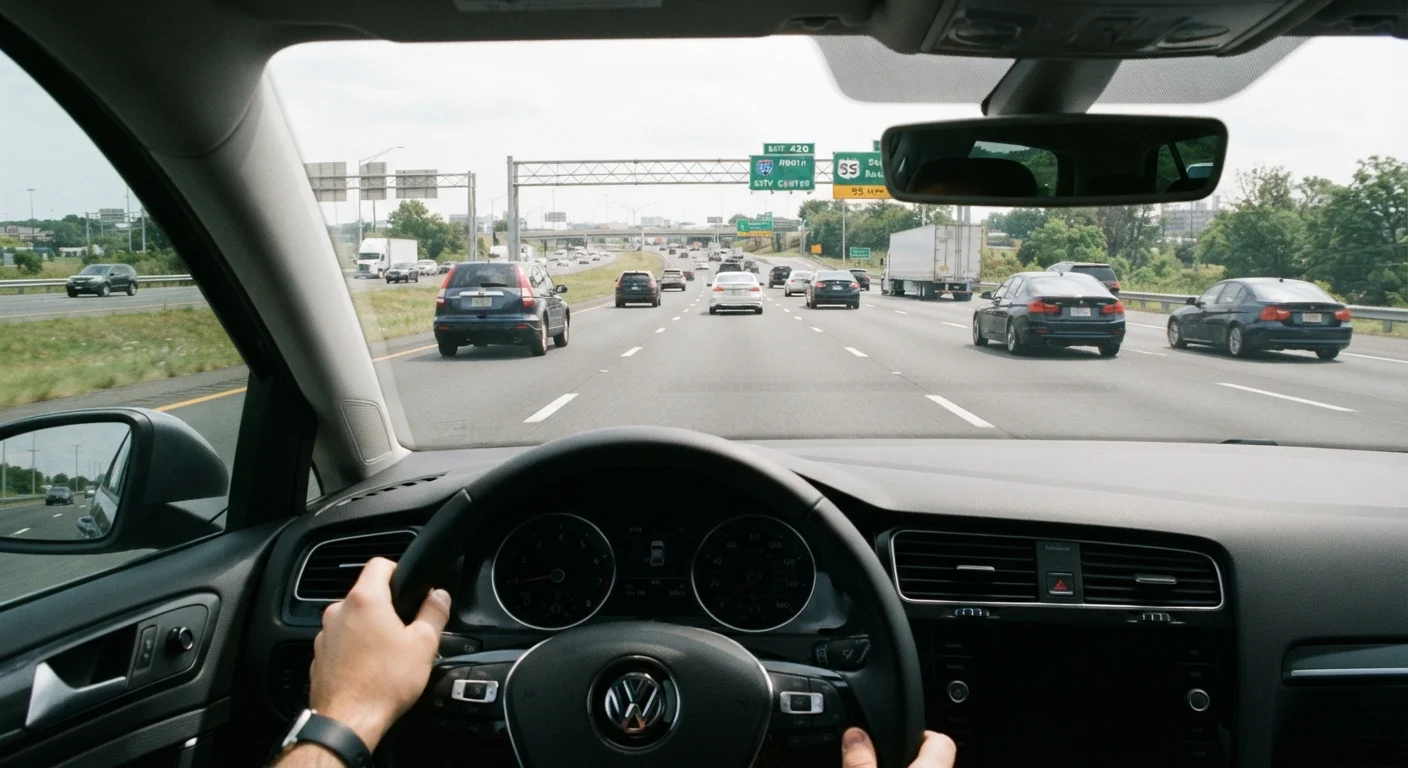
More Than Caution: What Defensive Driving Really Means
Most drivers think of defensive driving as simply being careful - staying in their lane, not speeding, avoiding tailgaters. But the concept goes significantly deeper than that. Defensive driving is an anticipatory mindset: you are constantly reading the road ahead, tracking the behavior of other vehicles, and planning your response to hazards that haven't fully materialized yet.
The core idea is that you cannot control what other drivers do - but you can control your position, speed, and attention so that their mistakes don't become your emergency. This distinction matters. A reactive driver responds after a problem appears. A defensive driver has already created an escape route before one is needed.
For a deeper look at the perceptual skill that makes this possible, see what situational awareness looks like behind the wheel - it's the foundation on which defensive driving is built.
“The goal of defensive driving is not to be a timid driver - it is to be a thinking driver. You are always asking: what could go wrong here, and what will I do if it does?”
— National Safety Council, U.S. nonprofit organization dedicated to eliminating preventable deaths
The Core Principles in Practice
Defensive driving is taught through several well-established principles. Applied consistently, they significantly reduce collision risk:
- Maintain a safe following distance. The 3-second rule - counting seconds between the car ahead passing a fixed point and your car reaching it - gives you reaction time when traffic stops suddenly. Increase this gap in rain, fog, or at highway speeds.
- Scan ahead, not just immediately in front. Look 10-15 seconds down the road (roughly a city block at typical speeds). This early visual horizon lets you spot slowing traffic, merging vehicles, or pedestrians entering the roadway with enough time to adjust smoothly.
- Manage your blind spots actively. Mirrors reduce blind spots but don't eliminate them. Make brief shoulder checks before changing lanes, and position yourself to minimize time spent in others' blind spots.
- Eliminate distractions before they pull your attention. Set your GPS before moving, silence non-essential notifications, and secure loose items. Cognitive distraction - thinking about something other than driving - is as dangerous as looking away from the road.
- Adjust for conditions, not just posted limits. Posted speed limits assume standard conditions. Rain, heavy traffic, construction zones, and night driving all call for extra margin.
Use Every Red Light as a Reset
While stopped at a traffic light, take a moment to check your mirrors, re-grip the wheel properly, and mentally note road conditions ahead. This brief pause helps counter the autopilot effect that builds on familiar routes - one of the quieter risk factors for experienced drivers.
These habits are especially important when children are aboard. Practices that protect the whole family builds directly on these principles for parents and caregivers.
Defensive vs. Aggressive: Where the Line Falls
A common misconception is that defensive driving means passive or hesitant driving - yielding to every merge, braking unnecessarily, or being easily bullied by aggressive drivers. That's not it. Defensive driving includes making confident, decisive moves when appropriate: clean merges, timely lane changes, and clear signaling.
What it excludes is behavior driven by frustration or ego - tailgating to pressure a slow driver, weaving through gaps, or reacting to provocation. Those responses raise your crash risk without improving your travel time. Understanding where assertive ends and aggressive begins is a useful companion read for anyone who wants to draw that line clearly.
~94%
Crashes with a human behavior factor
According to the National Highway Traffic Safety Administration (NHTSA), the vast majority of traffic crashes involve human error as a critical factor - underscoring why behavior-based skills matter.
3 sec
Recommended minimum following distance
The 3-second rule is a widely taught guideline from safety organizations including the NSC; experts recommend extending it to 4-5 seconds in adverse weather or at highway speeds.
~8 sec
Average eyes-off-road per text message
NHTSA estimates that reading or sending a text diverts a driver's eyes for roughly 5 seconds - at 55 mph, that's the length of a football field traveled without looking at the road.
Weather conditions add another layer of complexity. The same defensive principles apply - but the margins shrink. Rainy weather driving habits explains how to adapt when traction and visibility deteriorate.
Building the Habit Over Time
Defensive driving isn't a skill you perfect once - it requires deliberate, consistent practice to become second nature. New and experienced drivers alike benefit from periodic self-assessment. Ask yourself: Am I scanning far enough ahead? Do I leave enough space in stop-and-go traffic? Am I mentally present on every trip, or just going through the motions?
If you have teenagers approaching driving age, instilling these habits early pays long-term dividends. Foundational habits for new drivers covers how to structure that process before a teen drives solo.
Formal defensive driving courses - available in-person and online through organizations like the NSC and AAA - offer structured reinforcement and, in many states, insurance or point-reduction benefits. Even veteran drivers often find a refresher course surfaces habits that have quietly slipped.
The payoff isn't just safety. Fewer incidents mean lower insurance costs over time - a meaningful consideration for any household budget. For broader strategies on managing vehicle-related expenses, building savings and managing household costs wisely offers practical guidance.
This article provides general road safety information for educational purposes. Always follow the traffic laws applicable in your state and consult a certified driving instructor for personalized training.
Frequently Asked Questions
No. Defensive driving is about awareness and anticipation, not necessarily speed. Driving too slowly can itself create hazards. The principle is matching your speed appropriately to conditions while staying alert and leaving room to react.
Absolutely. Experienced drivers can develop blind spots in their habits over time. Refreshing defensive driving skills helps correct complacency, which is one of the most common factors in long-term driver accidents.
A commonly recommended guideline is the 3-second rule - pick a fixed point ahead, and make sure at least three seconds pass between the vehicle in front passing it and your vehicle reaching it. In poor weather or at higher speeds, increase that gap further.
In many states, completing a certified defensive driving course qualifies you for a discount on your auto insurance premium. Check with your insurer and your state's DMV for specifics, as eligibility and discount amounts vary.
Other drivers' unpredictable behavior is the most common hazard. Defensive driving equips you to anticipate sudden lane changes, abrupt stops, and distracted driving from those around you before those actions create a crisis.
Yes. Rural roads, neighborhood streets, and parking lots all carry risks - from pedestrians stepping out to vehicles pulling from driveways. Defensive habits apply everywhere, not just on congested highways.
The content provided on our blog site traverses numerous categories, offering readers valuable and practical information. Readers can use the editorial team’s research and data to gain more insights into their topics of interest. However, they are requested not to treat the articles as conclusive. The website team cannot be held responsible for differences in data or inaccuracies found across other platforms. Please also note that the site might also miss out on various schemes and offers available that the readers may find more beneficial than the ones we cover.