

Our Verdict
Ditching the gym permanently is a genuinely viable fitness strategy for many families - particularly those prioritizing cost savings, schedule flexibility, and low-barrier daily movement. The trade-offs are real, especially around equipment access, social motivation, and certain performance goals, but they are manageable with deliberate planning. This is general fitness information; consult a qualified health professional before making major changes to your exercise routine.
Best suited for budget-conscious families, parents of young children, and individuals whose primary goals are general health, weight management, and consistent movement rather than competitive sport or advanced strength training.
What You Actually Save - and What It Costs You
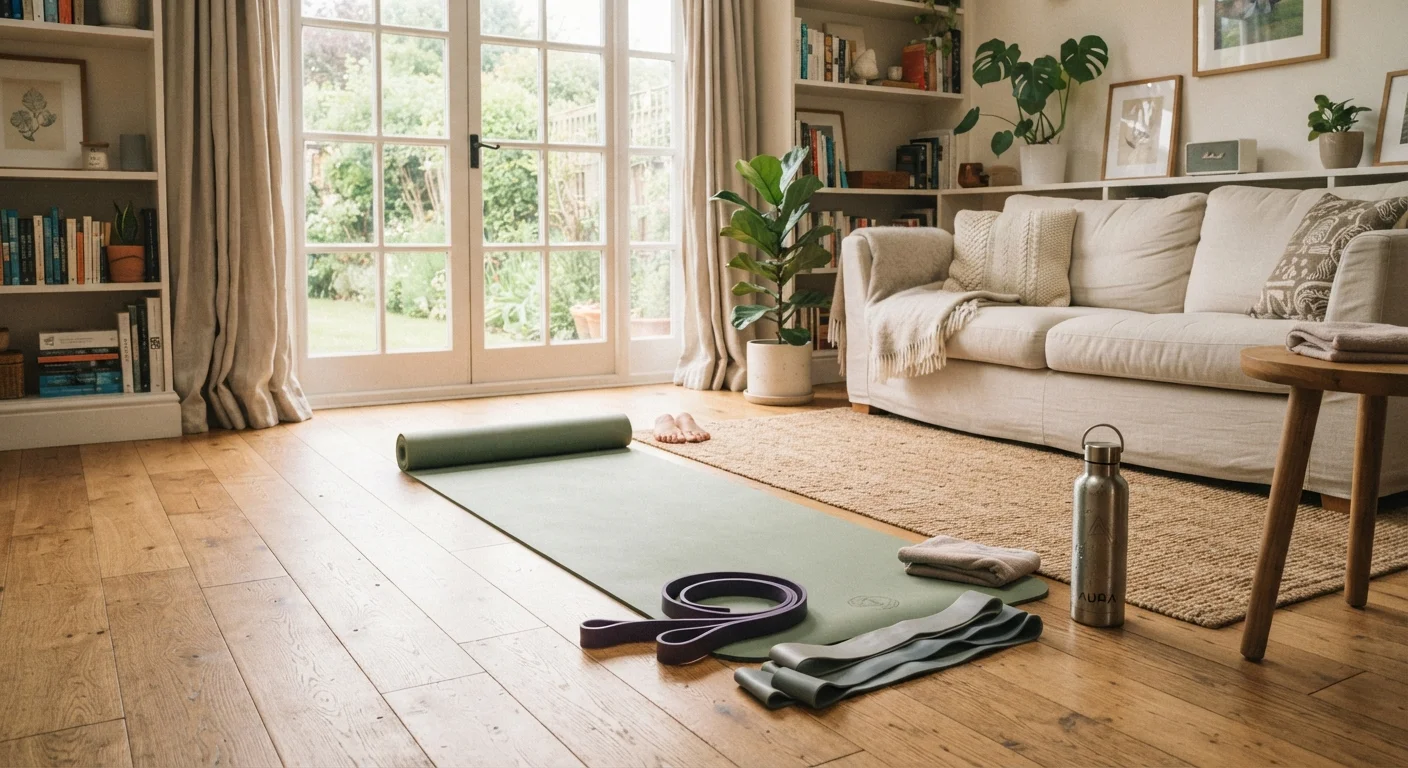
The financial case for going gym-free is straightforward. Average gym membership costs in the US range from roughly $40 to over $80 per month, and that figure multiplies quickly across a household. Redirecting that spending toward a minimal home setup - a mat, resistance bands, and perhaps a set of adjustable weights - typically pays for itself within a few months.
But the financial trade-off cuts both ways. Gyms provide infrastructure - barbells, cable machines, cardio equipment, pools - that most homes cannot realistically replicate. If your goals specifically require heavy compound lifting, sport-specific machines, or supervised rehab equipment, the cost of filling that gap at home may eventually approach what a membership would have cost. For general health and fitness, however, bodyweight training delivers genuine results without a significant equipment investment.
Significant annual cost savings for families
Eliminating gym memberships for two adults can free up $1,000 or more per year, money that can be redirected toward household priorities or a modest home setup.
No commute - workouts fit into real family schedules
Removing travel time lowers the activation energy required to exercise, making it easier to maintain consistency around irregular family demands.
Privacy and comfort for self-conscious exercisers
Many people - especially those returning to fitness after a break - find it easier to start and stay consistent without the social pressure of a gym floor.
Family can exercise together in the same space
Home workouts can involve children or partners naturally, turning fitness into shared time rather than a solo errand.
Flexible scheduling - any time of day
Unlike gyms with peak hours and limited class slots, home workouts can happen at 6 a.m. or 9 p.m. without planning around facility access.
The Convenience Advantage - and Its Hidden Friction
Removing the commute to a gym is a legitimately powerful benefit. Research consistently identifies time as one of the top barriers to regular exercise. When a workout can start the moment children are napping or a work call ends, compliance tends to improve. For families juggling school pickups, irregular schedules, and competing demands, this flexibility can be the difference between exercising consistently and not exercising at all.
The hidden friction, though, is motivational. Gyms create a dedicated behavioral cue - you arrive, you work out. At home, that cue must be engineered internally. Interruptions from family members, the pull of household tasks, and the absence of a socially charged environment all reduce the psychological momentum that many people rely on without realizing it. Building a sustainable home routine requires deliberate habit architecture that the gym provided passively.
Accountability Doesn't Have to Come From a Building
Virtual fitness communities, workout-sharing apps, and scheduled video sessions with friends can partially replicate the social accountability a gym provides. Some families find that involving a child or partner in home workouts serves a similar function - creating a shared expectation that makes skipping feel less easy. Experimenting with these structures early is more effective than relying on willpower alone.
What You Give Up Beyond Equipment
Gyms offer more than machines. For many members, they provide a low-stakes social environment, a degree of professional oversight through trainers, and the subtle accountability of exercising alongside others. These are not trivial losses. Studies on exercise adherence consistently show that social support and perceived accountability are among the strongest predictors of long-term consistency.
Variety is also a real consideration. Group fitness classes, swimming, racquet sports, and climbing walls are difficult to replicate at home. If your motivation depends heavily on novelty and community, removing those elements entirely may undermine long-term engagement. Cardio options at home have improved with streaming platforms and outdoor activity, but the range is genuinely narrower.
Limited access to heavy strength equipment
Barbells, squat racks, cable machines, and heavy free weights are expensive and space-intensive, making certain strength goals harder to pursue at home.
Reduced social accountability and community
The informal accountability of seeing the same faces at the gym, and the social energy of group classes, is difficult to replicate at home and affects long-term adherence for many people.
Higher self-discipline requirement
Without a dedicated environment and external cues, maintaining workout consistency relies almost entirely on intrinsic motivation, which fluctuates under stress.
Fewer variety and novelty options
Swimming, group cycling, climbing, and instructor-led classes require specialized facilities that most home setups cannot reasonably provide.
Space constraints limit exercise selection
Apartments and smaller homes may restrict movements that require floor space, ceiling height, or multiple pieces of equipment operating simultaneously.
Making the Home-Only Approach Work Long-Term
The families most likely to succeed without a gym are those who treat the decision as a system to build, not simply a subscription to cancel. That means scheduling workouts with the same firmness as other commitments, addressing space constraints proactively - even small apartments can support effective training - and tracking progress in meaningful ways rather than chasing gym-centric metrics that don't apply. See our guide on what's actually worth measuring for a practical framework.
It also helps to debunk the assumptions that make home workouts feel inadequate before they start. Common misconceptions - that sessions must be long, that equipment is mandatory, that results will plateau quickly - are addressed directly in our look at exercise myths families believe. The evidence broadly supports home training as a durable, effective choice for most fitness goals when approached with realistic expectations and a consistent structure.
$507-$1,200+
Estimated annual gym membership cost per adult
Based on average US gym pricing data; costs vary widely by facility type, location, and included amenities.
~30%
Gym members who attend regularly
Industry estimates suggest a significant proportion of members use their gym infrequently, meaning many families pay for access they rarely use.
This article is for general informational purposes only and is not a substitute for professional medical or fitness advice. Consult a qualified healthcare provider before starting or significantly changing any exercise program.
The content provided on our blog site traverses numerous categories, offering readers valuable and practical information. Readers can use the editorial team’s research and data to gain more insights into their topics of interest. However, they are requested not to treat the articles as conclusive. The website team cannot be held responsible for differences in data or inaccuracies found across other platforms. Please also note that the site might also miss out on various schemes and offers available that the readers may find more beneficial than the ones we cover.