

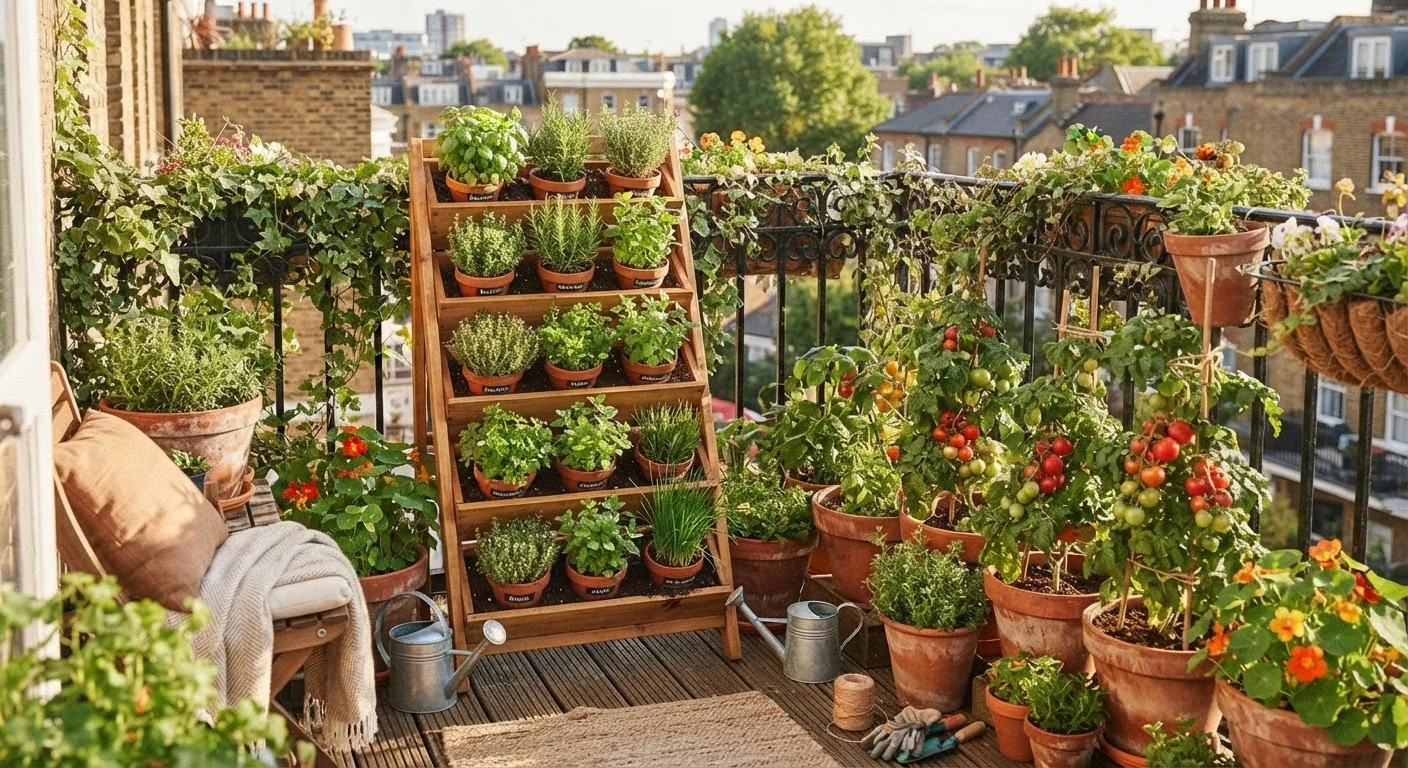
Why Small-Space Food Growing Works
The assumption that food gardening requires a sprawling backyard is outdated. Container gardening, vertical systems, and balcony plots have allowed urban families across the US to grow meaningful amounts of fresh food - herbs, greens, peppers, tomatoes - in surprisingly tight quarters.
The key shift is thinking in volume and vertical height rather than square footage. A well-configured 6-foot balcony can outproduce a poorly managed raised bed twice its size. The payoff goes beyond the harvest: growing your own food connects families to seasonal eating and can contribute - in a modest, realistic way - to household food budgets. For broader context on family nutrition strategies, understanding how homegrown produce fits into a balanced diet is worth exploring alongside your garden planning.
Think in Harvests, Not Just Plants
Succession planting - sowing a small batch of fast crops like lettuce or radishes every two to three weeks - keeps your containers continuously productive rather than producing one large flush and going bare. This is especially valuable in small spaces where every container needs to earn its place.
Choosing the Right Containers
Container depth is the single most important factor most beginners overlook. Different crops need different root room:
- Shallow (6-8 inches): Lettuce, radishes, herbs like basil and chives
- Medium (10-12 inches): Bush beans, spinach, chard, compact peppers
- Deep (14+ inches): Tomatoes, cucumbers, eggplant, carrots
Material matters too. Plastic pots retain moisture longer than terracotta, which matters on hot balconies where daily watering can become a burden. Fabric grow bags - porous, collapsible containers - are particularly useful because they air-prune roots (preventing root circling) and are easy to store off-season.
Drainage is non-negotiable. Every container must have drainage holes. Standing water leads to root rot, which is the most common killer of container plants. Elevating pots slightly on risers or pot feet improves airflow and drainage further.
6-8 hrs
Daily sun most fruiting crops require
University extension services consistently cite full sun (6-8 hours) as the minimum for productive tomatoes, peppers, and beans in container settings.
40-60 lbs
Weight of a single saturated large container
A 15-inch pot filled with wet potting mix can weigh this much - a key factor when assessing balcony load limits before setting up a container garden.
22 days
Minimum days to harvest for radishes
Radishes are among the fastest-maturing vegetables and are widely recommended by gardening educators as a confidence-building first crop for new growers.
Vertical Growing: Maximize Walls and Railings
Vertical growing systems - wall-mounted pocket planters, tiered shelving, trellis frames - allow you to stack growing capacity upward rather than outward. This approach suits both balconies and small patios.
A few practical configurations work particularly well in small spaces:
- Railing planters: Hook-on planters attach to balcony railings and are ideal for trailing herbs like thyme or compact lettuces. Keep heavier plants toward the interior of the balcony, not the railing edge.
- Freestanding tiered towers: Stacked pocket or tray systems can hold 10-20 plants in a 2-square-foot footprint. Good for strawberries, herbs, and greens.
- Trellis with climbers: Pole beans, compact peas, and small cucumber varieties can be trained vertically on a trellis or cage anchored in a deep container.
For inspiration on combining food plants with functional outdoor design, see our guide to planning an outdoor seating area on a tight budget.
When using railing planters, always position the heaviest pots closest to the wall or floor, not at the railing's outer edge. This keeps the center of gravity low and reduces strain on mounting hardware.
Weight distribution errors are a leading cause of planter failures on balconies, which can damage property or create safety hazards below.
Group containers tightly together rather than spreading them out. Clustered pots create a localized microclimate with higher humidity and slightly lower soil temperature, reducing how often you need to water.
Soil moisture loss accelerates when containers are isolated and exposed to full airflow on all sides - grouping them mimics the more stable conditions of in-ground beds.
Balcony Considerations: Weight, Light, and Wind
Before loading a balcony with containers, three structural and environmental factors deserve careful attention.
Weight Load
Wet soil is heavy. A 15-inch pot filled with potting mix and saturated with water can weigh 40-60 pounds. Multiple large containers can quickly approach a balcony's load rating. If you are unsure of your balcony's weight capacity, consult your building manager or a structural engineer before proceeding. Distribute weight toward the edges where balcony slabs are structurally strongest, and favor lightweight materials like fabric grow bags and plastic over ceramic or concrete.
Sun Exposure
Most food crops need 6-8 hours of direct sun daily. Assess your balcony's orientation: south- and west-facing balconies typically receive the most sun in the US. Shade-tolerant crops like lettuce, mint, and parsley can work in east-facing or partially shaded spots, but fruiting plants (tomatoes, peppers) generally will not perform without ample direct light.
Wind
High-rise balconies can experience damaging wind speeds that snap stems and rapidly dry out soil. Use lower-profile plants at exposed edges, group containers together to create a wind buffer, and consider a simple trellis screen or windbreak fabric if exposure is severe.
Best Plants for Compact Food Gardens
Plant selection is where small-space gardeners gain a significant advantage by being intentional. Focus on crops with a high yield-to-space ratio and a short time from seed to harvest.
| Crop | Minimum Depth | Days to Harvest | Notes |
|---|---|---|---|
| Lettuce (loose-leaf) | 6 in | 30-45 | Cut-and-come-again varieties maximize output |
| Basil | 6 in | 25-35 | Pinch flowers to extend harvest |
| Cherry tomatoes | 14 in | 60-80 | Choose compact or 'patio' varieties |
| Bush beans | 10 in | 50-60 | No staking needed, prolific producer |
| Radishes | 6 in | 22-30 | Fastest return of any vegetable |
| Kale / Swiss chard | 10 in | 50-60 | Harvest outer leaves continuously |
If you are new to vegetable growing entirely, our guide Your First Vegetable Garden explains soil conditions and sunlight requirements before your first plant goes in the ground.
Soil, Water, and Feeding in Containers
Never fill containers with garden soil dug from the ground. It compacts under repeated watering, drains poorly in pots, and may carry pests or disease. Instead, use a quality potting mix - a blend typically containing peat or coco coir, perlite, and compost - which is engineered to stay loose and drain well in container conditions.
Container plants dry out faster than in-ground plants, sometimes needing water daily in summer heat. A simple test: push your finger 1-2 inches into the soil. If it's dry at that depth, water thoroughly until it runs freely from the drainage holes. Shallow, frequent watering encourages weak roots - always water deeply.
Because nutrients leach out with each watering, container plants benefit from regular feeding. A balanced, slow-release granular fertilizer worked into the potting mix at planting, supplemented with a diluted liquid feed every 2-3 weeks during the growing season, supports consistent growth.
Home compost is an excellent soil amendment and slow feed. For families interested in reducing waste while improving their containers, composting at home is a natural companion habit to container growing.
Making It Budget-Friendly
A small food garden does not need to be an expensive one. Several strategies help families keep startup costs low:
- Start from seed: Seeds cost a fraction of transplants. Lettuce, beans, radishes, and herbs germinate reliably on a warm windowsill.
- Reuse containers: Food-safe buckets, wooden crates, and colanders with liner fabric all make serviceable planters. Ensure drainage is present.
- Share and swap: Seed swaps and community groups are practical ways to diversify your garden without buying every variety.
- Prioritize high-value crops: Herbs like basil and cilantro are expensive at the grocery store but cost almost nothing to grow - a strong return on minimal space.
When weighing the long-term investment in your outdoor space, consider that perennial food plants - certain herbs, strawberries, asparagus - come back each year without replanting costs. Our article on perennials vs. annuals explores how to balance upfront cost against seasonal replanting. For families thinking about these purchases within a broader household financial plan, reviewing family budgeting strategies can help prioritize where garden spending makes the most sense.
Small-space food growing rewards consistency more than scale. Start with two or three containers of crops your family actually eats, learn what works in your specific light and climate conditions, and expand gradually from there.
The content provided on our blog site traverses numerous categories, offering readers valuable and practical information. Readers can use the editorial team’s research and data to gain more insights into their topics of interest. However, they are requested not to treat the articles as conclusive. The website team cannot be held responsible for differences in data or inaccuracies found across other platforms. Please also note that the site might also miss out on various schemes and offers available that the readers may find more beneficial than the ones we cover.