

Our Verdict
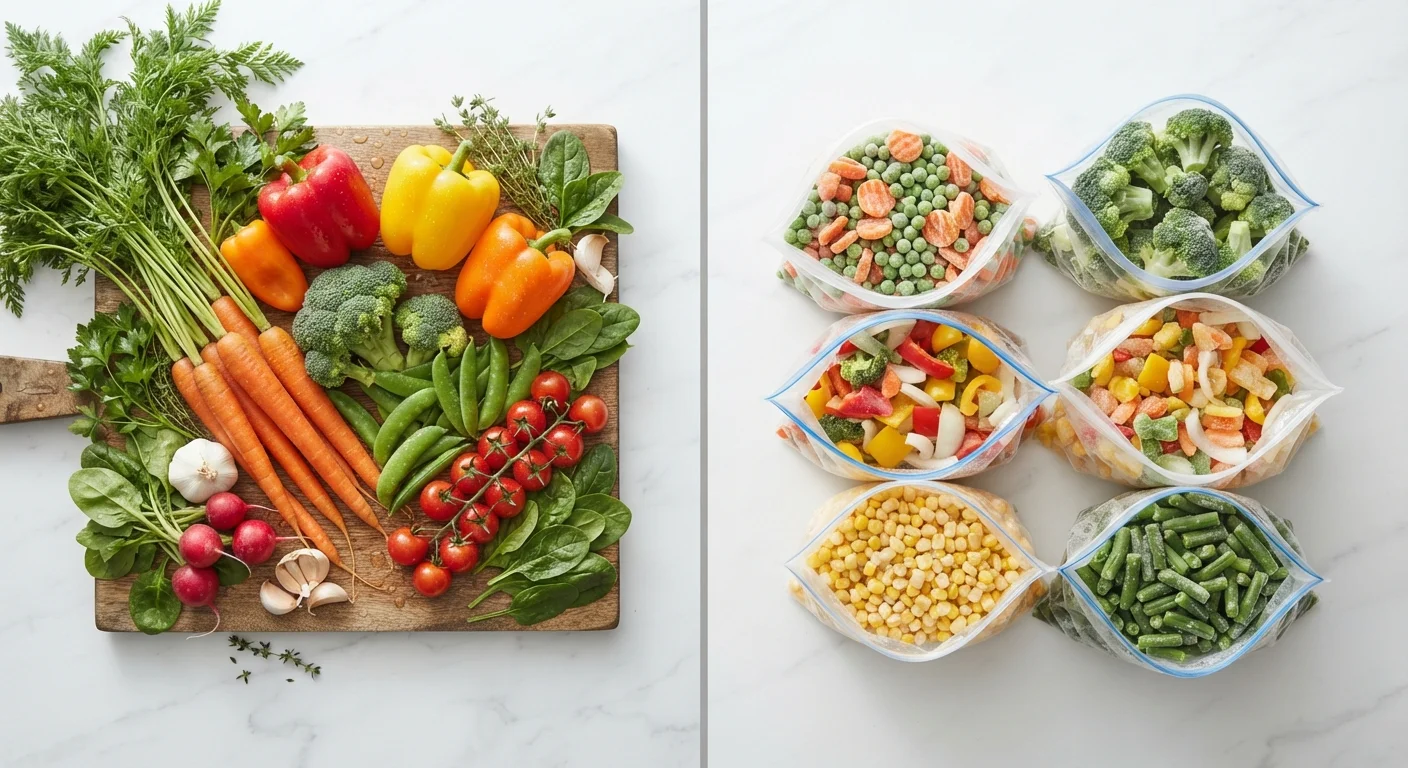
Neither frozen nor fresh is universally superior. Nutrition, cost, and convenience all depend heavily on the specific food, the season, and how your household actually cooks and eats. Families who use both strategically - leaning on frozen for staples and nutrient-dense vegetables year-round, while choosing fresh for seasonal, high-turnover items - tend to spend less and waste less without sacrificing diet quality.
Families looking to stretch a weekly grocery budget without compromising on nutrition will benefit most from learning which foods reward a freezer-first approach and which are worth buying fresh.
The Nutritional Picture: Closer Than Most People Think
A common assumption is that fresh food is inherently more nutritious than frozen. The reality is more nuanced. Commercial freezing typically happens within hours of harvest, locking in vitamins and minerals at close to peak levels. Research published in peer-reviewed food science journals has found that frozen fruits and vegetables are often nutritionally comparable to their fresh counterparts - and in some cases, particularly for items that have spent days in transit and on display shelves, frozen can retain higher levels of certain nutrients like vitamin C and folate.
Fresh produce, by contrast, begins losing water-soluble vitamins as soon as it is harvested. A tomato picked unripe to survive a long supply chain arrives at the store in a different nutritional state than one picked ripe locally. For items like berries, spinach, broccoli, and peas, the frozen version can be a genuinely solid nutritional choice.
Texture and taste are where fresh has a clearer edge. For salads, raw snacking, or dishes where appearance matters, fresh produce typically delivers a better eating experience. Some vegetables - asparagus, corn, green beans - also hold up better in certain preparations when used fresh.
This article provides general nutrition information for educational purposes and is not a substitute for advice from a registered dietitian or qualified healthcare professional.
Cost Comparison: Season and Item Both Matter
Frozen foods tend to carry a reputation for being cheaper, and often they are - but not always. The cost calculus depends on two key variables: what you are buying and when.
~30-40%
Fresh produce discarded by US households
USDA and food waste research consistently estimate that US households discard roughly one-third or more of the fresh food they purchase, representing a significant hidden cost.
Within hours
Time from harvest to freezing for commercial produce
Industry food science guidance indicates commercial frozen vegetables are typically blanched and frozen within hours of harvest to preserve nutritional quality.
During peak growing season, fresh produce purchased locally or at farmers markets can undercut the frozen equivalent. A flat of in-season strawberries in June often costs far less per ounce than a bag of frozen strawberries. Outside of that window, the price relationship typically reverses. Frozen peas or corn in January represent reliable value; their fresh equivalents may be expensive and of lower quality.
Hidden costs also factor in. Fresh produce that goes uneaten before it spoils is money thrown away. Studies on household food waste consistently estimate that American families discard a significant share of the fresh produce they buy. Frozen food eliminates that spoilage risk - you use what you need and return the rest to the freezer. For families tracking grocery spending, this waste reduction can be meaningful over a month.
Pairing frozen staples with pantry staples that stretch a grocery budget is a practical way to build flexible, lower-cost meal options throughout the week.
Practical Trade-offs for Everyday Households
Beyond nutrition and price, day-to-day practicality shapes which option actually works for a given household.
Frozen produce locks in nutrients at harvest peak
Commercial freezing occurs rapidly after harvest, preserving vitamins and minerals that can degrade during fresh produce's extended transit and shelf time.
Significantly reduces household food waste
Because frozen food can be used in measured portions and returned to the freezer, families avoid the spoilage losses that regularly eat into fresh-produce budgets.
Lower cost for out-of-season items
Frozen fruits and vegetables are processed in season and priced accordingly, making them more affordable than fresh equivalents shipped long distances in off-peak months.
Fresh delivers superior texture for raw preparations
Salads, crudités, and dishes where crunch and visual appeal matter consistently benefit from fresh ingredients, which retain cellular structure better than frozen.
Fresh can be cheaper during peak local season
In-season, locally sourced produce - particularly from farmers markets or community-supported agriculture - can cost less per serving than the frozen equivalent.
Frozen offers convenience with pre-cut, portioned formats
Pre-cut frozen vegetables reduce meal prep time and kitchen waste, benefiting households where scratch preparation is a barrier to cooking at home.
Fresh produce spoils quickly without active planning
Without a clear weekly meal plan, fresh vegetables and fruits frequently go unused, increasing household food waste and eroding the apparent cost savings of buying fresh.
Frozen requires adequate freezer storage capacity
Stocking a meaningful range of frozen foods demands freezer space many households - particularly those in smaller homes or apartments - may not have readily available.
Some frozen items contain added sodium or sauces
Frozen vegetable blends and ready-to-cook frozen meals sometimes include seasoning packets or sauces that add sodium or calories not present in plain fresh versions.
Fresh out-of-season produce is often expensive and lower quality
Produce transported long distances in off-peak months tends to cost more and arrive with diminished flavor, texture, and sometimes nutrient content compared to its in-season frozen alternative.
Frozen can have inferior texture in certain cooked dishes
Vegetables like zucchini, cucumber, or delicate greens release water when thawed and often become soft, making them unsuitable substitutes for fresh in specific recipes.
Frozen foods offer longer storage windows - typically several months to a year - reducing the pressure to plan meals around a rigid fresh-produce timeline. They are also available in pre-cut, pre-portioned formats that reduce prep time, which matters for busy families. The trade-off is freezer space: households with limited freezer capacity may find it harder to stock up.
Fresh foods require more active meal planning. Buying fresh works best when you shop frequently, have a clear weekly meal plan, or are purchasing items with a naturally long shelf life such as root vegetables, cabbage, or citrus. Understanding how seasonal pricing cycles work can help families time fresh purchases more strategically.
For a deeper look specifically at produce comparisons, see what families should actually know about frozen vs. fresh produce. Families making school meal decisions may also find useful context in the school lunch vs. packed lunch comparison.
The content provided on our blog site traverses numerous categories, offering readers valuable and practical information. Readers can use the editorial team’s research and data to gain more insights into their topics of interest. However, they are requested not to treat the articles as conclusive. The website team cannot be held responsible for differences in data or inaccuracies found across other platforms. Please also note that the site might also miss out on various schemes and offers available that the readers may find more beneficial than the ones we cover.