

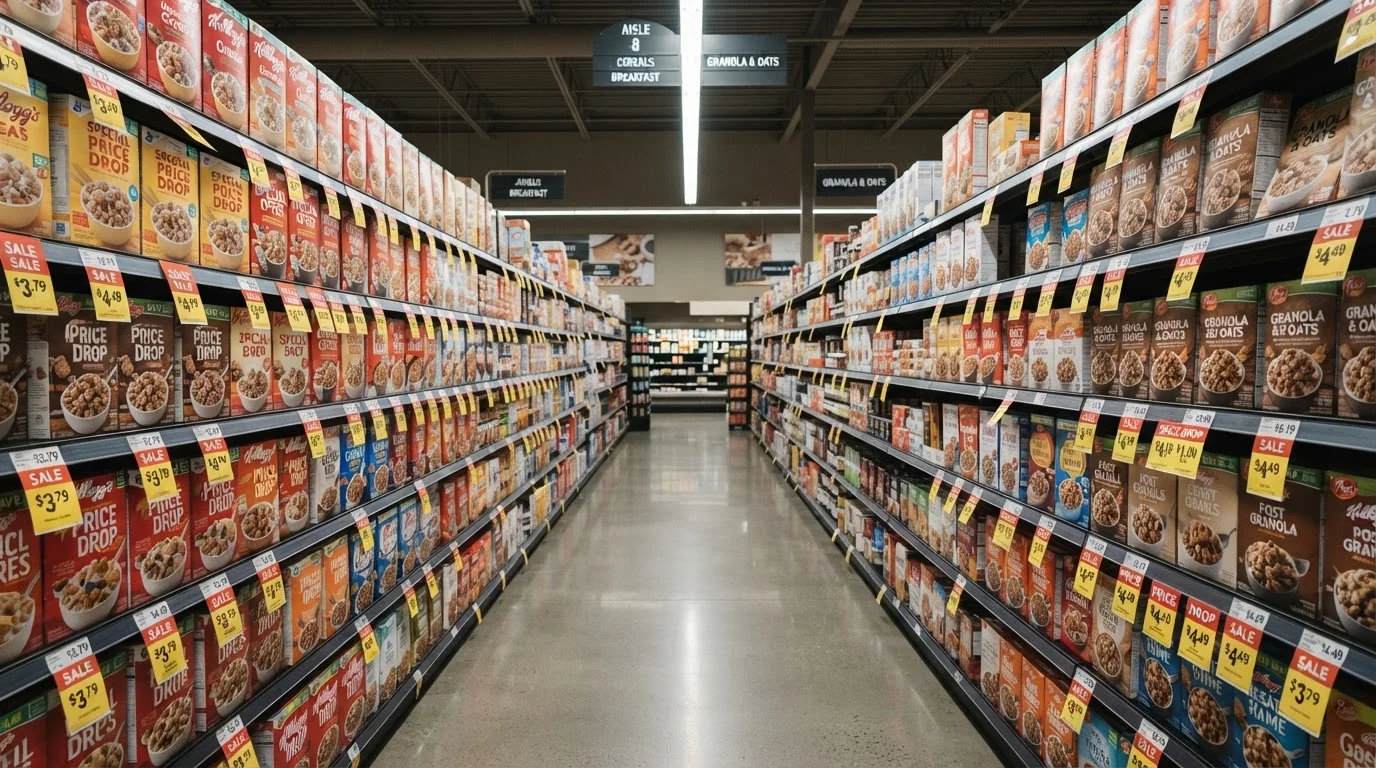
The Mechanics Behind the Sale Tag
Walk through any major grocery chain and you'll see sale tags in nearly every aisle - bright colors, bold fonts, and numbers crossed out in red. The visual language of a sale is designed to trigger a sense of urgency and value. But the mechanics beneath that tag are more complicated than they first appear.
Most sale tags display two prices: a "regular" or "was" price and a lower "sale" price. The implied message is that you're saving the difference. In practice, that reference price - the higher number - isn't always what shoppers typically paid. Retailers may set a reference price at a level that was charged briefly or infrequently, making the gap look larger than it actually is. This practice is sometimes called reference pricing or anchor pricing.
U.S. regulations on reference pricing are governed at the state level, and enforcement varies significantly. Some states require that a "regular" price be offered for a minimum period before it can be used as a comparison. Others have looser standards. Shoppers generally cannot assume that a crossed-out price reflects what a typical customer paid over any meaningful stretch of time.
State Law Varies on Reference Pricing
Some U.S. states require that a 'regular' price be offered for a set minimum period (often 28 days) before it can be used as a comparison price in advertising. Other states have no such requirement. If you believe a retailer is using a deceptive reference price, your state attorney general's consumer protection office is the appropriate contact. Do not assume that a posted reference price meets any legal standard without checking your state's rules.
Loyalty Card Pricing: Who Is the Sale Really For?
Many large grocery chains now operate two-tier pricing: a higher "everyday" price and a lower price available to loyalty cardholders. The sale tag often shows the card price as the discount and the non-card price as the reference. Since the vast majority of regular shoppers carry a loyalty card, the card price is functionally the standard price - not a special savings opportunity.
This structure isn't inherently deceptive, but it does mean that the "savings" shown on the tag are largely notional for most customers. The non-member price is rarely what a frequent shopper would pay. When evaluating whether a loyalty price represents genuine savings, it helps to compare it against the unit price of competing products rather than against the store's own non-member price.
~66%
U.S. grocery shoppers enrolled in at least one loyalty program
According to Food Marketing Institute research, the majority of American grocery shoppers participate in at least one store loyalty program, making card prices the functional standard rather than the exception.
Every 4-6 weeks
Typical promotional cycle for staple grocery items
Consumer research and industry analyses of grocery pricing suggest that many high-volume staple products rotate through promotional pricing roughly every four to six weeks at major chains.
Varies by state
Reference price regulations across the U.S.
There is no single federal standard governing how long a 'regular' price must be charged before it can be used as a comparison in advertising; requirements differ significantly by state.
For guidance on how unit pricing works as a comparison tool, see our guide to unit price math - it's one of the fastest ways to cut through shelf theater.
Multi-Buy Promotions and What They Actually Require
"3 for $5" and "Buy 2, Get 1 Free" are common promotional formats in grocery stores. They create the impression that purchasing multiple units is necessary to unlock the savings. In the majority of cases at major U.S. chains, it is not. The per-unit price applies whether you buy one item or three - the promotion is structured that way to encourage higher basket size without actually requiring it.
The practical takeaway: always check whether a multi-buy promotion requires the full quantity. The shelf tag or store policy usually clarifies this, and store employees can confirm. Buying three of something you don't need in order to get a per-unit price you could have gotten anyway defeats the purpose of the sale.
Multi-buy promotions also interact with spoilage and storage. Buying in bulk doesn't always save money when perishables are involved - a discounted price on three yogurts doesn't help if one goes to waste.
Rotating Sales and What 'Regular' Really Means
Grocery pricing follows predictable promotional cycles. Many staple items - canned goods, cereals, condiments - rotate through sale pricing every few weeks. A product that is "on sale" for four weeks out of every eight is, in practical terms, priced at two levels: the promotional price and an inflated non-promotional price that few shoppers encounter.
Understanding this cycle helps families make more deliberate decisions. Seasonal and promotional timing affects what you pay across most grocery categories, and recognizing a product's typical low price makes it easier to know when a sale tag is signaling a genuine opportunity versus a routine rotation.
The most reliable benchmark isn't the reference price on the tag - it's your own memory of what the item cost on your last several shopping trips. Keeping a rough mental (or written) note of prices on items you buy regularly is one of the most effective tools available to everyday shoppers.
Track Your Own Price History
The most effective defense against reference pricing is personal price history. Note the price of items you buy frequently over several shopping trips - even a rough mental benchmark helps you recognize when a 'sale' price is genuinely low. Some shoppers keep a short list in their phone's notes app for the 10 or 15 items they buy most often.
For a broader look at how sticker prices compare against more meaningful numbers, see price per unit vs. sticker price.
Frequently Asked Questions
In most U.S. states, if a price is displayed on the shelf, retailers are generally expected to honor it at checkout. However, the specifics depend on state consumer protection laws. If you're charged more than the posted price, you can politely ask a manager to correct it.
A reference price is the higher price shown alongside a sale price - often labeled 'was,' 'regular,' or 'original.' It's meant to anchor your perception of savings. Regulators in some states require this price to have been charged for a meaningful period before a retailer can use it as a comparison.
Usually not. Most multi-buy promotions (like '2 for $4') price each item at the per-unit rate even if you buy only one. Check the fine print on the shelf tag or ask a store associate, as policies vary by retailer.
Compare the unit price - the cost per ounce, pound, or count - against other package sizes and store brands. Tracking the item's regular price over several shopping trips also helps you recognize when a discount is genuine.
Grocery chains use rotating promotional cycles, which means popular items may be discounted for several weeks at a time and cycle back to 'sale' status regularly. When an item is perpetually on sale, the sale price is effectively the standard market price.
Loyalty card prices are real in the sense that you pay less at checkout - but the 'non-member' price is often set artificially high so the card price looks like a discount. For most frequent shoppers, the card price is simply the going rate.
The content provided on our blog site traverses numerous categories, offering readers valuable and practical information. Readers can use the editorial team’s research and data to gain more insights into their topics of interest. However, they are requested not to treat the articles as conclusive. The website team cannot be held responsible for differences in data or inaccuracies found across other platforms. Please also note that the site might also miss out on various schemes and offers available that the readers may find more beneficial than the ones we cover.